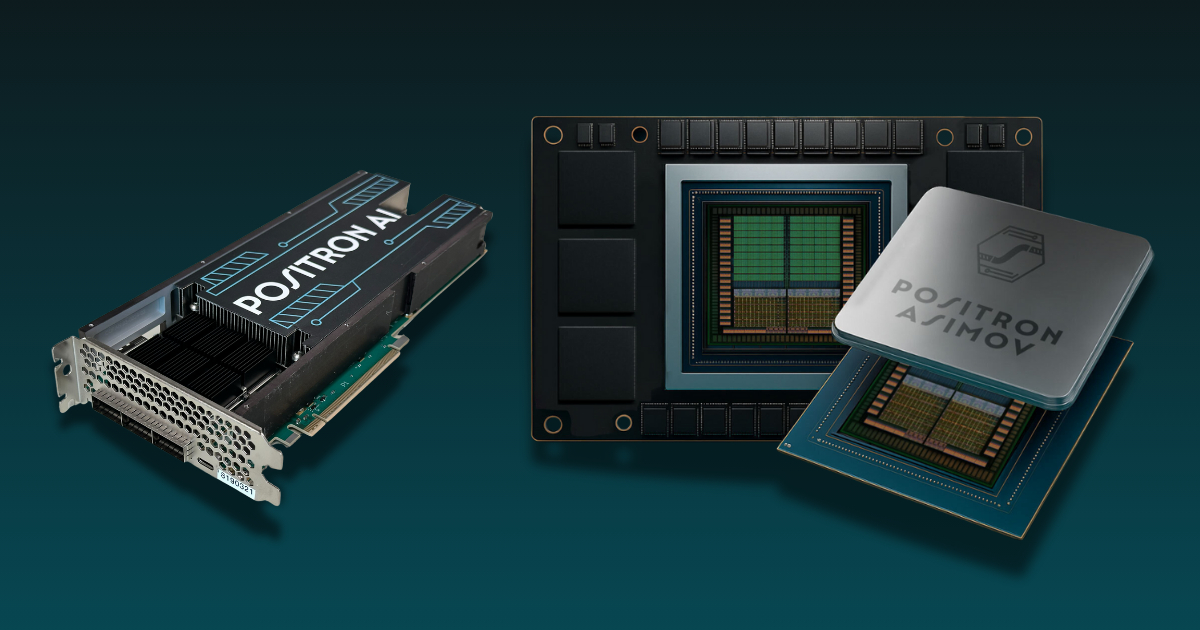
In one of the most noteworthy developments in AI hardware this year, AI semiconductor startup Positron has raised $230 million in a Series B funding round to accelerate development of its inference‑optimized silicon directly positioning itself as a challenger to Nvidia’s entrenched leadership in AI compute.
The funding round was led by Qatar Investment Authority alongside prominent investors such as Arena Private Wealth, Jump Trading, Valor Equity Partners, Atreides Management, and Flume Ventures. The capital injection not only pushes Positron’s valuation north of $1 billion but highlights how sovereign wealth and global capital are increasingly backing alternatives to the dominant GPU paradigm.
For years, Nvidia has held near‑monopoly status in AI hardware especially for training large language models and generative AI workloads with its GPUs forming the backbone of most cloud AI infrastructure. But as the AI industry moves from model development to widespread deployment, inference workloads (running models at scale) have become equally critical, and this is where Positron is focusing its efforts.
Positron’s flagship Atlas architecture aims to deliver performance comparable to Nvidia’s H100 GPUs at a fraction of the energy cost, a compelling proposition for data centres, cloud providers, and enterprises managing AI workloads that run 24/7. This efficiency focus along with recent sovereign and institutional capital suggests that the once clear hardware hierarchy in the AI stack could be shifting.
The broader AI hardware market is showing signs of diversification. With global demand for AI deployments skyrocketing and hyperscalers seeking alternatives to GPU‑centric compute strategies, emerging startups like Positron could carve out meaningful niches focused on inferencing, specialized acceleration, and power efficiency.
This newly competitive landscape comes at a time when major tech companies are pouring unprecedented capital into AI infrastructure overall, with collective 2026 spending expected to top $650 billion, intensifying pressures on existing supply chains and compute suppliers.
For Nvidia, the rise of capable challengers also underscores potential future risks. While Nvidia remains the go‑to provider for training clusters and high‑end workloads, the margins and dominance it has enjoyed may face sustained pressure as the ecosystem embraces purpose‑built silicon and diversified architectures. The broader geopolitical aspect with sovereign funds like Qatar’s backing alternatives, further reinforces the strategic importance of AI compute independence.
As AI becomes integral across industries from healthcare and finance to consumer apps and autonomous systems the hardware ecosystem that powers it is likely to become more pluralistic, with startups like Positron playing indispensable roles in shaping future compute norms.
Paul Balo is the founder of TechBooky and a highly skilled wireless communications professional with a strong background in cloud computing, offering extensive experience in designing, implementing, and managing wireless communication systems.
We use cookies to ensure that we give you the best experience on our website. If you continue to use this site we will assume that you are happy with it.