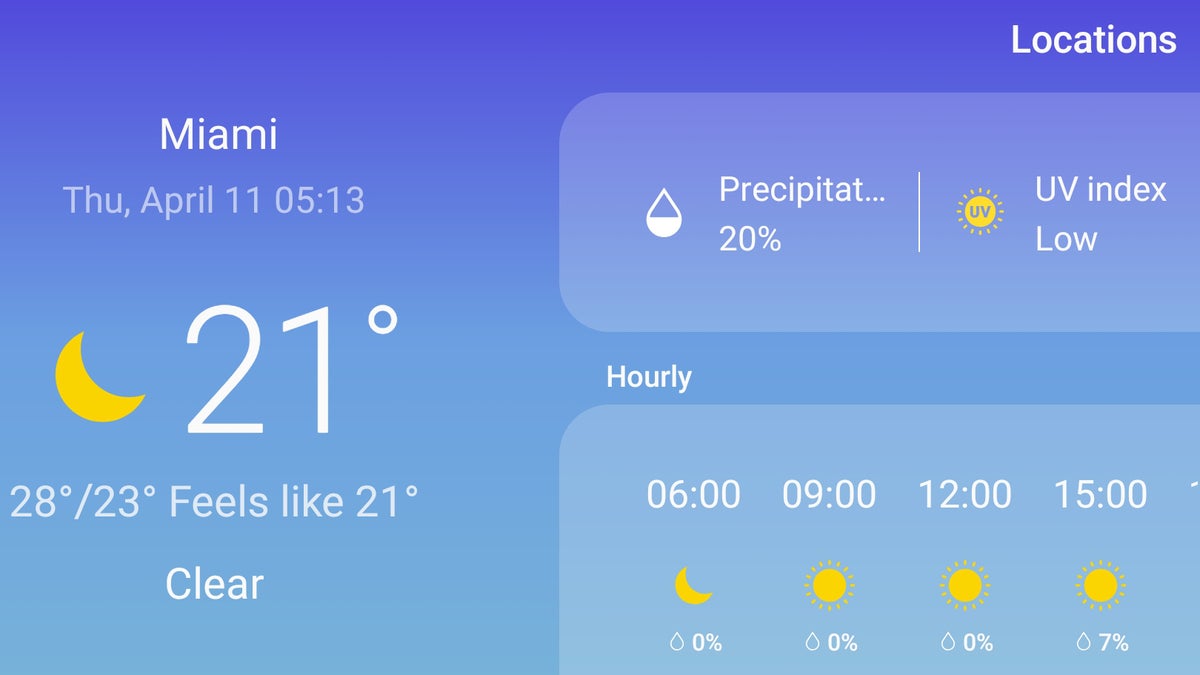
Samsung has found itself at the centre of a sensitive geopolitical controversy in South Korea after its pre-installed Weather app incorrectly identified Dokdo, a group of islets administered by South Korea, as being located in North Korea.
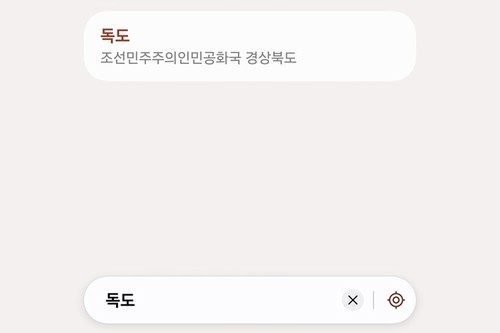
The issue appeared on Galaxy devices running Samsung’s latest One UI 8.5 software, including the Galaxy S26 series and updated models such as the Galaxy S25, Galaxy S24, Galaxy Z Fold 7 and Galaxy Z Flip 7. In the app, Dokdo reportedly appeared as being in “North Gyeongsang Province, Democratic People’s Republic of Korea” effectively placing one of South Korea’s most symbolically important territories under North Korean jurisdiction. For most countries, a misplaced label inside a weather app might be dismissed as a minor data error. In South Korea, this was never going to be treated that way.
Dokdo is more than a set of volcanic islets in the sea between Korea and Japan. It is a deeply emotional national symbol and a recurring source of diplomatic tension, particularly because Japan also claims the territory and refers to it as Takeshima. South Korea administers the islets and has consistently pushed back against foreign maps, textbooks and digital services that describe the territory incorrectly.
That is why the error triggered outrage so quickly. Samsung is not just another electronics company in South Korea; it is one of the country’s most powerful corporate symbols. For many users, seeing a Samsung app appear to place Dokdo under North Korea was not just a technical mistake it felt like a national embarrassment.
Samsung moved quickly to distance itself from the error, saying the Weather app relies on external weather data provided by The Weather Channel. A company official told Yonhap that the mistake occurred on the provider’s side and that Samsung was aware of the issue and taking corrective measures.
The company subsequently pushed an update to correct the label, while reports from Samsung-focused outlets said the issue was flagged by VANK, a South Korean cyber diplomacy organization known for challenging territorial and historical misrepresentations online. According to those reports, VANK sent protest letters to both Samsung and The Weather Company, and the issue was fixed shortly afterward.
The speed of the fix helped contain the controversy, but it does not erase the bigger question: how did such a politically sensitive geographic error make it into a default app on millions of devices in the first place?
That question matters because location data is no longer just background information. Weather apps, maps, search engines, ride-hailing platforms, AI assistants and mobile operating systems all shape how people see geography. A label buried inside a default phone app can carry more influence than a printed map because it appears repeatedly in daily life, often without users questioning the source.
This is especially true for Samsung. Its devices are used globally, and its native apps are often treated by users as authoritative. If a Samsung phone says a place belongs to a certain country, many people will assume that information has passed some kind of verification.
But the Dokdo incident shows how fragile that assumption can be.
Modern apps depend on a chain of third-party data providers, APIs, localization systems and mapping databases. When something goes wrong at any point in that chain, the mistake can surface inside products made by companies that did not create the original data. Samsung may be right that the source was The Weather Channel, but users saw the error inside Samsung’s app, on Samsung’s devices, under Samsung’s brand.
That is the reputational risk of outsourcing core data experiences.
The incident also comes at a time when digital platforms are under growing pressure to handle territorial disputes carefully. Around the world, maps and location services often show different borders depending on the user’s country, local law or political sensitivity. What appears to be a neutral geographic label can quickly become a diplomatic problem when it touches contested territory.
In Dokdo’s case, the mistake was even more explosive because it did not simply reflect Japan’s claim. It placed the islets under North Korea’s official name, the Democratic People’s Republic of Korea. That made the error feel particularly jarring for South Korean users, given the tense relationship between the two Koreas.
For Samsung, the lesson is clear. Default apps are not minor software extras anymore. They are part of a company’s public-facing information infrastructure, and the data inside them needs the same level of scrutiny as hardware, security and privacy.
The broader lesson for the tech industry is even bigger.
As more devices rely on automated feeds, AI-generated summaries and third-party data pipelines, companies will increasingly be judged not only by the products they build, but by the accuracy of the information those products display. In politically sensitive areas, “the data provider made the mistake” may explain what happened, but it may not be enough to satisfy users.
Samsung fixed the Dokdo label quickly.
But the controversy is a reminder that in today’s digital world, even a weather app can become a geopolitical flashpoint.
Related Reading
More contextual TechBooky stories selected from tags, categories and article context.
Paul Balo is the founder of TechBooky and a highly skilled wireless communications professional with a strong background in cloud computing, offering extensive experience in designing, implementing, and managing wireless communication systems.
We use cookies to ensure that we give you the best experience on our website. If you continue to use this site we will assume that you are happy with it.