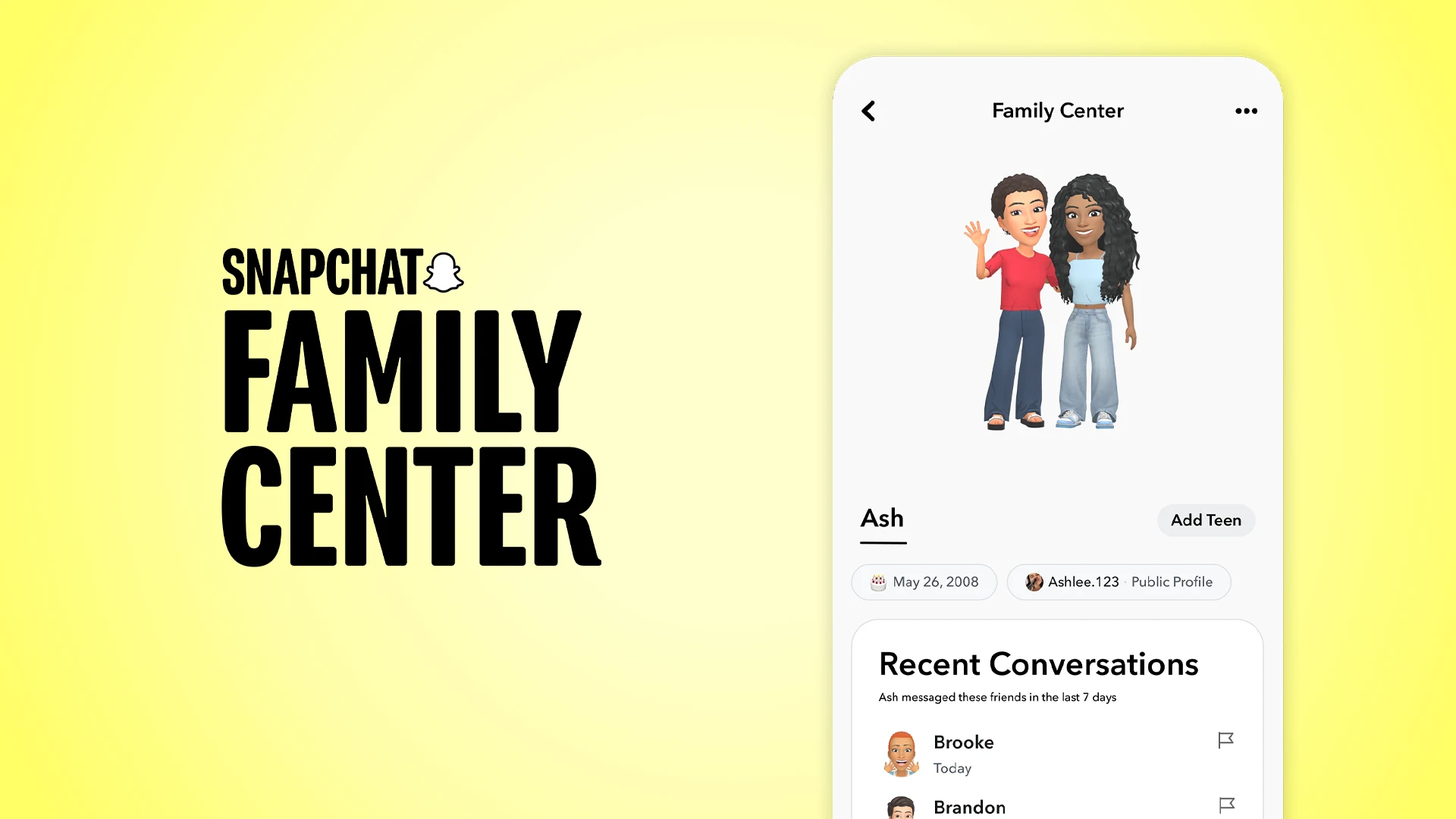
Snap Inc. added a number of new features to its Family Centre that are intended to give parents more detailed information on their adolescents’ app activity while preserving privacy for private talks. This was announced in the implementation of additional parental controls two days after resolving a lawsuit alleging Snapchat was responsible for mental health problems and social media addiction. According to Snapchat, the new feature, “Family Centre”, now allows parents and guardians to view the amount of time their teen spends on the app as well as more information about the new acquaintances they make.
With these additional capabilities, Snap probably hopes to allay parents’ and authorities’ worries about screen usage and safety on its platform.
A thorough analysis of their teen’s usage of the app during the preceding week is now available to parents through the feature-specific usage and weekly trend.
The Feature-Specific Usage allows parents and guardians to view the average amount of time spent each day on particular features, such as chatting, snapping (sending and receiving snaps), using the camera, browsing the Snap Map, and viewing Spotlight and Stories material.
The average amount of time their teen spent on Snapchat each day during the preceding week is now visible to parents. They can observe how this time is distributed throughout the app’s various features, such as conversing, taking pictures, producing with the camera, utilising Snap Map, and viewing material on Spotlight and Stories.
While the weekly trends are to identify consumption trends, examine a high-resolution image of the daily time split.
Parents may now discover how their adolescent probably knows a new person they’ve added as a friend, even though Family Centre previously gave them access to a complete list of their teen’s Snapchat pals. Parents will be able to see, for instance, if they are stored as contacts, have friends in common, or are part of shared communities.
In order to assist parents in understanding how a teen recognises a new connection, the update includes “trust signals”.
In a blog post, Snap stated, “These trust signals make it easier for parents to understand new connections and have greater confidence that their teen is chatting with someone they know in real life.” “A parent or guardian has the information necessary to initiate a fruitful conversation with a new friend they are unfamiliar with.”
The social context at the Family Centre shows whether a new buddy is in the teen’s phone book, whether they have friends in common, or whether they are a member of a shared in-app community (such as a school group).
With the Safety Cues, these indicators are meant to assist parents in determining if a new “friend” is a stranger or an actual acquaintance.
In response to regulatory pressure over social media firms’ failure to protect children on their apps, Snap introduced Family Centre, a suite of parental monitoring features, in 2022. Since then, Snap has expanded the tool with new features, such as the capacity to prohibit access to the app’s My AI chatbot, set time limits, and view who kids have recently communicated with.
The new features coincide with Snap’s settlement earlier this week of a lawsuit brought by a 19-year-old named K.G.M. in court filings. The plaintiff claimed that Snap and other social media behemoths had created features and algorithms that encouraged addiction and negatively impacted users’ mental health.
Other platforms, including Meta, YouTube, and TikTok, are also included in the case; however, no settlements have been reached with these businesses. Jury selection for the final lawsuit against Meta, TikTok, and YouTube is scheduled to start next.
In more lawsuits involving social media addiction, Snap remains a defendant. As early as nine years ago, Snap employees voiced worries about the hazards to kids’ mental health, according to documents revealed in the continuing proceedings. According to the firm, the samples were “cherry-picked” and taken out of context.
Other key features and tools which are also included are the
AI Controls: In the near future, parents will be able to block access to the AI-powered search engine Perplexity as well as the My AI chatbot.
Location Transparency: To encourage discussions about digital limits, parents can see their teen’s location-sharing settings (such as if they are sharing live location with friends).
Educational materials: To assist families in navigating online hazards together, a new video tutorial called “The Keys: A Guide to Digital Safety” and interactive materials are available.
Reporting: Using the dashboard, parents may send direct reports of problematic accounts to Snap’s Trust & Safety team.
The opt-in-only settings allow parents and teenagers to link their accounts through an opt-in process in order to access these capabilities.
While the privacy restrictions are that parents are only able to view metadata, such as who was contacted and for how long, rather than the actual content of private conversations or Snaps.