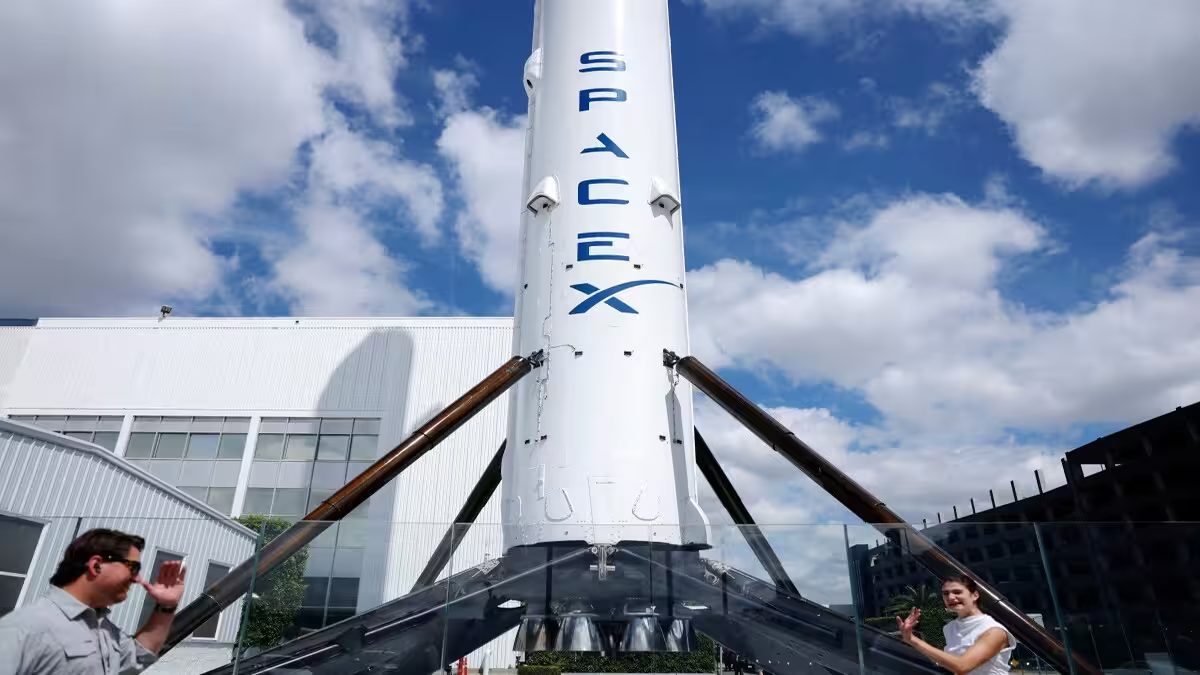
SpaceX has finally made its long-awaited IPO filing public, setting the stage for what could become one of the largest and most closely watched public listings in history.
The company filed its Form S-1 registration statement with the U.S. Securities and Exchange Commission on May 20, confirming that Space Exploration Technologies Corp. is preparing to go public after more than two decades as one of the world’s most valuable private companies. The SEC filing lists SpaceX’s registration under file number 333-296070, with the filing accepted on May 20, 2026.
The filing immediately confirms what many investors have been waiting years to see: SpaceX is no longer just a rocket company. It is pitching itself as a sprawling technology empire built around launch services, Starlink satellite internet, Starship, artificial intelligence, social media and future space-based computing infrastructure.
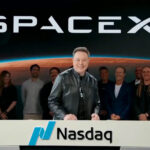
SpaceX plans to list on Nasdaq under the ticker SPCX, with expectations that the IPO could raise around $75 billion at a valuation reportedly near $1.75 trillion, making it potentially the biggest IPO ever.
That alone would be historic.
But the more interesting story is what SpaceX is actually selling to public investors.
For years, SpaceX’s core narrative was reusable rockets. The company changed the economics of space launch with Falcon 9, built a powerful government and commercial launch business, and became central to NASA, national security missions and global satellite deployment. That business still matters, but the IPO filing shows a company whose future increasingly depends on Starlink and artificial intelligence.
Starlink is already the financial engine. The filing shows that SpaceX generated more than $18 billion in revenue in 2025, with Starlink contributing more than half of that around $11 billion. But the company also recorded a loss of about $4.9 billion last year and has lost more than $37 billion since inception, underscoring how capital-intensive the business remains.
That is the contradiction at the heart of SpaceX’s IPO.
It is one of the most important technology companies ever built, but it is still burning enormous amounts of money to fund its next phase.
And that next phase is no longer only about reaching orbit.
SpaceX’s filing leans heavily into AI, especially after the company absorbed Elon Musk’s xAI and social platform X into its broader structure. SpaceX directed around 60% of its capital spending in 2025, or roughly $20 billion, toward its AI division. Yet that division lost billions last year and grew revenue by only about 22%, far slower than some frontier AI rivals.
That makes the IPO both a space story and an AI story.
SpaceX is effectively asking public investors to buy into Musk’s most ambitious integrated vision yet: reusable rockets launching satellites, Starlink connecting the planet, xAI powering intelligence, X providing distribution, and Starship eventually enabling orbital data centres and even industrial activity beyond Earth.
The filing reportedly claims SpaceX has identified a $28.5 trillion total addressable market, with a huge portion tied to enterprise AI applications. That figure is extraordinary, and investors will likely debate whether it reflects bold strategic foresight or classic Musk-style overreach.
The AI ambition also introduces new risks.
Wired reports that SpaceX’s IPO filing includes legal and reputational risks linked to xAI’s Grok chatbot, including controversial modes such as “Spicy” and “Unhinged,” and that SpaceX allocated $530 million for potential litigation connected to these issues.
That means public investors are not just buying rockets and satellites. They are buying exposure to Musk’s entire ecosystem including the parts that may be harder to control, regulate or monetize.
The filing also shines a light on inter-company relationships across Musk’s businesses. Business Insider reports that SpaceX and xAI purchased hundreds of millions of dollars’ worth of Tesla Megapacks and Cybertrucks, including $697 million in Megapacks across 2024 and 2025 and $131 million in Cybertrucks in 2025. These were disclosed as related-party transactions.
For some investors, that will reinforce the appeal of Musk’s vertically integrated empire. For others, it will raise governance questions.
And governance is already one of the biggest parts of the story.
The S-1 makes clear that Elon Musk will remain firmly in control. TechCrunch reports that Musk will serve as CEO, CTO and chairman after the IPO, while holding enough voting power to retain control even after the company goes public. The filing shows Musk owns 93.6% of SpaceX’s Class B stock, which carries 10 votes per share, giving him 85.1% of current voting power.
That means SpaceX may become public, but it will not become conventionally accountable in the way many public companies are.
Investors will get access to one of the most consequential companies in the world, but they will also be betting on Musk’s control, priorities and risk appetite.
Starship remains the biggest operational variable. SpaceX says it expects Starship to begin payload delivery to orbit in the second half of 2026, with plans to use the vehicle for Starlink satellite deployments and eventually far more ambitious missions. SpaceX spent $3 billion on Starship research and development in 2025 and another $930 million in the first quarter of 2026.
That spending is central to the company’s long-term plan. SpaceX argues Starship could reduce the cost of reaching orbit by 99% or more compared with historical launch costs. If that happens, it could unlock everything from cheaper satellite deployment to lunar infrastructure, Mars missions and space-based computing.
But if Starship is delayed, crashes, or fails to achieve rapid reusability, the entire valuation story becomes harder to defend.
That is what makes this IPO so unusual.
Most companies go public with a clearer business model and a narrower set of risks. SpaceX is going public as a profitable-looking revenue engine in some areas, a capital-intensive moonshot in others, and an AI conglomerate still trying to prove its economics.
It has real revenue. It has dominant launch capability. It has Starlink. It has government contracts. It has one of the most valuable private infrastructure networks ever built.
But it also has enormous losses, massive capital expenditure, execution risk around Starship, AI legal exposure, governance questions and a future market narrative that stretches from global broadband to Mars colonies and orbital data centres.
That combination will make SpaceX one of the most fascinating public companies in the world.
For Wall Street, the IPO is not just a chance to buy into space. It is a chance to buy into Elon Musk’s most complete vision of the future — one where rockets, satellites, AI, chips, social media and compute infrastructure all converge under one corporate roof.
The risk is that this vision may be too big, too expensive and too dependent on one person.
The opportunity is that if even part of it works, SpaceX could become one of the defining companies of the next technological era.
Either way, this IPO changes the conversation.
SpaceX is no longer just preparing humanity for Mars.
Paul Balo is the founder of TechBooky and a highly skilled wireless communications professional with a strong background in cloud computing, offering extensive experience in designing, implementing, and managing wireless communication systems.
We use cookies to ensure that we give you the best experience on our website. If you continue to use this site we will assume that you are happy with it.