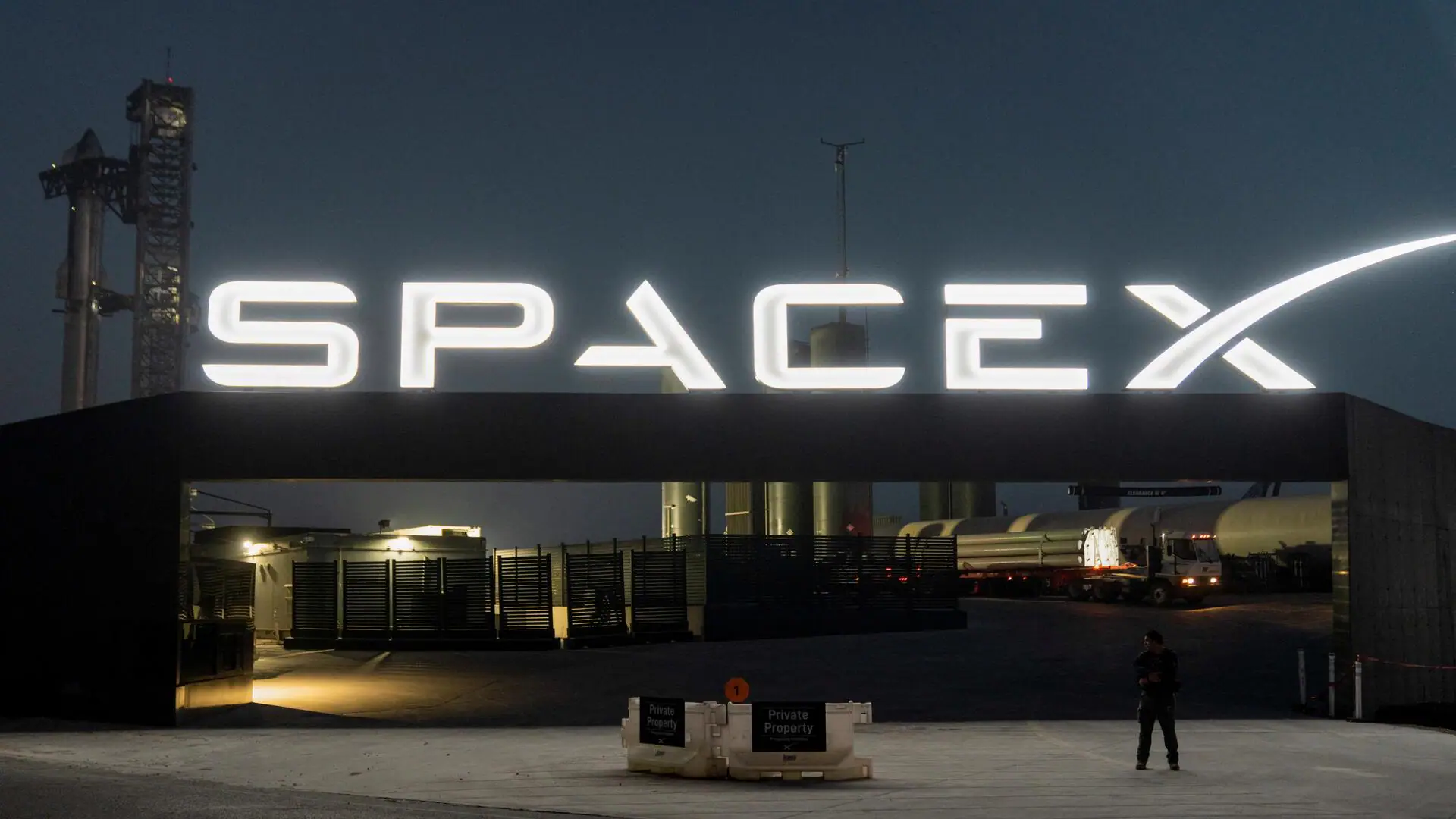
The Federal Communications Commission has received a proposal request from SpaceX to launch a constellation of up to one million solar-powered satellites, which it claims will function as artificial intelligence data centres.
This concept is a significant change from using Starlink to provide internet connectivity to developing a worldwide infrastructure for edge processing and AI computation.
In addition to characterising these proposed satellites as “the most efficient way to meet the accelerating demand for AI computing power”, the company’s filing presents them as “a first step towards becoming a Kardashev II-level civilisation, one that can harness the Sun’s full power” and “ensuring humanity’s multi-planetary future amongst the stars”.
The press suggested that the one-million-satellite target is a high initial ask, intended for negotiation rather than outright approval. The analysis points to the FCC’s recent partial authorisation approving 7,500 Starlink satellites while postponing a decision on nearly 15,000 more as evidence of this regulatory back-and-forth.
The application also coincides with Amazon’s request for an extension of the FCC deadline for having more than 1,600 satellites in orbit, claiming a shortage of rockets. Before going public, SpaceX is apparently thinking about merging with two of Elon Musk’s other businesses, Tesla and xAI (which has merged with X).
The constellation would serve billions of people worldwide by offering “unprecedented computing capacity” for extensive AI inference and data processing.
The satellites will use laser links for inter-satellite communication while operating in low Earth orbit (LEO) at elevations between 500 and 2,000 kilometres.
SpaceX asserts that space-based facilities are more “eco-friendly” than terrestrial ones because they avoid the enormous amounts of water and electricity needed on Earth by using nearly constant solar power and radiative cooling in the vacuum of space.
The Starship launch vehicle, which is built to transport the enormous tonnages needed to construct such a network, is crucial to the project.
The concept is described in SpaceX’s file as a “first step towards becoming a Kardashev II-level civilisation”, one that can fully use the power of its parent star.
The proposal is in line with rumours that SpaceX and xAI may combine in advance of a massive 2026 initial public offering (IPO) that would combine rocket capabilities with the need for proprietary AI.
While SpaceX frequently requests big numbers to guarantee design freedom, analysts and regulators point out that the FCC has already reduced or postponed large requests because of worries about orbital debris and congestion.
We use cookies to ensure that we give you the best experience on our website. If you continue to use this site we will assume that you are happy with it.