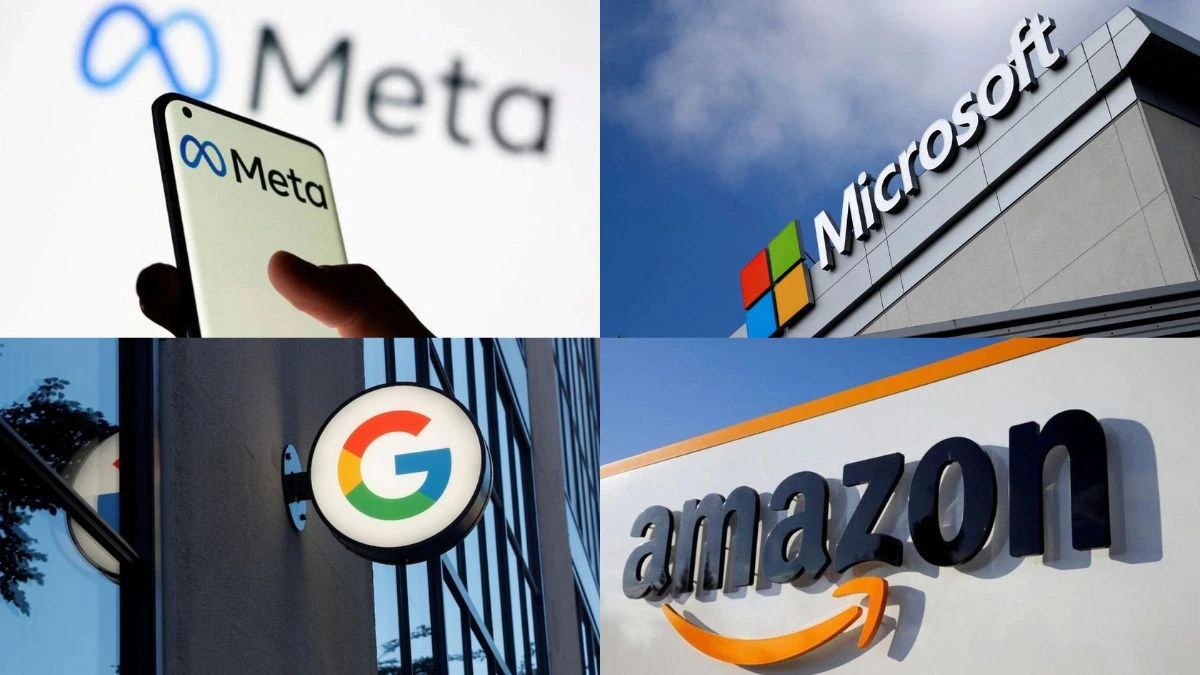
According to Morgan Stanley analysts, the “age of inference is upon us,” and the big hyperscalers, which include Google, Amazon, Meta Platforms, and Microsoft, are expected to deploy up to 34 gigawatts of computation by 2027.
The “age of inference,” as raised by Morgan Stanley, is a period when AI models move from the resource-intensive training phase to everyday commercial applications like creating content and responding to customer inquiries, driving the mega infrastructure increase.
To put things in perspective, the analysts and experts pointed out that in the first eighteen years of its existence, Amazon Web Services, which is still the biggest cloud service provider, probably only added about five gigawatts of computation. In other words, the experts noted that the 20 gigawatts that may be added next year, which will make it a total of 34 when combined with 14 in 2206, could power almost 15 million houses in the United States.
In a letter to clients, experts and analysts stated that they see Google (~7 GW) again bringing on the most capacity in ’27, followed by Amazon/Microsoft (~5 GW each).”
It was also estimated that META is actually adding ~4 GW in ’27 when grossing up its hyperscale spend, even though its capex is only adding 3.5 GW.
The analysts stated that GPUs, where Nvidia “shines” because of its superior power efficiency over its rivals, will account for a sizable percentage of that increased capacity (and its cost).
According to the analyst and experts, the remaining funds will be allocated to powered shells with high single digits to low teens on a percentage basis, dynamic random access memory (mid-single digits), high bandwidth memory (mid-single digits to mid-teens), and custom application-specific integrated circuits (similar to Google’s TPUs or Amazon’s Trainium), according to the analysts.
Based on analysts’ and experts’ predictions, Amazon, Microsoft, and Meta are making the greatest forward purchases for the remainder of 2026 and 2027, thereby acquiring power shells, land, equipment, and memory. Further predictions tell that in 2027 and beyond, at least half of the trio’s current capital expenditures will be realised.
On the other hand, the analysts noted that approximately 10% of Google’s 2026 capital expenditures will probably be implemented in 2027 and beyond.
Morgan Stanley’s prediction also states that cumulative hyperscaler capital expenditures could rise and exceed $1.1 trillion by 2027 because of the extraordinary financial scale of this buildout, with a significant portion going directly toward GPUs and specialist AI chips. Analysts point out that Nvidia’s superior power efficiency puts it in a unique position to continue being the main beneficiary, but the company’s quick growth has also raised worries about the strain on the world’s power systems, leading businesses like Meta to negotiate nuclear power contracts for their new data centres.
We use cookies to ensure that we give you the best experience on our website. If you continue to use this site we will assume that you are happy with it.