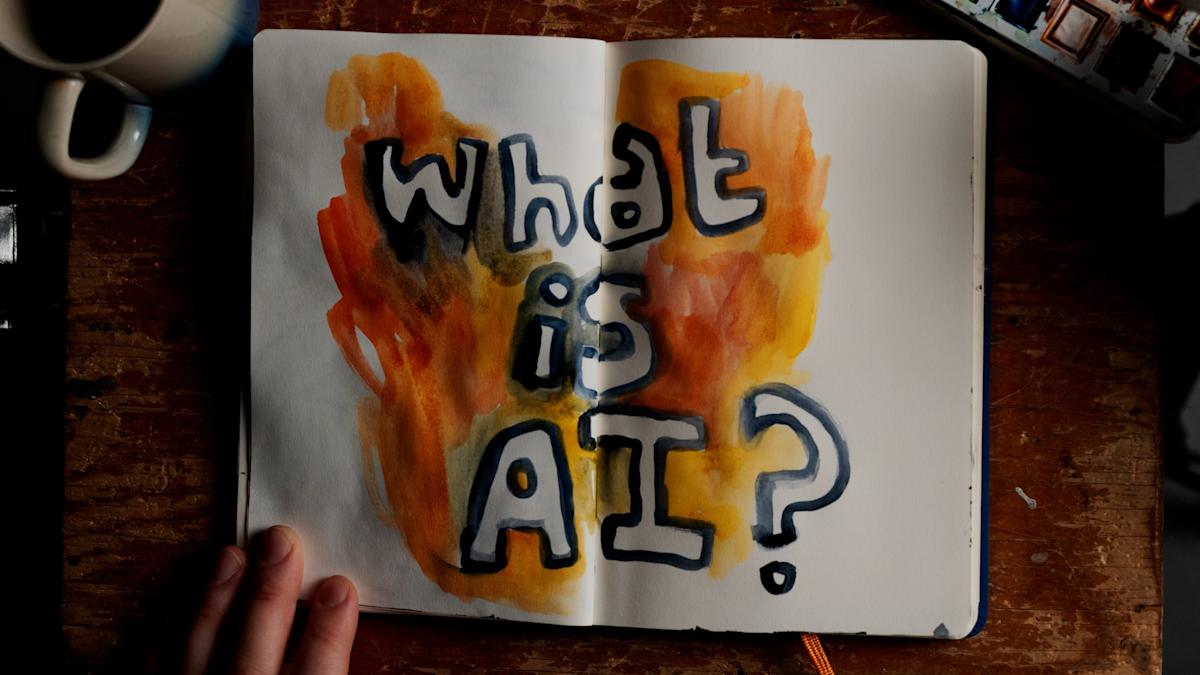
A new documentary, The AI Doc: Or How I Became an Apocaloptimist, is arriving in theatres this weekend with a clear mission: translate the current artificial intelligence moment for people who are only vaguely paying attention, and give shape to the unease many already feel.
Directed by Daniel Roher, the film is less a technical explainer and more a portrait of anxiety. Roher is about to become a parent and is wrestling with a now-familiar question: is AI building a better world for his child, or something far darker? To interrogate that tension, he sits down with some of the most recognizable champions and sceptics in the field.
A film about belief, backlash and “apocaloptimism”
The AI Doc pulls in a notable roster of interviewees from across the AI spectrum. On the industry and research side, the film features Anthropic CEO Dario Amodei and OpenAI CEO Sam Altman, figures closely associated with the push toward ever more capable AI systems. It also includes author Karen Hao, whose book The Empire of AI tracks the ascent of OpenAI and the fragile economics around this new wave of AI, as well as linguistics professor and AI critic Emily M. Bender.
Alongside them are outspoken sceptics and reformers such as Tristan Harris, co-founder and president of the Centre for Humane Technology, and former Google AI researcher Timnit Gebru. Gebru, who links AI’s development to what she describes as a rise of “techno-fascism” in Silicon Valley, only appears briefly; the review notes that her perspective isn’t deeply explored in the final cut.
The film organizes these voices into two broad camps: “true believers” and critics. The believers tend to see AI as a pathway to something close to a technological utopia and, as the review points out, as a route to enormous wealth for those building it. The critics, on the other hand, warn of extreme downside risks, up to and including the end of humanity. At one point, Harris recalls friends working in AI risk assessment who fear their children “won’t see high school,” a line that captures the intensity of the concern inside parts of the field.
Roher himself lands in what he calls an “apocaloptimist” position. The film acknowledges that AI is likely to have serious social consequences and that there are genuine dangers. At the same time, it argues that humans still have agency: AI’s trajectory is not fixed, and the public can influence what gets built and how it is deployed.
Central to that argument is a challenge to one of the dominant narratives in today’s AI industry: the supposed inevitability of artificial general intelligence (AGI), a system that could match or surpass human abilities across a wide range of tasks. Many AI proponents treat AGI as a matter of when, not if. The AI Doc pushes back on that sense of destiny, suggesting that AGI is not guaranteed and that there is room to question whether that goal should define the field.
While The AI Doc draws on high-profile insiders and critics, it is not aimed at AI researchers or policy specialists. The review makes clear that it “doesn’t really shed new light” for those already steeped in the technology’s history and politics, suggesting instead that curious viewers looking for depth should turn to Karen Hao’s book for a more detailed account of OpenAI and its business model.
Roher’s primary audience appears to be mainstream users: people who occasionally turn to ChatGPT or Google’s Gemini but may not understand why these tools have triggered so much controversy. For that group, the film tries to map out the current AI landscape and reveal what the review calls the “near-religious devotion” to AI in parts of the tech world. That quasi-spiritual belief in progress especially around AGI is presented as one of the forces driving AI forward, regardless of broader public consent.
The documentary also nods to the growing backlash against some high-profile AI deployments. The review points to several recent flashpoints as examples of how public resistance can influence corporate decisions:
A strongly negative reaction from gamers to NVIDIA’s DLSS 5 AI upscaling features.
Microsoft’s move to scale back some Copilot AI capabilities in Windows 11.
OpenAI’s shutdown of its Sora AI video generation app, which the review notes may be driven in part by cost, but has also faced substantial criticism.
These are framed as early signals that if enough people push back on certain AI uses, tech companies will adjust at least at the margins. That idea underpins Roher’s apocaloptimist stance: the future is not pre-written, and resistance matters.
Stylistically, The AI Doc leans hard on pace and visuals. It is described as an “energetic, animation-heavy” production, intent on making sure viewers are never bored across its one hour and 43 minute running time. That accessibility comes with trade-offs. According to the review, the film does not probe deeply into the structural and historical forces behind the current AI boom for example, how power, capital and ideology shape what gets built and deployed.
The review contrasts this with another recent AI-focused documentary, Ghost in the Machine, which is set for a theatrical release this summer before airing on PBS in the fall. That film is said to draw a direct line between the rise of eugenics and Silicon Valley, signalling a more explicit examination of the ideas underpinning today’s tech industry. By comparison, The AI Doc is portrayed as more of a fast-moving survey than a deep excavation.
That doesn’t mean it is toothless. At its most effective, the documentary may prompt everyday viewers to question the default assumption that more AI is always better. The review argues that the “threat of AI” deserves more nuance and scrutiny than the film ultimately delivers, but it also acknowledges that even a somewhat surface-level treatment could still have an impact. In a moment when the industry is “more desperate to make [AI] a success,” a documentary that leaves mainstream audiences more sceptical of uncritical adoption could itself shift the conversation.
For now, The AI Doc sits at an intersection. It packages the AI debate in a way that is designed to entertain and inform a broad audience, even as it leaves some of the hardest questions open. Whether that’s enough may depend on what viewers do with the unease it surfaces once they leave the theatre.
Paul Balo is the founder of TechBooky and a highly skilled wireless communications professional with a strong background in cloud computing, offering extensive experience in designing, implementing, and managing wireless communication systems.
We use cookies to ensure that we give you the best experience on our website. If you continue to use this site we will assume that you are happy with it.