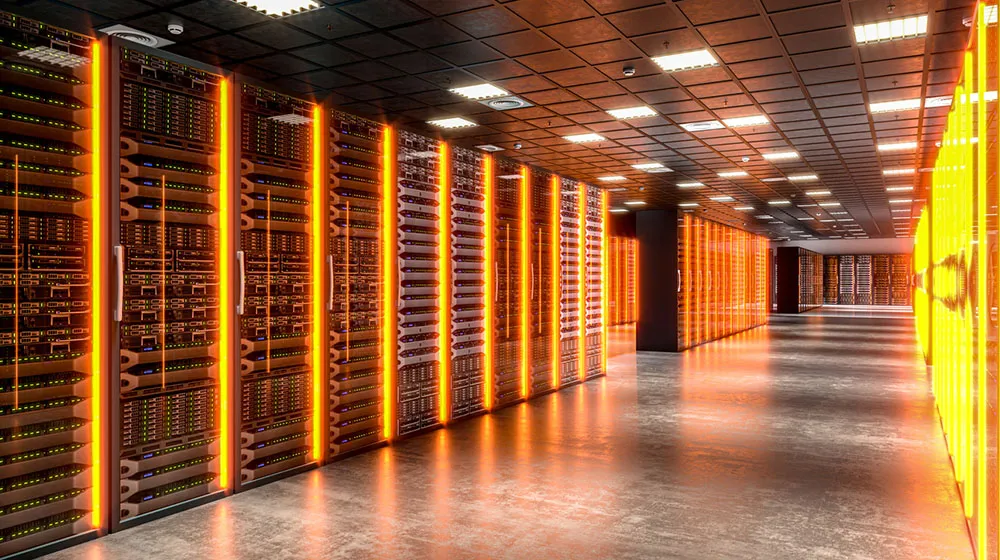
The foundation and focus of digitalisation have been traced to the data centres as well as energy-intensive development engines, thousands of which are being built all around the world. The Iran war has shown how vulnerable societies are as a result.
Data centres also remain a highly concentrated target for multi-domain threats because they have formally transitioned from private company assets to vital national infrastructure. These facilities are currently being targeted by local activists, cybercriminals, and state actors due to the rapid growth of artificial intelligence.
Dietzenbach, which is a small German town with a population of around 35,000. It is most well-known locally for its outdoor woodland swimming pool and an architecturally unique observation tower that, on a clear day, allows you to view Frankfurt, which is about 12 kilometres (7 miles) away.
The US internet giant Google undoubtedly invested several billion dollars in a new, high-performance data centre because of its location. One of Europe’s most significant data centre regions is the greater Frankfurt area.
The top online exchange in the world is DE-CIX Frankfurt, which manages around 17 terabits of data flow at peak hours. This is the same amount of data that would be processed if nearly 3.5 million individuals watched a high-definition movie at the same time. In the greater Frankfurt area, there are now 76 such data centres in operation. There are roughly 12,000 of these complexes in the world, and many more are being constructed.
Given that the internet, increasingly driven by artificial intelligence’s growing demand for data processing and storage, has become indispensable to modern global society, data centres serve as the backbone of cloud services and online applications; are fundamentally significant to the national security of industrialized countries whose power grids, health systems, financial management, and transport logistics rely on them; and are therefore classified as critical infrastructure in Germany, which published a national Data Centre Strategy in March 2026 that aims to double the country’s data centre capacity by 2030 while reducing dependence on non-European providers.
Because nearly all online activity now flows through data centres, these hubs have become prime targets for a sharp increase in cyberattacks; the German Federal Bank alone records over 5,000 attacks per minute on its IT systems as of January 2026, prompting operators to secure complexes with video cameras, fences, and barbed wire, a precaution justified by the March 2021 fire in a major Strasbourg data centre that took down over 3.6 million websites and caused permanent data loss for many customers whose backups were stored in the same building.
Data centres have become strategic targets in military conflicts, as seen in the war in Ukraine, where IT infrastructure has been deliberately hit to disrupt military operations and civilian supply lines, and in the US-Israeli war with Iran, where Tehran launched drones and rockets at three Amazon Web Services data centres in Bahrain and the UAE, which are causing widespread disruption to banking and payment platforms.
Shortly afterward, the Iranian leadership published a list on Telegram of up to 30 additional potential targets in America’s Gulf-based IT technology infrastructure, including data centers, research facilities, and offices of IBM, Google, Palantir, and Oracle, prompting serious discussions about improving air defense for these facilities.
As it becomes increasingly important to find suitable locations where new data centers can be reliably secured, nearby residents often oppose these projects due to the vast amounts of energy and water required for server operation and cooling, the rapid hardware turnover producing large electronic waste, and the urgent need for researchers to improve efficiency through waste heat utilization and renewable energy.
In addition, while investors pour billions into construction, data centers create very few local jobs, often employing fewer than 100 people across tens of thousands of square meters, offering only indirect economic benefits if dependent companies choose to locate nearby.
Protests against data centers have already emerged worldwide, as seen in Chile in 2024, where an environmental group successfully blocked an AI-focused data center; and in April 2026, when Maine’s legislature voted for a moratorium on facilities over 20 megawatts, only stopped by the governor’s veto, while Germany itself does not always approve such projects either.
Construction has begun in Dietzenbach, but plans for a €2.5 billion (about $3.4 billion) Vantage Data Centres project in nearby Gross-Gerau collapsed after a majority of the town council voted against it, arguing the project was too large and its environmental and social impacts too uncertain.
Related Reading
More contextual TechBooky stories selected from tags, categories and article context.
We use cookies to ensure that we give you the best experience on our website. If you continue to use this site we will assume that you are happy with it.