U.S. Department of Commerce special agents have reportedly been investigating claims that Meta employees may access purportedly encrypted WhatsApp chats, according to stories that surfaced in late January 2026.
The claims that Meta has the ability to read encrypted WhatsApp messages have reportedly been investigated by U.S. authorities.
The reports come after a lawsuit was filed last week alleging that Meta “can access virtually all of WhatsApp users’ purportedly ‘private’ communications.”
According to a report from Bloomberg, Meta has refuted the accusation, calling the lawsuit’s assertion “categorically false and absurd”. It implied that the allegation was an attempt to defend the NSO Group, an Israeli company that creates malware for use against journalists and activists and just lost a lawsuit filed by WhatsApp.
Quinn Emanuel Urquhart & Sullivan, the firm that launched the complaint against Meta last week, credits anonymous “courageous” whistleblowers from Australia, Brazil, India, Mexico, and South Africa with making the claim.
In another instance, Quinn Emanuel is assisting the NSO Group in appealing a ruling from a US federal court last year that mandated it pay $167 million to WhatsApp for breaking its terms of service by using Pegasus spyware against over 1,400 users.
“We’re pursuing sanctions against Quinn Emanuel for filing a meritless lawsuit that was designed purely to grab headlines,” Meta spokesperson Carl Woog said in a statement. “This same company is attempting to assist NSO in overturning an injunction that prohibited their operations from using spyware to target government officials and journalists.”
“Our colleagues’ defence of NSO on appeal has nothing to do with the facts disclosed to us and which form the basis of the lawsuit we brought for worldwide WhatsApp users,” stated Adam Wolfson, a partner at Quinn Emanuel.
Regardless of its assertions regarding end-to-end encryption, WhatsApp’s denials have all been carefully crafted to avoid refuting the main allegation in the case, which is that Meta can read WhatsApp communications. We look forward to pursuing those claims.
The lawsuit, according to UCL security engineering professor Steven Murdoch, is “a bit strange”. “It seems to be going mostly on whistleblowers, and we don’t know much about them or their credibility,” he added. “If what they are saying is true, I would be shocked.”
He stated that if WhatsApp was actually reading user communications, employees would have probably found out and the company would have shut down. “Keeping secrets inside a firm is really difficult. I believe it’s highly plausible that someone at WhatsApp would have leaked information about something as terrible as this.
The Bloomberg piece asserts that the US has looked into whether Meta could access WhatsApp communications, citing sources and discussions with US Department of Commerce officials. But a government representative described these claims as “unsubstantiated”.
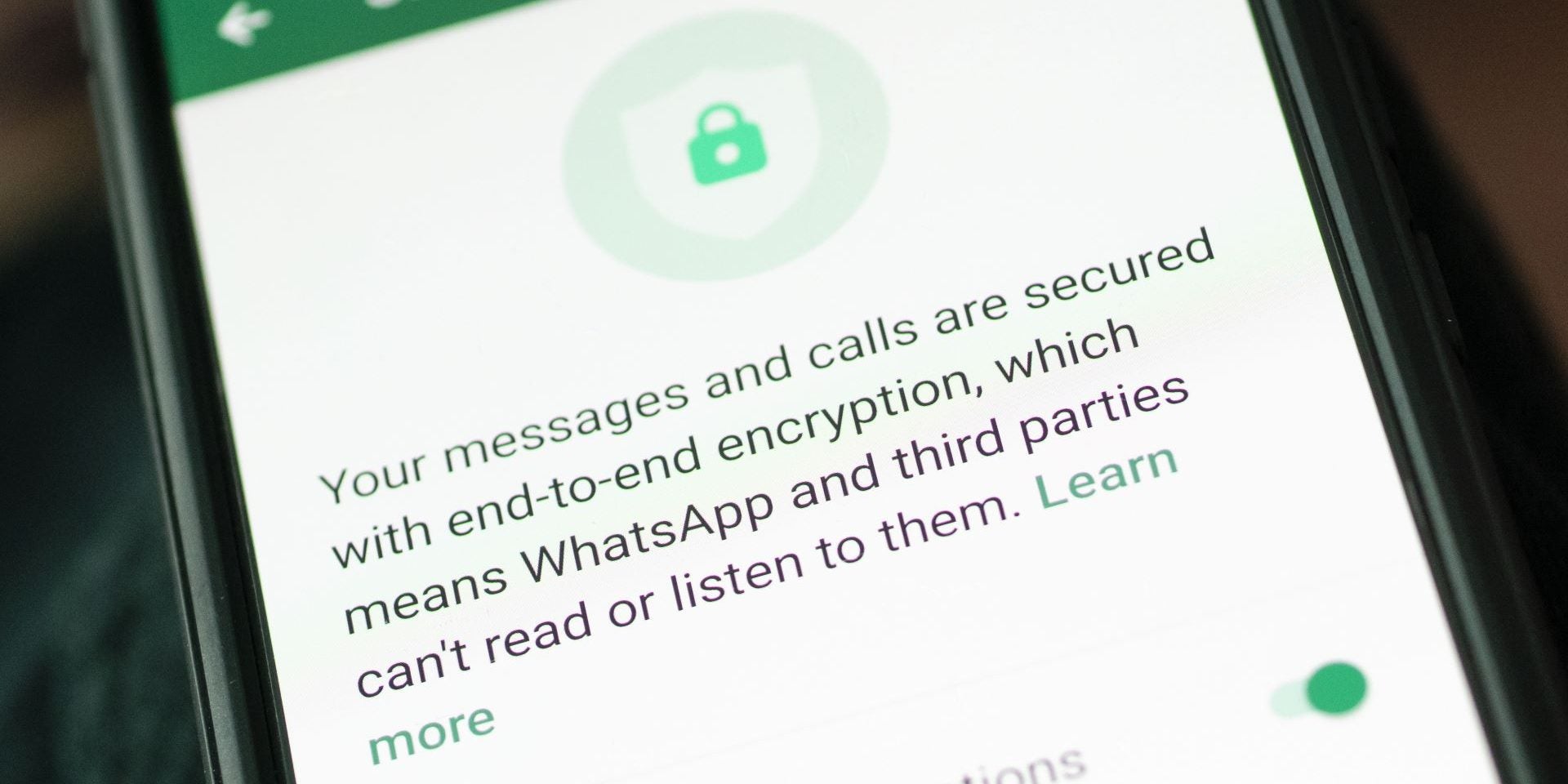
WhatsApp claims to be an end-to-end encrypted platform, meaning that communications are not decoded by a server in the middle and can only be read by the sender and recipient.
In contrast, some other messaging apps, like Telegram, encrypt communications between a sender and its own servers, making it impossible for third parties to access them but theoretically enabling Telegram to decrypt and read them.
WhatsApp’s much-heralded privacy “leaves much to be desired,” according to a top executive in the technology industry who spoke to the Guardian. This is because the platform is willing to gather metadata about its users, including their contact lists, profile information, and who they talk to and when.
But according to him, it is mathematically impossible for WhatsApp to “selectively and retroactively access the content of [end-to-end encrypted] individual chats.”
“We’re pursuing sanctions against Quinn Emanuel for filing a meritless lawsuit that was designed purely to grab headlines,” stated Woog of Meta. WhatsApp’s encryption is still safe, and we’ll keep opposing those who attempt to restrict people’s ability to communicate privately.
The current update states that while the Bloomberg report cited notes from internal agents, a U.S. Department of Commerce official later described claims of a formal investigation as being “unsubstantiated”.
Some experts are still dubious about the allegations, pointing out that it would be very challenging to keep a secret of this magnitude without technological researchers finding out or leaking it.
We use cookies to ensure that we give you the best experience on our website. If you continue to use this site we will assume that you are happy with it.