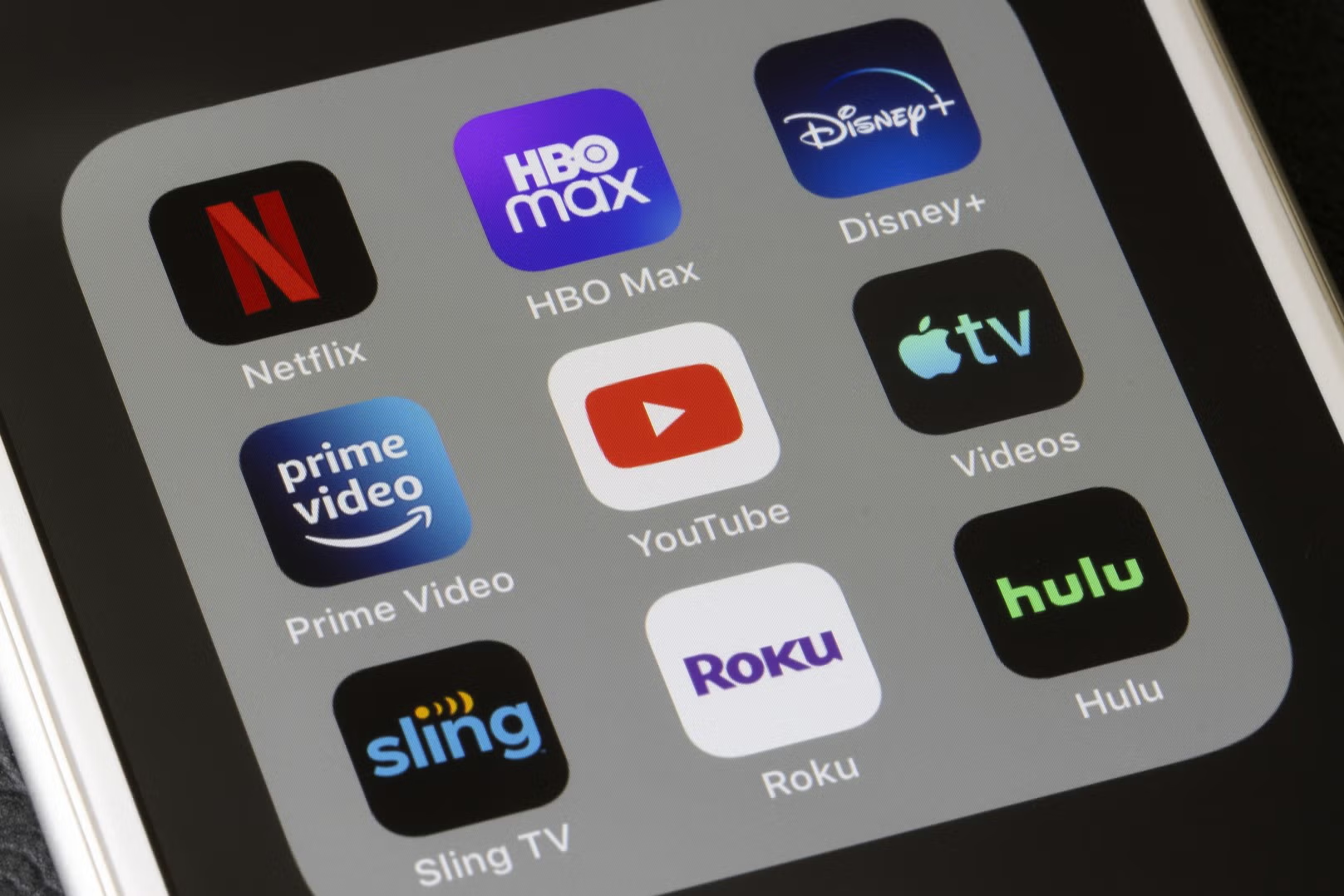
Major streaming platforms including Netflix, Disney+ and Amazon Prime Video are set to come under tighter UK regulation, with new rules that bring them closer to traditional broadcasters like the BBC and ITV.
Under the UK government’s plan, video-on-demand (VOD) services that attract a monthly average of more than 500,000 viewers in the country will be designated as “Tier 1” platforms. Those services will be regulated by media watchdog Ofcom and required to follow a dedicated VOD standards code, as well as meet new accessibility targets.
Tier 1 services will be subject to rules on accuracy and impartiality, and will be expected to protect audiences from “harmful or offensive” content. Ofcom will gain powers to:
Receive complaints from viewers about potential breaches of the VOD standards code
Investigate those complaints
Take enforcement action where it finds a breach
Sanctions can include financial penalties of up to £250,000 (around $337,000) or 5 percent of a service’s “qualifying revenue” for each breach.
The government says more than 20 platforms would fall into the Tier 1 category under current viewing levels, though it has not listed them all. Services already subject to statutory rules enforced by Ofcom include Prime Video, Disney+, Paramount+, Discovery+, Hayu and ITVX. Netflix, however, is not currently overseen by Ofcom because its European base is in the Netherlands, where it is regulated by the Dutch media authority. The new UK measures are intended to change that.
Public service streamers such as ITVX and Channel 4’s on-demand platform will also have to comply with the new regime. BBC services such as iPlayer are, for now, exempt from these specific rules because they are already regulated under the existing Broadcasting Code. The government nonetheless plans to update the BBC Framework Agreement so that iPlayer is ultimately regulated in the same way as commercial VOD giants.
Alongside the content standards, the government will introduce a separate VOD accessibility code designed to bring major streaming apps closer to broadcast TV in terms of support for disabled viewers.
Under this accessibility code, Tier 1 services will be required to ensure that:
At least 80 percent of their entire catalogues are subtitled
At least 10 percent include audio descriptions
At least 5 percent are signed
Platforms will have four years to meet these accessibility requirements once the code is in force.
Media Minister Ian Murray said the changes are intended to ensure people with sight or hearing impairments can continue to enjoy streaming services, noting that a new Ofcom-regulated accessibility code for the largest VOD platforms is meant to provide “peace of mind” for those audiences.
The regulatory overhaul is being implemented under the UK’s Media Act 2024. The government argues that the shift reflects how people now consume television: it says 85 percent of people use an on-demand service every month, compared with 67 percent who watch live TV, and that two-thirds of UK households subscribe to at least one of Netflix, Prime Video or Disney.
Not all online video platforms are covered in the same way. Video-sharing sites such as YouTube will remain under the scope of the Online Safety Act, according to reporting cited from Variety, so they are not directly pulled into the Tier 1 framework. However, individual channels on such platforms could still be made subject to the VOD standards code.
The exact shape of the new code is not final. Ofcom will run a public consultation to help define the rules, giving both streaming providers and the wider public an opportunity to respond. The resulting VOD standards code will come into effect one year after Ofcom formally publishes it.
The UK government frames the move as a response to the rise of on-demand viewing and a way to align global streaming platforms with long-standing expectations placed on TV broadcasters, particularly around editorial standards and accessibility.
Paul Balo is the founder of TechBooky and a highly skilled wireless communications professional with a strong background in cloud computing, offering extensive experience in designing, implementing, and managing wireless communication systems.
We use cookies to ensure that we give you the best experience on our website. If you continue to use this site we will assume that you are happy with it.