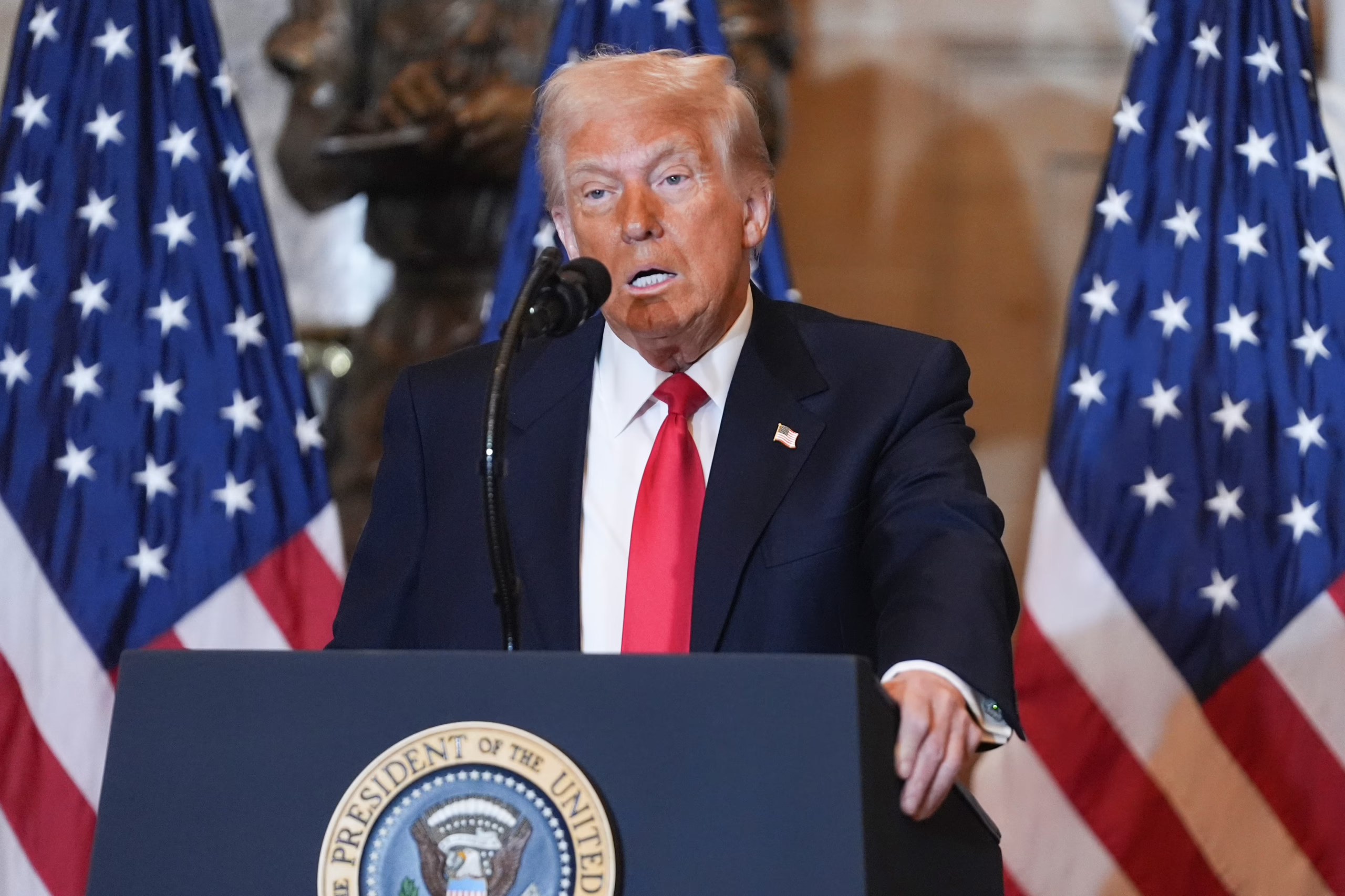
In a move few saw coming, the United States government is embracing Bitcoin in an unprecedented way. The White House has announced the formation of a “Strategic Bitcoin Reserve”, treating Bitcoin as a national reserve asset for the first time .This surprise pivot — essentially creating a digital-age Fort Knox — marks a sharp departure from past U.S. crypto policies and has sent shockwaves through the tech and finance world. Tech billionaires and crypto enthusiasts are buzzing, with figures like Elon Musk applauding the bold step and sceptics questioning its execution. Here’s what we know about this digital gold rush and why it matters.
From Seized Crypto to National Bitcoin Reserve
Unlike traditional reserves filled with gold bars, America’s new Bitcoin reserve will be stocked with crypto coins the government already possesses. **No taxpayer funds are being spent to buy Bitcoin initially – instead, the reserve is seeded by Bitcoin that federal agencies have seized from criminal cases and asset forfeitures. Essentially, Uncle Sam is repurposing confiscated crypto and stashing it away for the nation’s future.
White House AI and Crypto Czar David Sacks explained that roughly 200,000 BTC (worth tens of billions of dollars) could flow into this reserve based on current government holdings. “It will not cost taxpayers a dime,” Sacks noted, emphasizing that these are existing assets. In fact, there’s never been a full public audit of the government’s crypto trove until now, so this move finally shines a light on what’s been an open secret. The reserve formally recognizes Bitcoin as a U.S. reserve asset – a symbolic first that gives Bitcoin a new level of legitimacy in government
A cache of Bitcoin and other coins – the U.S. will stockpile seized cryptocurrency instead of auctioning it off
The new Strategic Bitcoin Reserve turns these digital assets into a national store of value.
Alongside the Bitcoin Reserve, the government is also establishing a “U.S. Digital Asset Stockpile” for other cryptocurrencies like Ethereum, USD Coin, and others obtained through forfeitures. Think of it as a secondary vault for altcoins. However, officials made clear they won’t be actively buying more crypto for these stockpiles (at least not yet). The Treasury Secretary (along with the Commerce Secretary) is authorized only to explore “budget-neutral” strategies to acquire additional Bitcoin over time, meaning they must find creative ways that don’t burden taxpayers. For now, the plan is simply to hold tight to what the government has already seized.
No Selling Allowed: A “Digital Fort Knox” for Bitcoin
One striking aspect of the plan is what won’t happen: the U.S. government has vowed not to sell any Bitcoin that goes into this reserve. Those coins are being taken off the market indefinitely. “The U.S. will not sell any bitcoin deposited into the Reserve. It will be kept as a store of value,” Sacks said, likening the reserve to a “digital Fort Knox” safeguarding the nation’s crypto wealth. In other words, just as Fort Knox locks away gold, this initiative locks away Bitcoin as “digital gold.”
This commitment to HODL (tech slang for holding onto crypto long-term) is a huge shift from how the government used to handle seized Bitcoin. In the past, agencies like the U.S. Marshals Service would swiftly auction off confiscated crypto to the public – as happened with the Silk Road bitcoins and others – partly because of the view that crypto was too volatile to keep. In fact, late last year officials were authorized to sell 69,000+ seized BTC (worth over $6 billion) rather than hold it, citing price volatility.
. Now, that mindset has flipped on its head. Instead of worrying about Bitcoin’s volatility, the government is embracing its long-term value proposition by stockpiling it. The reserve essentially signals that the U.S. is willing to ride out short-term swings for potential big gains down the road, just as it does with gold in vaults.
Officials haven’t detailed exactly how much crypto is going into the reserve on day one, but estimates suggest the government’s Bitcoin stash is substantial. The move also raises questions: How will these assets be secured? (Presumably with heavy cybersecurity, given this is digital treasure.) And will the government ever tap into this reserve, or is it purely for show? For now, the plan is strictly “store of value” – no selling, no spending, just holding. The Treasury Secretary will oversee its stewardship, ensuring the reserve grows (through any additional seizures or possibly strategic buys) and remains secure, much like overseeing the nation’s gold reserves.
An About-Face from Past Crypto Regulation
To put this in perspective, the U.S. government’s stance on crypto has done a 180° turn. For years, regulators approached Bitcoin and its brethren with skepticism, if not outright hostility. We saw crackdowns on ICOs, lawsuits against major crypto exchanges, and warnings that digital currencies were a Wild West needing taming. Seized bitcoins were routinely liquidated at auction, as authorities were hesitant to hold onto them. Never before has Washington treated Bitcoin as a strategic asset to be preserved – that idea was squarely in the realm of crypto die-hards, not policymakers.
That’s why this Strategic Bitcoin Reserve is catching everyone off guard. “The significance of this executive order is mainly symbolic, as it marks the first time Bitcoin is formally recognized as a reserve asset of the United States government,” noted Andrew O’Neill of S&P Global Ratings. Symbolic or not, it’s a milestone. The U.S. is effectively saying Bitcoin is here to stay – a remarkable endorsement after years of regulatory uncertainty.
This shift can be partly attributed to a change in leadership and philosophy. The current administration (under President Donald Trump) has been notably more crypto-friendly than its predecessor. Trump campaigned on making America the “Crypto Capital of the World” and reversing what he called years of overregulation. Since taking office, he’s rolled back some crypto oversight and even halted a planned central bank digital currency (CBDC) project, signalling a preference for private crypto innovation over government-issued digital money. Establishing a national crypto reserve fits this agenda of elevating the industry. It’s a stark contrast to the prior administration, which had treated crypto more cautiously, often prioritizing consumer protection and anti-money-laundering enforcement. In short, U.S. crypto regulation is pivoting from restraining to stockpiling – a change almost no one predicted a couple of years ago.
Comparisons to past actions make the pivot even clearer. Just weeks before Trump’s inauguration, the Justice Department was on track to dump tens of thousands of bitcoins on the market (which likely would have depressed prices). Now, those coins are being locked away for the nation’s benefit. Some observers are drawing parallels to countries like El Salvador, which famously made Bitcoin legal tender and built its own reserve. The difference: El Salvador’s bet was considered an outlier, even risky – whereas the U.S. doing something similar lends a whole new credibility to the concept. It’s as if the playbook on crypto regulation has been rewritten overnight.
Elon Musk and the Crypto Community React
It didn’t take long for the crypto world’s biggest names to weigh in on this bombshell. Leading the cheers was Elon Musk, the tech mogul who’s practically a one-man hype machine for crypto. Musk has been a vocal Bitcoin advocate (his car company Tesla holds about $1 billion in BTC) and has even advised President Trump informally on crypto policy. Upon news of the U.S. Bitcoin Reserve, Musk hinted at his approval in characteristic fashion on social media. He recently praised El Salvador’s Bitcoin reserves as “impressive” when that country’s gamble paid off, and he’s long mused about Bitcoin’s potential as “digital gold.” Seeing the United States create its own reserve is a validation of an idea that Musk and other crypto bulls have championed for years. It suggests that the U.S. government is, in Musk’s view, finally getting on the crypto bandwagon in a serious way.
Other crypto influencers and industry leaders echoed optimism that this could be a bullish development. Many see it as the start of a new era where governments compete to hold crypto, potentially driving prices higher in the long run. If the U.S. is doing it, can other nations be far behind? The crypto community, always quick with a meme, jokingly suggested it’s time to “front-run the Fed” by buying Bitcoin before the government buys more.
Not everyone is unreservedly positive, however. Sceptics within the crypto camp are cautioning that this move, while headline-grabbing, might be more window dressing than substantive action. “This is the most underwhelming and disappointing outcome we could have expected,” wrote Charles Edwards, a crypto hedge fund manager, lamenting that the government isn’t committing new funds to buy Bitcoin. Without active buying, some argue the reserve is “just a fancy title” for coins the government was already sitting on. In a colourful rebuke, Edwards quipped that calling the existing stash a strategic reserve is like putting “lipstick on a pig”
– suggesting the fanfare might be overblown if no new Bitcoin is acquired.
Furthermore, the sudden spotlight on Uncle Sam’s crypto holdings has brought calls for greater transparency. How much Bitcoin does the U.S. really have, and where did it all come from? These questions are bouncing around crypto forums. There’s wariness about the lack of a complete audit of government-held crypto until now, and some in the community are urging an independent verification of the reserves. The irony isn’t lost that a technology built on transparent ledger entries is now being held by a government not exactly known for openness in its finances. To build trust, advocates say, the feds should disclose wallet addresses or at least totals of what they control. It’s a strange new twist on the old mantra “Don’t Trust, Verify” – this time applied to government HODLing.
Implications for the Crypto Market and Beyond
The creation of a U.S. Bitcoin Reserve could be a game-changer for the crypto landscape. In the immediate term, the market’s reaction has been mixed. Bitcoin’s price actually dipped about 5% on the news initially, likely because traders expected the government to start buying coins (which would drive the price up) – and that didn’t happen, at least not yet. But that pullback was short-lived; the symbolism of the world’s biggest economy formally endorsing Bitcoin as a reserve asset is ultimately seen as wildly bullish by many. “It’s mainly symbolic,” as O’Neill noted, but symbols matter – especially one that flips the narrative of Bitcoin from renegade asset to strategic national treasure.
Long term, there are several big implications to watch:
Legitimacy & Adoption: Bitcoin just gained a new level of legitimacy. It’s no longer just an investment or speculative asset; it’s now part of the U.S. government’s strategic reserves. This could spur other countries to consider similar moves in fear of falling behind. (If Bitcoin is the new digital gold, no nation wants to be the one with empty vaults.) It may also encourage institutional investors on the sidelines to allocate more to Bitcoin, knowing governments themselves are holding it.
Regulatory Climate: The fact that the U.S. is holding crypto could herald a friendlier regulatory environment. We might expect more nuanced regulation that seeks to boost the crypto industry rather than suppress it, given the government now has skin in the game. Indeed, analysts are predicting that a more crypto-friendly SEC and clearer rules will follow, which could fuel innovation and investment. The White House is even hosting its first-ever Crypto Summit, indicating a willingness to engage with industry leaders rather than treat them as adversaries.
Market Dynamics: By taking a chunk of Bitcoin off the market and vowing not to sell, the government is effectively reducing supply (or at least liquidity) in the marketplace. In theory, this supply shock, combined with potentially increased demand due to legitimization, could be a recipe for price appreciation. Crypto traders are keenly aware that in previous cycles, rumors of governments selling crypto created bearish pressure – now the dynamic is reversed. The U.S. HODLing could introduce a new kind of “whale” whose actions are driven by policy, not profit, adding a fascinating wrinkle to market behavior.
National Finance Strategy: Some are contemplating what this means for national debt and reserves. There’s an intriguing (if speculative) notion: if Bitcoin skyrockets in value over the coming years, the government’s reserve could appreciably strengthen the national balance sheet. Lawmakers like Senator Cynthia Lummis have even suggested swapping some of America’s gold for Bitcoin to modernize the country’s reserves. While that remains a long shot, it underscores a broader point – crypto is entering the chat in conversations about economic strategy. Could Bitcoin one day help back the dollar, or be used to offset debt? Those ideas were fantasy not long ago, but the reserve brings them into the realm of possibility.
As the U.S. embarks on this grand crypto experiment, the world will be watching closely. Will this digital Fort Knox truly fortify America’s financial future, or will it be a symbolic gesture that fizzles without further action? For now, the U.S. government has planted its flag firmly in Bitcoin’s camp, sending a clear message: crypto is no longer an outsider in the halls of power, but a strategic asset of the state. In the ever-evolving crypto landscape, that might be the biggest plot twist yet – one that both excites and unsettles, depending on whom you ask. Either way, the line between the crypto world and the traditional financial system just got a lot blurrier, and the coming chapters in this saga promise to be riveting for the tech news audience and global markets alike.
Related Reading
More contextual TechBooky stories selected from tags, categories and article context.
Paul Balo is the founder of TechBooky and a highly skilled wireless communications professional with a strong background in cloud computing, offering extensive experience in designing, implementing, and managing wireless communication systems.
We use cookies to ensure that we give you the best experience on our website. If you continue to use this site we will assume that you are happy with it.