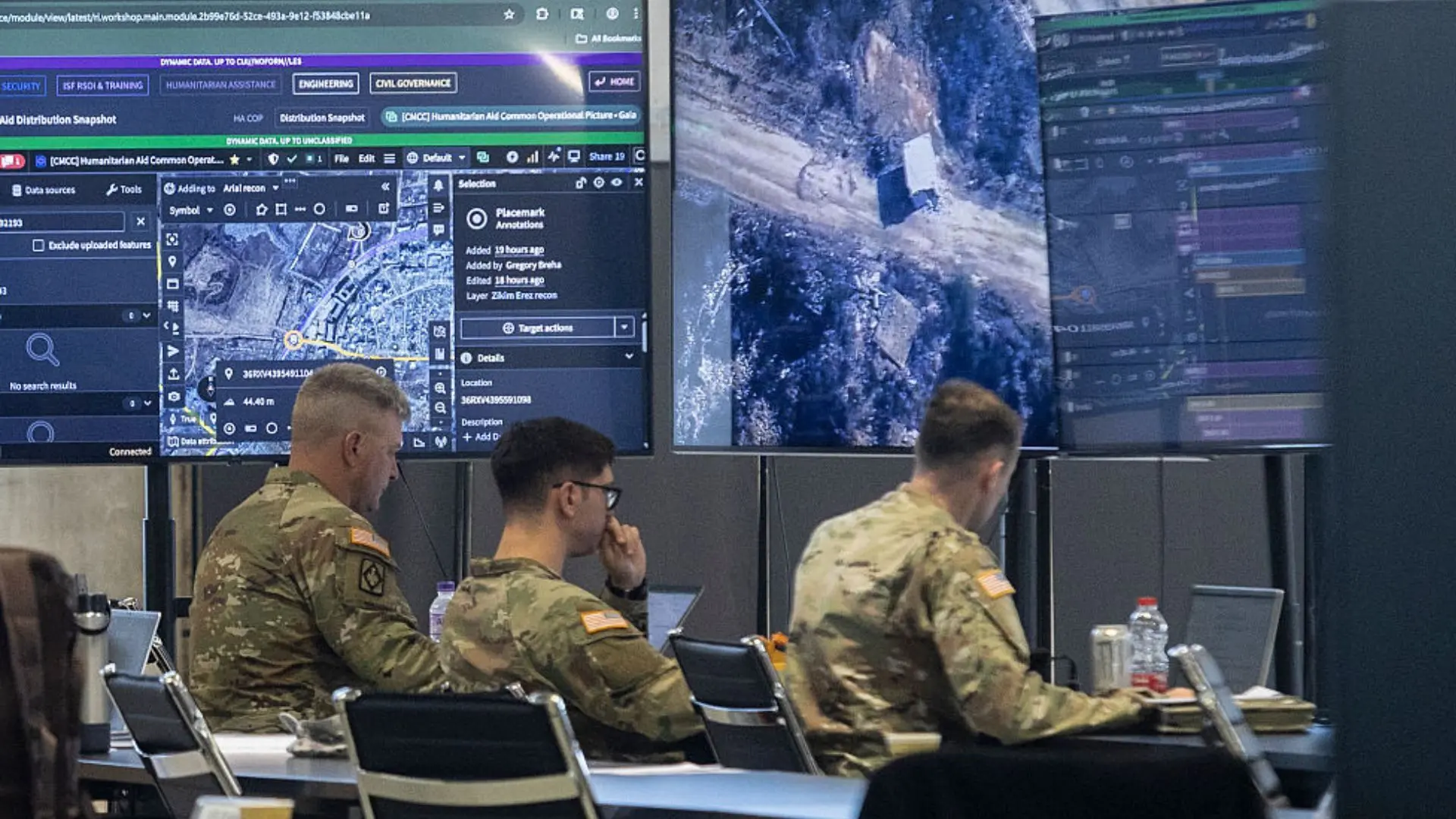
The United States military is increasingly relying on artificial intelligence systems to accelerate operations against Iran, using the technology to process vast amounts of battlefield data and support faster decision-making during ongoing military actions, according to a Bloomberg report.
Officials from U.S. Central Command (CENTCOM) said AI tools are being deployed to help analysts and commanders manage the enormous flow of intelligence collected from surveillance aircraft, satellites, drones, and other sensors involved in the campaign.
Modern military operations generate huge volumes of information in real time including imagery, communications intercepts, and location data. AI systems can rapidly sift through these datasets, identify patterns, and flag potential targets or threats much faster than traditional manual analysis.
According to officials, artificial intelligence is helping military planners prioritize targets and coordinate operations more quickly, allowing commanders to react faster to changing battlefield conditions.
The technology is particularly useful for processing large streams of intelligence data, where human analysts alone would struggle to keep up with the scale and speed required during active operations.
Such systems can help military units identify potential launch sites, track troop movements, and analyse satellite imagery, enabling quicker operational decisions across different branches of the armed forces.
The growing reliance on AI highlights how digital technologies are becoming central to modern warfare, where speed and information dominance can determine operational success.
The U.S. Department of Defense has been investing heavily in AI for several years as part of efforts to modernize military capabilities.
Programs like Project Maven, launched in 2017, were designed to integrate machine-learning systems into intelligence workflows, using computer vision and data fusion to analyse images, surveillance footage, and geospatial intelligence.
Such systems can identify military assets, track movements, and assist analysts in narrowing down potential targets drastically reducing the time required to interpret raw intelligence.
The Pentagon has also been exploring partnerships with technology companies to improve the performance of AI tools used in military operations, as defense agencies race to incorporate emerging technologies into combat planning and intelligence analysis.
The use of artificial intelligence in the Iran campaign reflects a broader shift in how advanced militaries conduct operations.
Rather than relying solely on human analysis, modern warfare increasingly combines human decision-making with automated intelligence processing, enabling commanders to respond more rapidly to developments across the battlefield.
Defense experts say the trend is likely to accelerate as AI models become more capable of interpreting complex data sources and supporting operational planning in real time.
At the same time, the expanding role of AI in combat operations continues to raise debates about the ethical and strategic implications of machine-assisted warfare, particularly regarding accountability, oversight, and the potential for unintended escalation.
Paul Balo is the founder of TechBooky and a highly skilled wireless communications professional with a strong background in cloud computing, offering extensive experience in designing, implementing, and managing wireless communication systems.
We use cookies to ensure that we give you the best experience on our website. If you continue to use this site we will assume that you are happy with it.