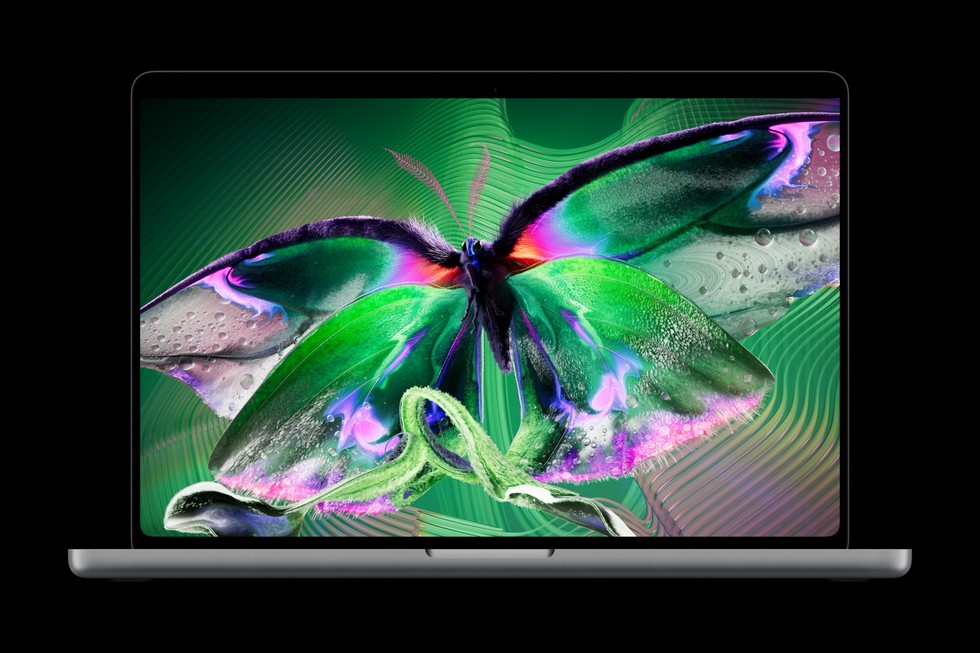
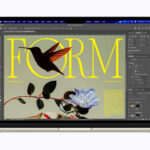
Apple has unveiled its first touchscreen MacBook Pro, bringing a tandem OLED PROLED XDR display to new 14-inch and 16-inch models. The machines run on M5 Pro or M5 Max chips, start at $2,899 in the US and can be pre-ordered from 28 October ahead of availability on 6 November. The launch marks a more substantial change to Apple’s professional laptop than a routine processor refresh: touch is now part of the Mac’s working surface.
The new line is separate from the 14-inch M6 MacBook Pro TechBooky covered on 27 October. That $1,999 model keeps a conventional Liquid Retina XDR screen and uses the base M6 chip. Apple’s touchscreen PROLED XDR machines instead pair a new display and redesigned chassis with the higher-tier M5 Pro and M5 Max. Buyers comparing the two should not assume that the newer chip number alone describes which laptop is more capable for their work.
According to Apple’s 28 October announcement, PROLED XDR uses two self-illuminating OLED layers. Apple quotes up to 2,000 nits of peak brightness for HDR and SDR content, a 10,000,000:1 contrast ratio and an adaptive refresh rate reaching 120Hz. The display supports P3 and Adobe RGB colour spaces, with more than 80% coverage of Rec. 2020. Those specifications are aimed squarely at photographers, colourists, designers and video editors who need to judge work accurately away from a studio monitor.
A nano-texture glass option is available for bright settings. Apple says its display engine adjusts pixels in real time and monitors use over time, but brightness, colour accuracy and long-term OLED behaviour will still need independent testing. A headline peak-brightness figure is not the same as sustained brightness across an entire screen in every environment.
Apple says touch is integrated directly into the display panel to reduce latency. Users can scroll, pinch to zoom, move slides and arrange windows with their fingers, while the keyboard and trackpad remain available. The hinge has been redesigned for stability when the screen is touched. For creative professionals, Apple points to drawing on the full display in Pixelmator Pro, playing onscreen instruments in Logic Pro and positioning clips directly in Final Cut Pro.
Existing Mac apps can receive touches translated into clicks, while developers gain gesture APIs for more deliberate touch interfaces. That distinction matters. Basic compatibility does not guarantee that a complex desktop app will instantly feel natural under a finger. The value of this Mac will depend partly on how quickly professional software takes advantage of the input method.
Apple has also brought the Dynamic Island to Mac. It houses Spotlight, Live Activities and Siri AI near the top of the display. It is a visible change to the interface, although the more consequential shift for many users may be the ability to move between touch and precision input without leaving the same application. TechBooky has separately covered Apple’s new Creator Studio tools, several of which are being adapted for this touchscreen workflow.
M5 Pro, M5 Max and the rest of the hardware
The new MacBook Pro offers up to 128GB of unified memory and up to 16TB of storage. Apple says Neural Accelerators in the GPU can help with local AI tasks, while M5 Max is intended for especially demanding work such as large language models, visual effects and 8K post-production. These are Apple’s descriptions of capability, not independent benchmark results. The right chip and memory choice will depend on actual project sizes and software.
Both sizes include three Thunderbolt 5 ports, HDMI, an SDXC card slot, MagSafe and a headphone jack. The M5 Pro version supports up to three external displays, while M5 Max supports up to four. Wi-Fi 7, Bluetooth 6, a 12MP Centre Stage camera, studio-quality microphones and a six-speaker system round out the hardware. Apple claims up to 24 hours of battery life and a 50% charge in 30 minutes with a suitable adapter; real-world endurance will vary with workload and settings.
Apple says the 14-inch model weighs about three pounds and the 16-inch about four pounds, both lighter than their predecessors. The display sizes are 14.2 and 16.3 inches respectively. The thinner construction is important because a touchscreen notebook has to remain stable and portable while tolerating repeated interaction with the screen.
Price and availability
US prices start at $2,899 for the 14-inch M5 Pro and $3,399 for the 16-inch M5 Pro. M5 Max versions begin at $4,499 and $4,799 respectively. Apple says pre-orders open on 28 October in 30 countries and regions, with deliveries and store availability beginning Friday, 6 November. Prices and configurations elsewhere will vary. At this premium, the purchase decision is less about whether touch is novel and more about whether the display, portability and app support genuinely improve a buyer’s daily work.
Related Reading
More contextual TechBooky stories selected from tags, categories and article context.
Paul Femi Balo is the founder and publisher of TechBooky. He covers artificial intelligence, African technology, digital infrastructure, enterprise technology and the global digital economy.
We use cookies to ensure that we give you the best experience on our website. If you continue to use this site we will assume that you are happy with it.