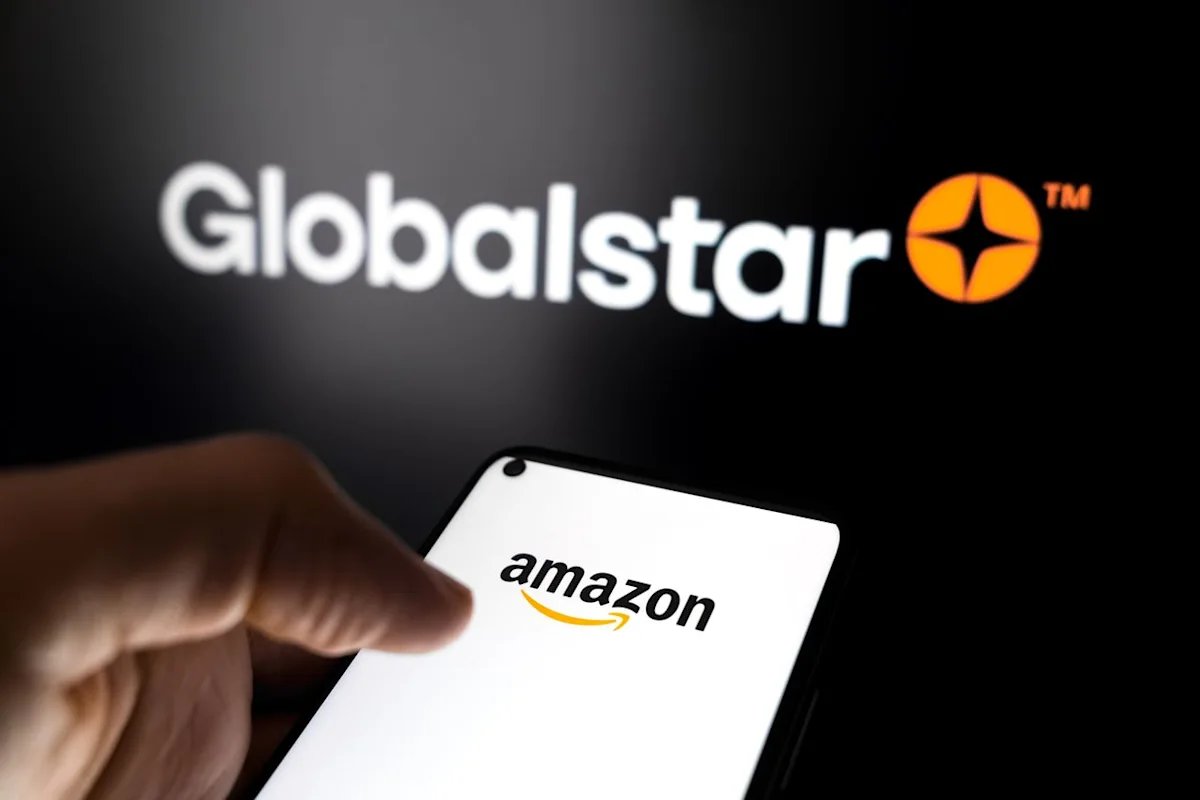
Amazon’s plan to buy Globalstar has cleared a major regulatory hurdle. The US Federal Communications Commission said on 27 October that it had approved the transfer of Globalstar’s satellite licences and roughly 25 megahertz of mobile-satellite spectrum to Amazon Leo. The decision concludes the FCC’s review of the $11.5 billion transaction, although regulatory approval should not be confused with the purchase having closed.
The acquisition itself is not new. TechBooky reported Amazon’s agreement in April. What changed this week is that the regulator accepted the transfer of assets Amazon needs for its proposed direct-to-device service. That moves the company closer to a satellite network that can reach ordinary phones beyond terrestrial coverage, but it does not mean that service is ready for customers today.
Globalstar brings more than satellites. Its licensed spectrum is a scarce piece of the infrastructure needed to connect handsets and other devices from orbit. Amazon says it intends to combine those rights with its Leo constellation and ground systems. The FCC’s approval statement says the complementary assets could support fixed and mobile services and extend coverage into unserved areas. The agency also cited possible benefits for emergency communications.
That is the competitive significance. Starlink has pushed satellite-to-phone connectivity into the mainstream conversation, while mobile operators want reliable ways to cover places where building towers is difficult or uneconomic. Amazon is trying to enter that market with spectrum and an existing satellite-services business rather than waiting to assemble every component from scratch. The FCC decision removes a substantial US licensing obstacle, not the engineering and commercial work still ahead.
Amazon’s original acquisition announcement also described an agreement to continue satellite features for supported Apple devices. That makes continuity of current services important as Amazon integrates Globalstar. It also raises a larger question for mobile operators: whether a stronger Amazon Leo can become a useful wholesale partner rather than only another consumer broadband brand.
The FCC found the deal likely to serve the public interest and said it saw no material public-interest harm. Reuters reported that Amazon is preparing commercial Leo satellite services, but availability and performance will depend on deployment, device support and agreements with network operators. The companies had previously indicated an expected 2027 closing, so investors and customers should watch for completion rather than assume the ownership change is already final.
For users in remote communities, the eventual test is practical. Satellite-to-phone promises are meaningful only if compatible devices connect reliably, calls and messages work when needed, and pricing is within reach. The regulator has opened the door for Amazon to pursue that test at a much larger scale. It has not yet answered how well Amazon’s service will perform once millions of people try to use it.
Related Reading
More contextual TechBooky stories selected from tags, categories and article context.
Paul Femi Balo is the founder and publisher of TechBooky. He covers artificial intelligence, African technology, digital infrastructure, enterprise technology and the global digital economy.
We use cookies to ensure that we give you the best experience on our website. If you continue to use this site we will assume that you are happy with it.