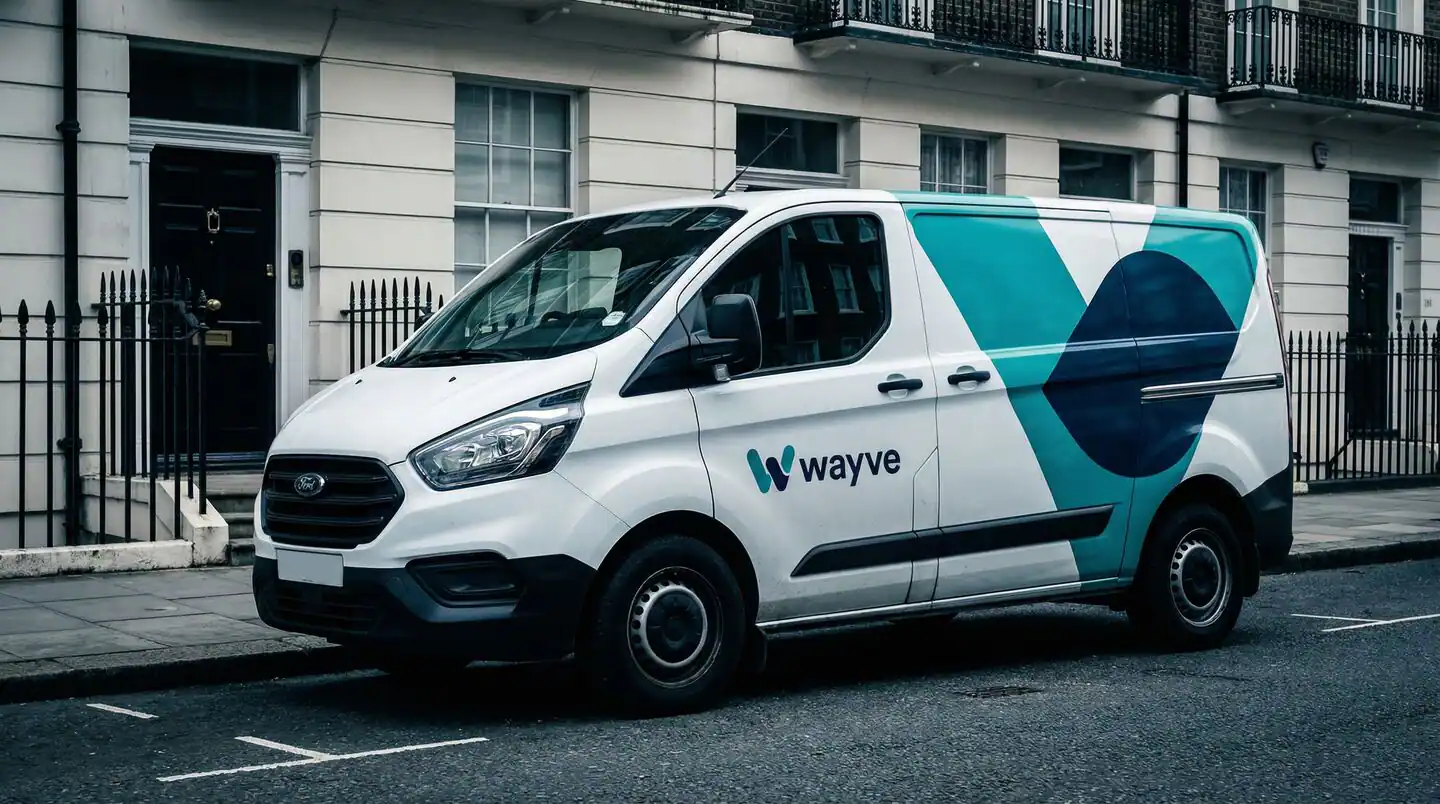
A diverse group of investors participated in Wayve’s latest $1.2 billion fundraising round, showing strong interest in the company’s self-driving technology. The group includes three automakers and top institutional and venture capital firms, as well as returning backers Microsoft, Nvidia, and Uber. If an additional $300 million from Uber materialises contingent on the deployment of robotaxis beginning in London, the total could climb to $1.5 billion.
Now valued at $8.6 billion, the UK-based company appears to have broad appeal in Series D funding, increasing its overall valuation to the tune of $8.6 billion, which is a significant development for the autonomous vehicle (AV) industry. The latest round underscores the eagerness of Big Tech, legacy automakers, and investors to gain a foothold in the fast-growing autonomous driving sector.
In an interview Tuesday, Wayve founder and CEO Alex Kendall described the company as offering a “contrarian” option in automated driving, both in terms of its technology and its business strategy.
Kendall noted that as the commercial landscape takes shape, the technology side is being defined by where companies are placing their bets. Wayve took an unconventional path from the start, he said, pioneering end-to-end deep learning for autonomous driving. Now, as the company moves toward commercialisation, it is also breaking from tradition in how it approaches its business model.
Founded in 2017, Wayve develops software capable of teaching itself. The company built a system that uses an end-to-end neural network to train vehicles to drive using only data, without relying on high-definition maps.
This data-driven learning method supports two products: an “eyes on” assisted driving system and an “eyes off” fully automated system intended for robotaxis or consumer vehicles that can handle all driving tasks in specific environments.
What sets the technology apart, according to the company, is its agnostic nature, as it does not depend on specific sensors or maps. Instead, the software interprets information from a vehicle’s sensors to guide driving decisions.
Wayve’s software is also designed to run on any chip already present in its OEM partners’ vehicles.
That said, Wayve has maintained a close development partnership with Nvidia, also an investor, since 2018. The company’s Gen 3 platform, introduced last fall, runs on Nvidia’s Drive AGX Thor in-car compute development kit. This platform is expected to enable Level 4 autonomy and eyes-off driver-assistance systems on both city streets and highways.
While Wayve’s technology shares similarities with Tesla’s approach to automated driving, their business strategies diverge significantly. Wayve has no interest in operating its own “eyes-off” or hands-free systems, unlike Waymo, which primarily runs its own robotaxi fleet despite having partners. Nor does it plan to manufacture vehicles equipped with its software, as Tesla does. Instead, Wayve is focused on selling its “embodied AI” to companies like Uber and to automakers.
Kendall believes this model offers the largest addressable market but only works because Wayve built an AI system flexible enough to adapt to different technologies and environments.
He explained that a different business strategy isn’t possible if the autonomy stack is tied to a specific sensor setup, computing architecture, or mapping requirement.
Wayve is already working with both Uber and Nissan. Nissan plans to integrate the startup’s software into its advanced driver-assistance systems starting in 2027. Uber, meanwhile, intends to begin commercial trials later this year using vehicles equipped with Wayve’s technology.
The partnership with Uber may extend well beyond an initial pilot. During his Tuesday remarks, Uber CEO Dara Khosrowshahi hinted at a broader collaboration.
He said the company is proud to deepen its cooperation with Wayve and plans to deploy across more than ten regions worldwide. Khosrowshahi added that Uber looks forward to working with Wayve across multiple OEMs and regions, with more details to come on what he described as a powerful end-to-end approach built for scale, safety, and effectiveness.
The funding round was led by Balderton, SoftBank Vision Fund 2, and Eclipse. New investors also include the Ontario Teachers’ Pension Plan, Baillie Gifford, British Business Bank, Icehouse Ventures, Schroders Capital, and other institutional investors from around the world.
Automakers Nissan, Stellantis, and Mercedes-Benz also joined the round, each intending to adopt Wayve’s technology. Last year, Nvidia, which participated in Wayve’s $1.05 billion Series C, indicated it might invest up to $500 million in the startup’s next round. While Nvidia did take part this time, Kendall declined to disclose the amount or confirm whether it approached that figure.
We use cookies to ensure that we give you the best experience on our website. If you continue to use this site we will assume that you are happy with it.