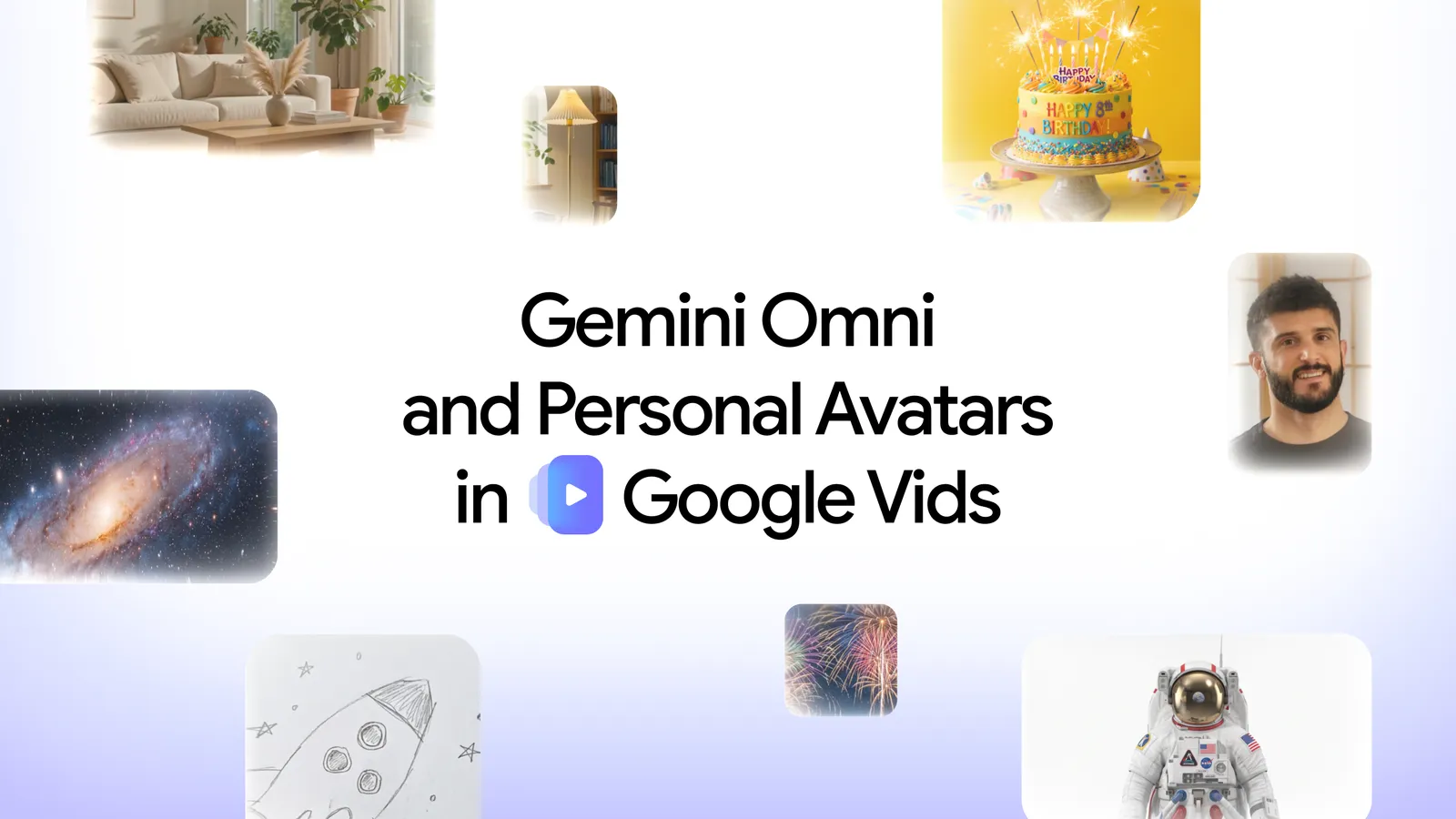
Google is pushing Vids beyond workplace video editing with two new AI features that make the product feel much closer to a business-grade avatar and generative video platform. Users can now create personal AI avatars from a selfie and voice recording, while Gemini Omni brings more flexible multimodal video generation and editing into Google Vids.
The new Google Vids update lets eligible users create a digital version of themselves that can appear in videos and read scripts. Google says the personal avatar is tied to the account holder’s likeness, restricted to that person, and protected with invisible SynthID watermarking. Access is limited to users in certain regions who are 18 or older.
For businesses, the appeal is clear. Training videos, company updates, sales explainers, onboarding clips and internal announcements often need a human presenter, but recording one can slow the whole process. AI avatars promise a faster way to produce polished video without booking studio time or asking the same manager to record the same message ten times.
Google Vids originally looked like a Workspace tool for creating business videos with AI assistance. These updates move it closer to a full creation platform. Gemini Omni can combine prompts, reference images and edits, while users can ask for changes step by step instead of starting a project again from scratch.
That matters because workplace video is becoming as common as slide decks and documents. Companies use short videos for training, support, marketing, HR, sales enablement and internal communication. If Google can make video creation feel as routine as writing a Doc or building a Slide, Vids becomes a more important part of Workspace.
The move also fits Google’s broader push into AI creation tools. Its earlier Gemini Omni Flash video work showed where Google wanted to go: text, image and video inputs blending into a single creative workflow.
Personal avatars are powerful, but they also create obvious risks. A tool that can make a person appear to say something on video must be careful about consent, identity controls, watermarking and misuse. Google’s decision to tie avatars to the account holder’s likeness and restrict access by age and region is part of that safety posture.
Still, trust will depend on execution. Businesses will need to know whether avatars can be copied, transferred, spoofed or used by administrators. Employees will want clarity on whether a company can require them to create an avatar, and how that likeness can be used after they leave.
This is the same wider tension around AI avatars. A previous TechBooky piece on YouTube’s AI-generated avatars for Shorts showed how quickly avatar tools are moving from novelty to mainstream content creation. Once the tools are built into products people already use, adoption can move very fast.
The bigger story is that AI video is becoming infrastructure for business communication. The first wave of generative AI made text faster. The second wave is making slides, images, voice and video faster. Google wants Workspace to be where those formats come together.
That could put Vids in competition with avatar-video startups such as Synthesia, HeyGen and D-ID, as well as editing tools that are adding AI presenters, voiceovers and automated production. Google’s advantage is distribution. If Vids is already inside Workspace, many companies may try it before buying a separate specialist product.
For African businesses, schools and creators, these tools could reduce the cost of professional video communication. But they also raise the bar for media literacy. Viewers will need to understand that a polished presenter video may not have been recorded in the traditional sense.
Google Vids is no longer just about making videos easier. It is about making video a normal AI-generated business document. That shift could change how companies train, sell, explain and communicate.
Related Reading
More contextual TechBooky stories selected from tags, categories and article context.
Paul Balo is the founder of TechBooky and a highly skilled wireless communications professional with a strong background in cloud computing, offering extensive experience in designing, implementing, and managing wireless communication systems.
We use cookies to ensure that we give you the best experience on our website. If you continue to use this site we will assume that you are happy with it.