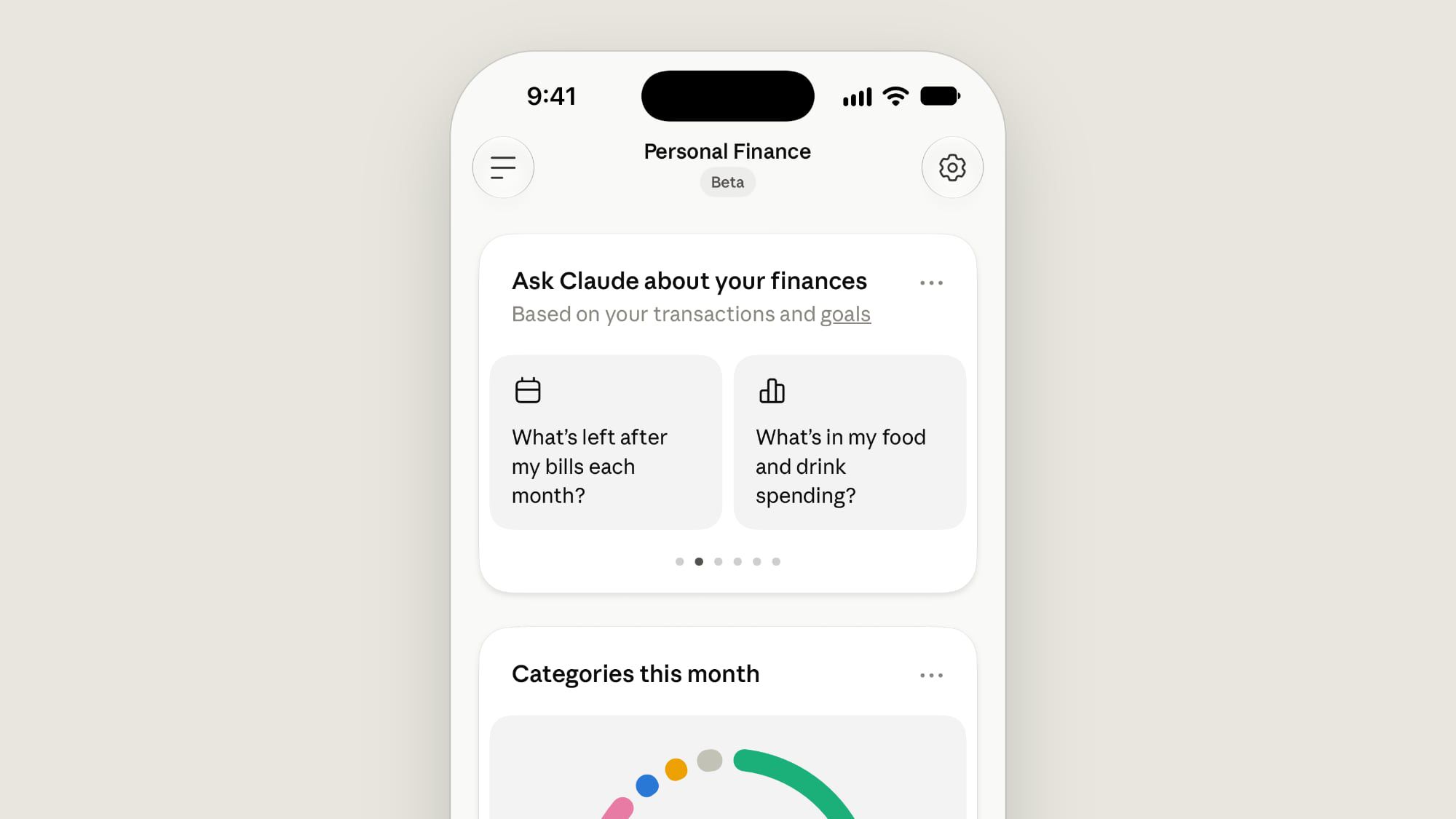
Anthropic is bringing bank-account data into Claude. Its new Personal Finance feature lets eligible users connect accounts, inspect spending and ask questions about bills or subscriptions in ordinary language. It is rolling out gradually in beta to Pro, Max and Ultra subscribers in the United States, not to every Claude user or to readers in Nigeria or the UK.
The launch, announced by Anthropic on 5 November, moves the AI assistant closer to a role traditionally occupied by budgeting apps. A user can ask where money went last month, look for an unexpected charge or build a dashboard from linked accounts. Claude can also explain financial terms and create spending charts and payment calendars. The important distinction is that the feature analyses information; it cannot move, manage or invest money.
Users connect accounts through Plaid and choose which ones to share. Anthropic says Claude does not receive a bank password. According to its help documentation, the assistant can see bank names, account types, the final digits of account numbers, balances and credit limits. It can also read up to 24 months of bank transactions, including merchants, amounts and categories. For investment, loan and card accounts, its access is narrower than a full portfolio or contract record.
That is still sensitive information. A transaction history can reveal where a person lives, which services they use and how their finances change over time. Anthropic says conversations in the Personal Finance hub are not used to train its models, but information shared with Claude elsewhere follows the user’s broader privacy settings. The data stays in chat history until deleted, subject to Anthropic’s retention practices, and service providers involved in hosting Claude also handle bank data. Plaid has its own terms and privacy policy.
Anthropic says users can unlink an account at any time, stopping Claude from reading it. They can also manage the connection through Plaid. That control matters, but so does reviewing the permissions before connecting an account in the first place. Users should be clear about which accounts are shared and whether a detailed transaction history is necessary for the question they want answered.
The product may be most useful for straightforward questions that require collating information from several accounts. Claude could identify a subscription increase or summarise spending by category faster than a user moving between banking apps. Anthropic says it does not sell its own financial products or insert sponsored recommendations into the feature.
The company also warns that Claude can make mistakes. A bank balance may be a day or two old, one account could be counted twice, or a missing connection could leave part of a household budget out. A fluent answer is therefore not the same as a reconciled statement. Users should check important figures against their bank and treat projections as working estimates rather than instructions to borrow or invest.
The wider significance is that AI companies are trying to become the interface through which consumers understand their money. TechBooky covered OpenAI’s similar personal-finance move earlier this year, while Anthropic has also been pursuing financial advisers on the professional side. Anthropic’s consumer product starts with read-only analysis, a narrower proposition than an autonomous money manager, but it asks users to trust an AI company with a detailed picture of their financial lives.
For now, the feature is a US-only paid beta. The next test will be whether its answers remain accurate and genuinely useful after the novelty of connecting accounts fades. In personal finance, the standard should be higher than a persuasive summary: users need to know where every number came from and be able to correct it.
Related Reading
More contextual TechBooky stories selected from tags, categories and article context.
Paul Femi Balo is the founder and publisher of TechBooky. He covers artificial intelligence, African technology, digital infrastructure, enterprise technology and the global digital economy.
We use cookies to ensure that we give you the best experience on our website. If you continue to use this site we will assume that you are happy with it.