Nigerian health technology company Helium Health has secured Google.org funding to bring clinical AI into maternal healthcare across four states. In its 4 November announcement, the company named Lagos, Delta, Kano and Oyo, with Lagos serving as the primary launch point. It did not state how much money Helium Health itself will receive.
Helium Health is one of 15 recipients in Google.org’s $30 million AI for Government Innovation challenge. That $30 million is the total programme, not Helium’s individual award. The company will also receive support through a Google.org accelerator involving engineers and AI product specialists.
The planned deployment centres on HeliumMum, which aims to help pregnant women identify risks earlier and reach appropriate care. Providers would use electronic medical records and AI-assisted clinical decision support, while public health officials would receive data to help track services and outcomes. The proposal connects a patient’s warning signs to the clinic that must respond, rather than presenting a chatbot as a substitute for a midwife or doctor.
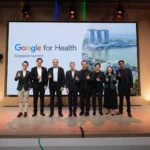
Helium Health says its maternal health initiatives have already reached more than 3.5 million women. It now aims to reach another 1.9 million over three years and contribute to a 30% reduction in maternal mortality. Those are the company’s goals, not measured results from the new AI deployment. The implementation roadmap was presented in Lagos at a briefing involving the state governor and executives from Helium Health and Google.
Nigeria’s maternal health challenge makes early warning attractive, but accuracy alone will not settle whether this system helps patients. A risk alert must reach someone with the time, training and facilities to act. Referral capacity, follow-up and the availability of care will determine whether digital screening translates into safer pregnancies.
The announcement does not give a date for full deployment in each state, the number of participating clinics or independent evidence that the AI model improves clinical outcomes. Nor does it explain how patients can challenge or correct a risk assessment. Those details will matter as the programme moves from a roadmap to everyday care.
Pregnancy records are sensitive. Clear consent, restricted access to records and a way for clinicians to see why a tool flagged a patient will be essential. AI should support professional judgement, particularly where a false reassurance or a missed warning could have severe consequences.
The project arrives as Google pursues healthcare AI partnerships elsewhere. TechBooky recently examined Google’s clinical AI work in Singapore, where the proposed co-clinician is being evaluated before use in real patient management. The same distinction applies in Nigeria. A grant and a rollout plan are promising, but the decisive story will be whether women receive timely care and whether independently assessed outcomes improve.
Related Reading
More contextual TechBooky stories selected from tags, categories and article context.
Paul Femi Balo is the founder and publisher of TechBooky. He covers artificial intelligence, African technology, digital infrastructure, enterprise technology and the global digital economy.
We use cookies to ensure that we give you the best experience on our website. If you continue to use this site we will assume that you are happy with it.