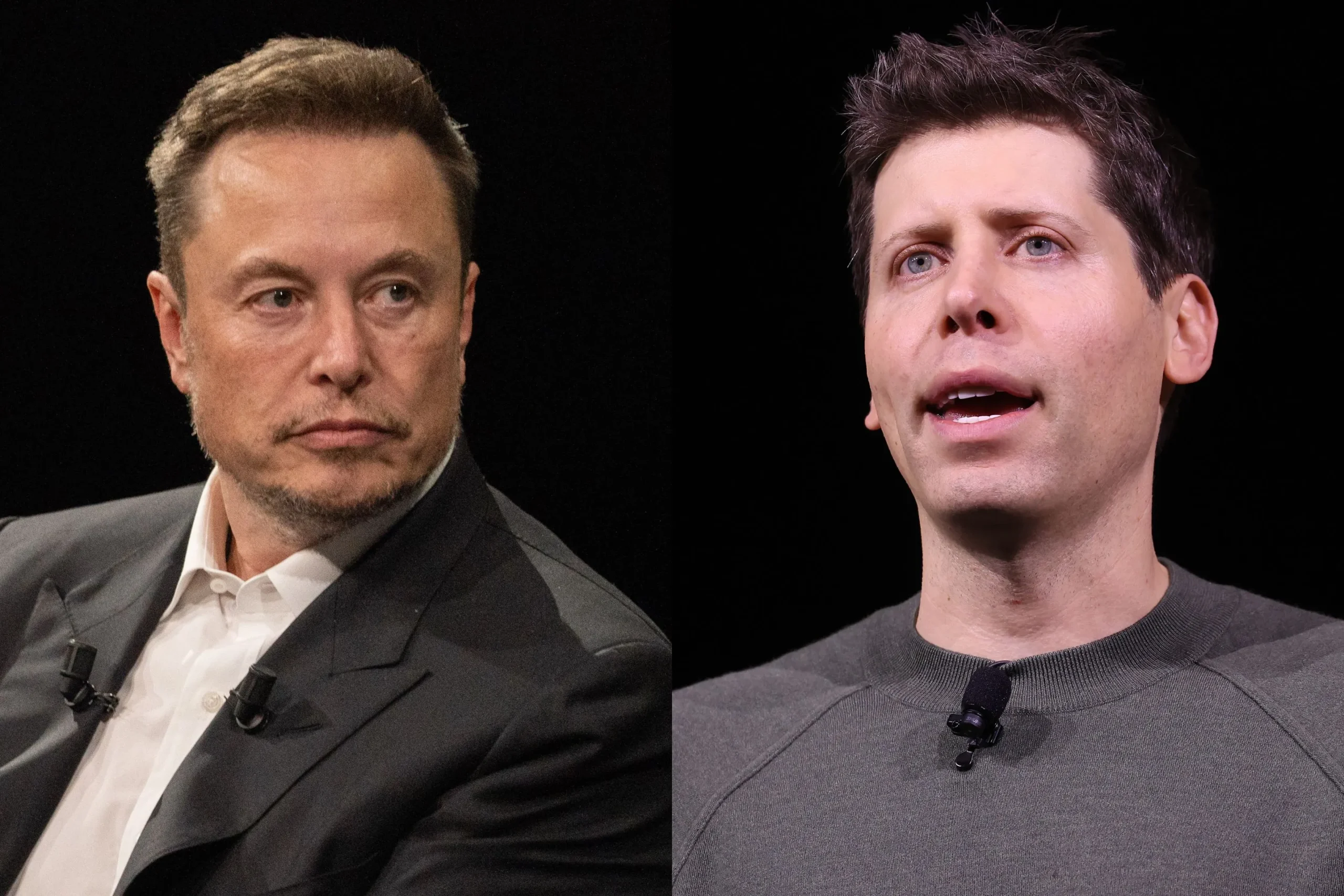
Sam Altman and Elon Musk are fighting in public again, but the latest exchange is not only about personal rivalry. It is about whether the future of AI compute can realistically move into orbit, and whether investors are being asked to believe in a space-based data-centre story before the engineering has caught up.
The latest flare-up followed Musk’s renewed criticism of Altman and OpenAI. Musk mocked Altman online after Apple’s lawsuit against OpenAI, while Altman fired back by accusing Musk of selling investors on short-term space data centres. Data Center Dynamics also tracked the exchange, which quickly turned the old OpenAI co-founder feud into an infrastructure debate.
homeboy you're the one sellling public market investors on short-term space datacenters https://t.co/wTYSA4q3Qx
This is not a random argument. AI companies are running into a brutal compute problem. Training and serving frontier models now requires enormous data centres, power supply, specialised chips, cooling systems and long-term energy deals. TechBooky has already covered how data-centre energy demand is expected to rise sharply and why Africa must fix power if it wants to compete in the AI data-centre race. Musk’s space idea is one possible answer to that pressure, but it is also the most extreme one.
Why Space Data Centres Sound Tempting
The basic pitch is easy to understand. In orbit, solar power is abundant, land constraints disappear and a company like SpaceX already has rockets, satellite experience and Starlink infrastructure. If AI compute becomes one of the world’s most valuable resources, owning the transport layer and the orbital network could give Musk an infrastructure advantage that no normal cloud provider can match.
That is the optimistic version. It is also why Wall Street has become fascinated by SpaceX’s AI infrastructure story. If SpaceX can turn rockets, satellites and xAI compute into one integrated platform, the company would no longer be valued only as a launch and internet business. It would be valued as a future AI infrastructure provider.
But Altman’s criticism is straightforward: the near-term economics do not yet make sense. Launch costs, heat management, hardware failure, latency, maintenance and radiation risks are not small details. A broken GPU on Earth can be replaced by technicians. A broken compute cluster in orbit is a very different engineering problem.
The Real Fight Is About Credibility
Musk has built a career on making impossible-sounding projects look inevitable. SpaceX itself is proof that dismissing him too quickly can be a mistake. But AI infrastructure is also becoming a market where hype can move huge amounts of capital. Altman’s jab was aimed at that gap between long-term possibility and short-term investor promise.
The irony is that both men agree on the underlying point: compute is the new oil of the AI economy. OpenAI is looking for more chips, more data-centre capacity and more energy. Musk is trying to connect xAI, SpaceX and possibly orbital infrastructure into a single strategic story. The disagreement is over timing, feasibility and whether space-based compute is a real this-decade solution or a compelling future narrative.
There is also a competitive layer. Musk co-founded OpenAI, left after disagreements over its direction, and later built xAI as a direct challenger. Altman now runs the company that became the public face of generative AI. Their fight over space data centres is partly personal, partly technical and partly financial.
For the AI industry, the lesson is bigger than the insult trading. The data-centre race has become so expensive and so politically sensitive that even outer space is now being discussed as a possible escape route. That alone shows how intense the compute bottleneck has become.
Space data centres may eventually matter. But for now, the fight between Altman and Musk is a reminder that the AI boom is no longer just about smarter models. It is about who can secure the power, chips and infrastructure needed to run them.
Related Reading
More contextual TechBooky stories selected from tags, categories and article context.
Paul Balo is the founder of TechBooky and a highly skilled wireless communications professional with a strong background in cloud computing, offering extensive experience in designing, implementing, and managing wireless communication systems.
We use cookies to ensure that we give you the best experience on our website. If you continue to use this site we will assume that you are happy with it.