Virtual Private Networks, or VPNs, have transformed from niche security tools into mainstream privacy essentials. In 2025, VPNs are used by everyone from everyday internet users to journalists and businesses. But what exactly is a VPN, how does it work, and is it still worth using one today? This comprehensive guide will explain VPNs in simple terms (with some tech insights for the curious), explore why people use them, real-world examples of VPN usage, modern online privacy risks, and how top VPN services stack up. By the end, you’ll have a clear answer to the question: Do I really need a VPN in 2025?
1. What Is a VPN and How Does It Work?
A VPN (Virtual Private Network) is a service that creates an encrypted tunnel between your device and a remote server. Instead of your internet traffic going directly from your computer or phone to the websites you visit, the VPN software redirects it through one of its own servers (often located in another city or country) and encrypts the data in transit. This means that anyone intercepting your traffic – whether it’s a hacker on public Wi-Fi or even your Internet Service Provider (ISP) – would only see scrambled gibberish, not your actual browsing activity.
When you connect through a VPN, your IP address (the unique number that identifies your device’s location on the internet) is replaced with the IP address of the VPN server. To outside observers, it appears you’re browsing from the VPN server’s location, not your true location. For example, if you’re in London and connect to a VPN server in New York, websites will think you’re in the U.S. This dual function of encryption and IP masking is the core of how VPNs work.
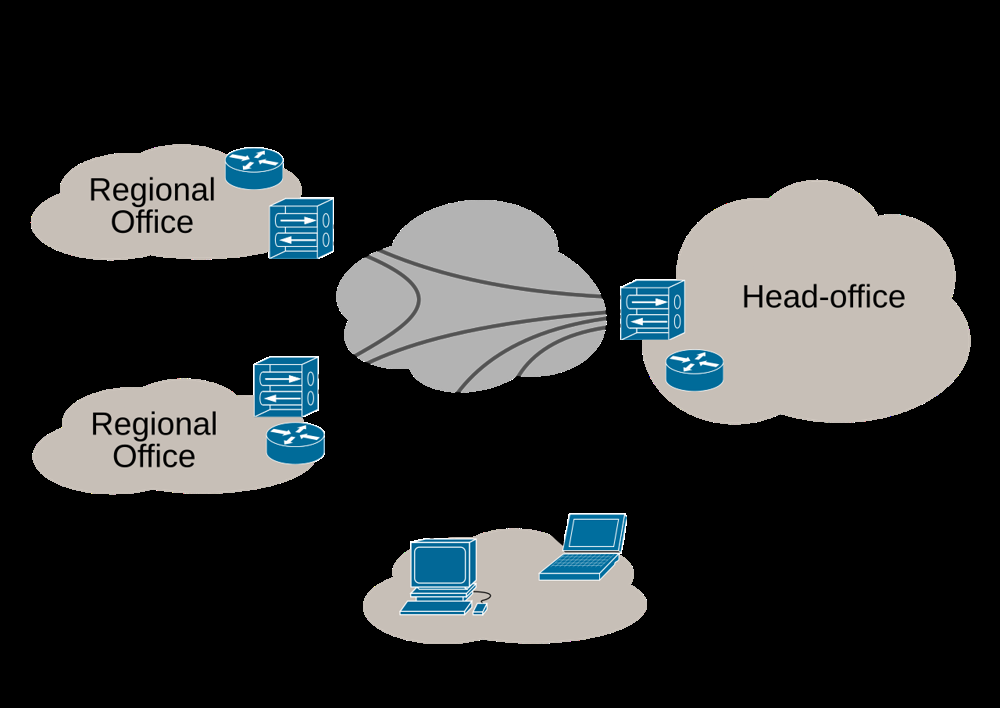
Diagram: A VPN connects your device through an encrypted “tunnel” (gray cloud) to a secure server, often in another location. This hides your IP address and protects data exchanges. In this example, regional offices and remote users connect securely to a head-office network via VPN.
Under the hood, VPNs use protocols like OpenVPN, WireGuard, or IPsec to handle the secure tunnelling. These protocols employ strong encryption (typically AES-256 or ChaCha20) to ensure data confidentiality. In non-technical terms, a VPN is like a secure, private route through the internet that keeps your communications locked away from prying eyes. Modern commercial VPN apps have made this technology very user-friendly – usually one click to “turn on” the VPN and instantly your connection is secured. You don’t need to be a tech expert to use it, even though under the hood the VPN is doing some heavy cryptography and network rerouting.
Key points: A VPN hides your online activity from third parties by encrypting your internet connection and masking your location. This boosts your online security, privacy, and even anonymity. Next, we’ll see why that matters in 2025.
2. Protecting Your Privacy in 2025: Why VPNs Matter
Online privacy is a growing concern in 2025. Without a VPN, your ISP can monitor and log every website you visit, every unencrypted piece of data leaving your device, and even metadata like when and where you connected. In many countries, ISPs are legally allowed (or even required) to retain these logs. In the U.S., for instance, ISPs can sell anonymized user data to advertisers, and globally, government surveillance programs still routinely collect internet traffic data. Simply put, browsing without a privacy tool leaves a trail.
Incognito mode is not enough. Private browsing in Chrome or “Incognito” only prevents storing history on your local device – it doesn’t stop your ISP or network from seeing where you go. In fact, even in incognito mode your ISP can see your activity online. This means advertisers and data brokers could potentially profile you, and governments or malicious actors could spy on your traffic if it’s unencrypted. Modern websites do use HTTPS encryption (the little padlock in your browser) which protects the content of what you do on that site. However, HTTPS doesn’t hide which sites you connect to – your ISP can still see you visited www.examplenews.com even if it can’t see which article you read. A VPN closes this gap by shielding your DNS requests and destination addresses inside its encrypted tunnel.
Using a VPN significantly boosts your privacy by preventing third parties from snooping on your browsing habits. For example, if you look up health information or research a sensitive topic, neither your ISP nor anyone else on the network can tell what you’re accessing. All they see is that you’re connected to a VPN server (and many VPNs use common ports/protocols that blend in with regular HTTPS traffic). Advertisers also get blinded – those trackers that show you targeted ads lose sight of your IP and location, disrupting their profiles on you. In a world of pervasive online tracking, a VPN restores a measure of anonymity to your web surfing.
Modern privacy threats without a VPN: If you don’t use a VPN or similar privacy tool, you’re trusting all your data to your ISP and network. Governments have broad powers in some jurisdictions to access ISP records or tap internet backbones. There have been high-profile revelations of mass surveillance programs and data leaks. For instance, metadata (like who you communicate with or which sites you visit) can be very revealing – and it’s often not fully protected by just using encrypted websites. Journalists and privacy experts thus recommend using a VPN to keep your online life private. As PC Magazine succinctly puts it, “Using a VPN… is one of the best ways to protect your online privacy.”
Please continue to next page
Related Reading
More contextual TechBooky stories selected from tags, categories and article context.
Paul Balo is the founder of TechBooky and a highly skilled wireless communications professional with a strong background in cloud computing, offering extensive experience in designing, implementing, and managing wireless communication systems.
We use cookies to ensure that we give you the best experience on our website. If you continue to use this site we will assume that you are happy with it.