• AI Search
  • Cryptocurrency
  • Earnings
  • Enterprise
  • About TechBooky
  • Submit Article
  • Advertise With TechBooky
  • Contact Us
TechBooky
  • African
  • AI
  • Metaverse
  • Gadgets
Generic selectors
Exact matches only
Search in title
Search in content
Post Type Selectors
Search in posts
Search in pages
  • African
  • AI
  • Metaverse
  • Gadgets
Generic selectors
Exact matches only
Search in title
Search in content
Post Type Selectors
Search in posts
Search in pages
TechBooky
Generic selectors
Exact matches only
Search in title
Search in content
Post Type Selectors
Search in posts
Search in pages
Home Earnings

ASML Raises Its 2026 Outlook Again As AI Chip Demand Keeps Surging

Paul Balo by Paul Balo
July 15, 2026
in Earnings
Share on FacebookShare on Twitter
Share this story

Send it to someone who should read it.

f Facebook X X in LinkedIn wa WhatsApp tg Telegram @ Email
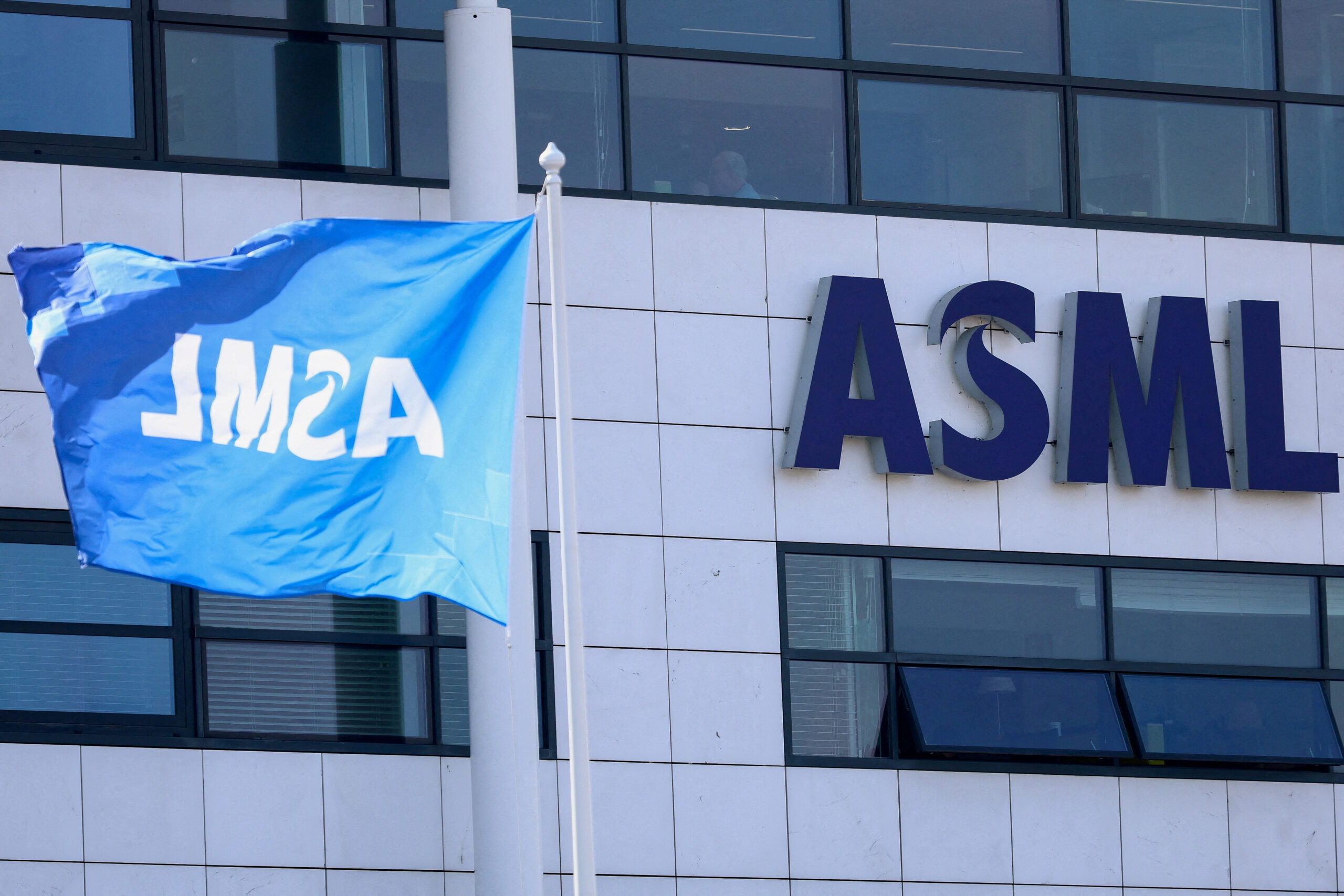
FILE PHOTO: A flag and a logo at ASML offices on the day workers participate in a walk-out over the company’s plans to cut its workforce, in Veldhoven, Netherlands, March 24, 2026. REUTERS/Nicolas Economou/File Photo
In Brief
  • ASML has raised its 2026 outlook again, reinforcing one of the clearest truths of the current AI boom: the companies that make advanced chips possible are...
  • The Dutch chip-equipment giant now expects 2026 sales between EUR43 billion and EUR45 billion, up from its earlier range of EUR36 billion to EUR40 billion, according...
  • The Wall Street Journal reported that ASML’s stronger guidance was driven by unrelenting AI demand, while Investing.com noted Q2 net sales of about EUR9.3 billion and...

ASML has raised its 2026 outlook again, reinforcing one of the clearest truths of the current AI boom: the companies that make advanced chips possible are now as strategically important as the companies building AI models.

The Dutch chip-equipment giant now expects 2026 sales between EUR43 billion and EUR45 billion, up from its earlier range of EUR36 billion to EUR40 billion, according to market reports following its Q2 results. The Wall Street Journal reported that ASML’s stronger guidance was driven by unrelenting AI demand, while Investing.com noted Q2 net sales of about EUR9.3 billion and net income of about EUR2.9 billion.

ASML matters because it is the only company that makes the most advanced extreme ultraviolet lithography systems at the heart of leading-edge chip production. TSMC, Samsung, Intel, SK Hynix and Micron all depend on advanced lithography to produce the chips and memory needed for AI servers, smartphones, PCs and cloud infrastructure.

TechBooky has covered the pressure AI is putting on the wider technology stack, from AI spending becoming an inflation story to IBM’s warning that customers are redirecting spending toward servers, storage and memory. ASML’s results show the same story from the supplier side: demand is moving upstream into the machines that make the chips.

When cloud providers, AI labs and chipmakers want more compute, they do not simply order more servers. The entire supply chain has to respond. More advanced chips require more wafer capacity, more advanced process technology, more memory and more lithography tools. ASML sits near the centre of that chain.

That is why ASML’s guidance matters beyond its own shareholders. If ASML is lifting forecasts and planning capacity expansion, it means chipmakers are still committing serious capital to AI-related demand. It also suggests that the industry expects AI infrastructure spending to remain strong beyond one or two quarters.

The memory angle is especially important. AI systems need huge amounts of high-bandwidth memory and advanced DRAM. That demand is now affecting everything from data centres to smartphones, as TechBooky noted in its recent smartphone shipment story.

ASML’s strength also exposes a constraint. EUV systems are complex, expensive and slow to manufacture. Even if demand rises quickly, supply cannot instantly follow. Reports suggest ASML is looking to expand EUV output over the next two years, but the market may still face tightness if AI capital spending continues at its current pace.

That creates a powerful pricing environment for ASML, but also a strategic bottleneck for the industry. If chipmakers cannot get enough advanced tools quickly, the AI infrastructure race becomes partly a race for production slots, not just design talent or cloud contracts.

ASML’s upgraded outlook is good news for the semiconductor supply chain, but it also confirms that AI is becoming more capital intensive. Every new generation of models requires more compute, and that compute requires a deeper industrial base.

This is why AI competition is now being fought across multiple layers: chips, lithography, memory, power, data centres, export controls and software. OpenAI, Google, Microsoft and Meta may dominate headlines, but companies like ASML quietly determine how fast the physical infrastructure of AI can scale.

The lesson is simple: the AI boom is not only a software story. It is an industrial story, and ASML just gave the market another reminder of who controls one of the most important gates.

Related Reading

Explore more TechBooky stories from the latest and category sections below.

Keep Reading Smarter

Search TechBooky with AI

Use TechBooky's AI Search to explore the context behind this story and related coverage across the site.

Try AI Search
More On This Topic
Earnings
Follow TechBooky

Follow TechBooky for more technology stories and newsroom updates.

f Facebook X X in LinkedIn ig Instagram wa WhatsApp

Tags: ai chipsASMLEUV lithographymemory chipsSemiconductors
Paul Balo

Paul Balo

Paul Balo is the founder of TechBooky and a highly skilled wireless communications professional with a strong background in cloud computing, offering extensive experience in designing, implementing, and managing wireless communication systems.

Search TechBooky
Open TechBooky AI Search Try the AI Assistant

BROWSE BY CATEGORIES

Receive top tech news directly in your inbox

subscription from
Loading

Freshly Squeezed

  • OpenAI’s GPT-5.6 Sol File-Deletion Reports Show The Risk Of Overeager AI Agents July 15, 2026
  • China’s AI Companion Rules Show The Next Fight Is Emotional Dependency July 15, 2026
  • UK Wants Midnight Social Media Curfews For Older Teens As AI Chatbot Rules Loom July 15, 2026
  • ASML Raises Its 2026 Outlook Again As AI Chip Demand Keeps Surging July 15, 2026
  • Moniepoint Picks Rose Muturi To Lead Its Kenya Expansion After Sumac Deal July 15, 2026
  • Ethio Telecom And Huawei Deepen AI, Cloud And telebirr Partnership July 15, 2026
  • Stripe And Advent’s Reported US$53bn PayPal Bid Could Reshape Digital Payments July 15, 2026
  • OpenAI’s First Device May Be A Moving ChatGPT Speaker, Not A Phone July 15, 2026
  • New York Puts AI Data Centres On Pause As Power Grid Anxiety Grows July 14, 2026
  • Spotify’s New AI Assistant Turns Music Discovery Into A Conversation July 14, 2026
  • Supercell Is Offering African Game Studios Equity-Free Grants Of Up To US$200,000 July 14, 2026
  • WAEMU Wants To Build Africa’s Most Connected Fintech Market July 14, 2026

Browse Archives

July 2026
M T W T F S S
 12345
6789101112
13141516171819
20212223242526
2728293031  
« Jun    

Quick Links

  • About TechBooky
  • Advertise With TechBooky
  • Contact us
  • Submit Article
  • Privacy Policy
Generic selectors
Exact matches only
Search in title
Search in content
Post Type Selectors
Search in posts
Search in pages
  • African
  • Artificial Intelligence
  • Gadgets
  • Metaverse
  • Tips
  • AI Search
  • About TechBooky
  • Advertise With TechBooky
  • Submit Article
  • Contact us

© 2025 Designed By TechBooky Elite

Discover more from TechBooky

Subscribe now to keep reading and get access to the full archive.

Continue reading

We use cookies to ensure that we give you the best experience on our website. If you continue to use this site we will assume that you are happy with it.