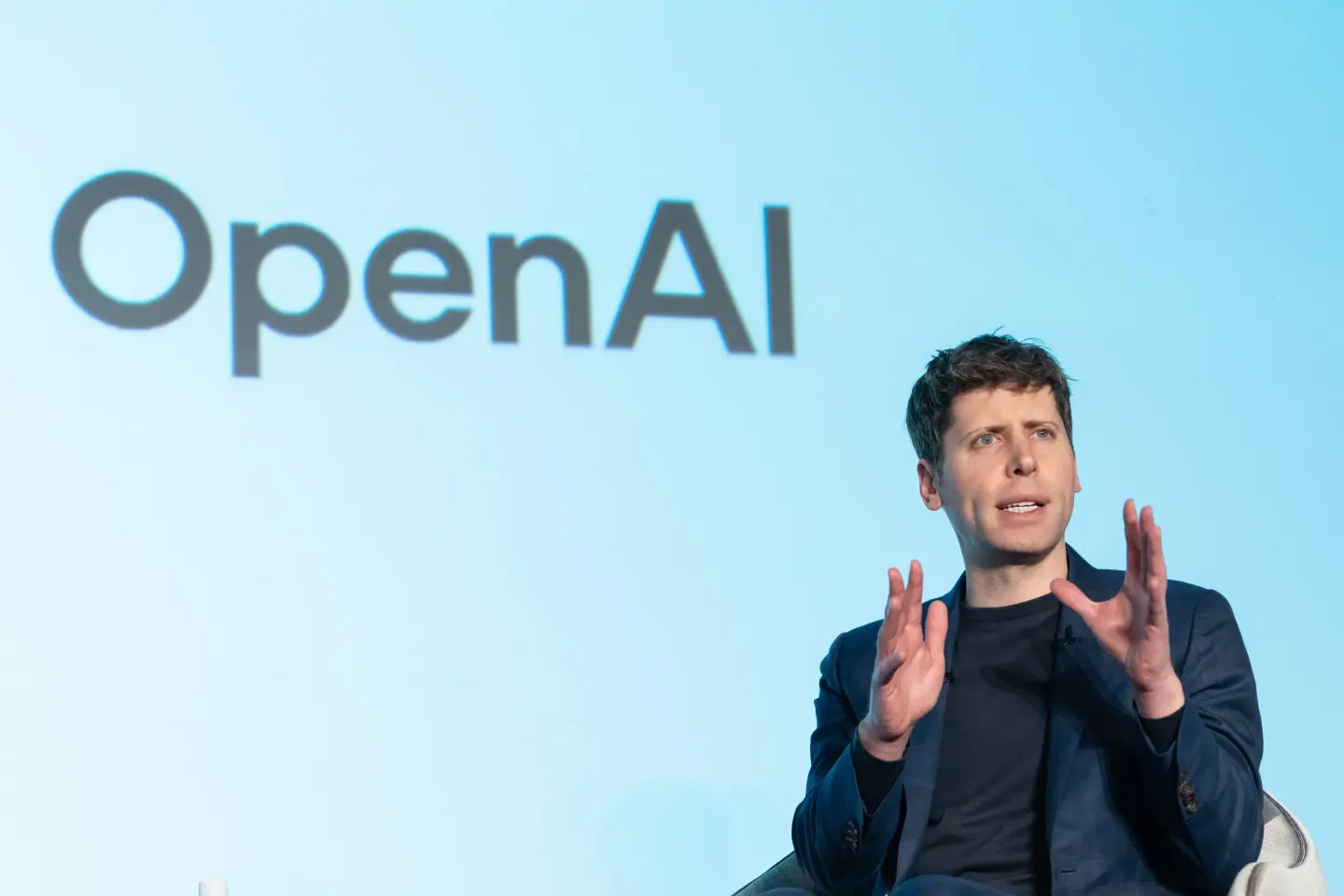
OpenAI has scaled back its ambitions for a new financing round as investors become more selective about the enormous sums needed to build frontier artificial intelligence. The company has reduced its fundraising target from $30 billion to about $20 billion, according to the Financial Times. Separately, the Wall Street Journal reports that OpenAI has secured roughly $11 billion in commitments so far, less than half the original target.
Those are two different numbers. The $20 billion is the revised amount OpenAI reportedly wants to raise, while the roughly $11 billion describes investor commitments reported at this stage. Neither figure should be presented as a final, company-confirmed closing. Both outlets put the latest proposed valuation at about $1.25 trillion, below an earlier $1.4 trillion goal.
The FT said some investors had reduced their planned allocations and that an initial close was expected to fall short of even the revised $20 billion target. The Journal described a more cautious response from large investors amid unease about the broader AI trade. Together, the reports suggest OpenAI can still attract capital on a scale most companies could never contemplate, but not necessarily on the terms or timetable it initially sought.
A reduction from $30 billion to $20 billion is a $10 billion change in the fundraising goal. Moving the valuation from $1.4 trillion to $1.25 trillion is a $150 billion change in the price investors are being asked to accept. Neither adjustment means that OpenAI has lost that amount of cash. Valuation is an estimate implied by the terms of a financing, not money sitting in the company’s bank account.
There is also a difference between commitments and immediately available cash. Investors can commit funds under terms that involve later payments or conditions. OpenAI has not publicly disclosed a final amount raised in this latest round, named the participants or confirmed when it will close. Until it does, the latest figures remain reports based on people familiar with the talks.
The issue is not whether demand for ChatGPT and OpenAI’s models has disappeared. It is how quickly a business building increasingly expensive systems can turn usage into returns that justify its infrastructure commitments. Training, running and distributing advanced AI require computing capacity, power and long-term supplier agreements. Investors are now scrutinising when those outlays translate into durable profit rather than simply faster growth.
OpenAI’s own March 2026 funding announcement offers useful context. It said a previous round closed with $122 billion in committed capital at an $852 billion post-money valuation, while also expanding a revolving credit facility. That statement concerned an earlier financing and must not be confused with the new round described by the FT and Journal. It nevertheless shows how central outside capital has become to OpenAI’s strategy.
TechBooky reported last week that OpenAI was discussing a round of up to $30 billion at a $1.25 trillion pre-money valuation, with the terms still subject to change. The latest accounts sharpen the picture by showing a smaller target and a reported shortfall in commitments. Whether more investors join in the coming weeks will determine how much of the revised goal is ultimately met.
For the wider AI industry, the signal is that even its highest-profile developers may have to make a more exact case for each new dollar. That is not proof of an AI collapse, nor is an $11 billion reported commitment a small financing. It is evidence that the market is beginning to separate enthusiasm for the technology from willingness to fund any expansion plan at any price.
Related Reading
More contextual TechBooky stories selected from tags, categories and article context.
Paul Femi Balo is the founder and publisher of TechBooky. He covers artificial intelligence, African technology, digital infrastructure, enterprise technology and the global digital economy.
We use cookies to ensure that we give you the best experience on our website. If you continue to use this site we will assume that you are happy with it.