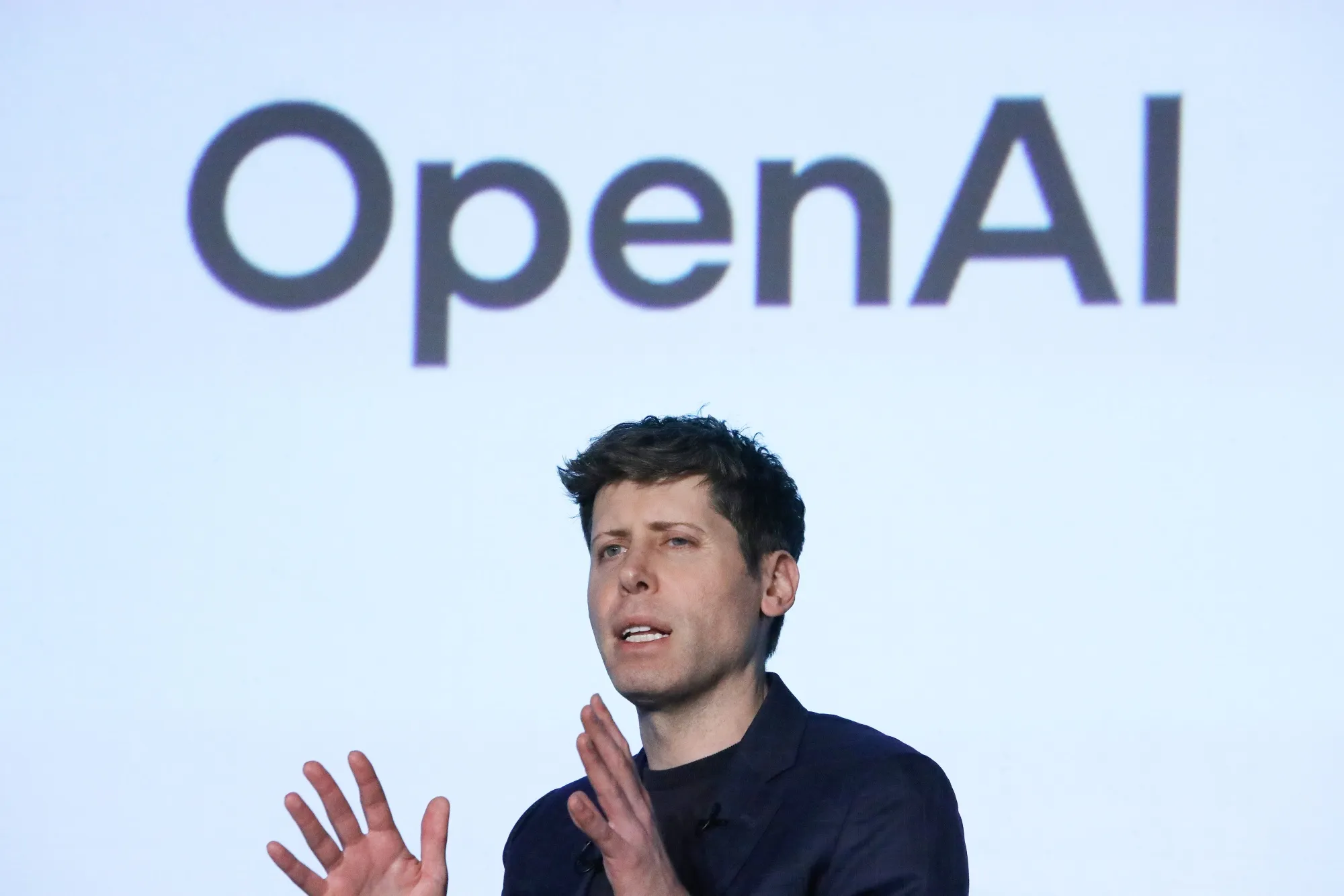
OpenAI is reportedly discussing a funding round of roughly $30 billion that could value the company at about $1.4 trillion. At the same time, its annualised revenue run rate is said to be approaching $70 billion. Taken together, the figures show how quickly the business built around ChatGPT has grown. They also show how much confidence investors are being asked to place in growth that still comes with enormous computing costs.
The possible fundraising remains a discussion, not a completed deal. Reuters, citing Bloomberg, reported the proposed size and valuation. OpenAI has not announced final terms, investors or a closing date. That distinction matters for a company whose fundraising numbers can quickly become shorthand for what the wider AI market is worth.
Separately, Axios reported that OpenAI’s annual recurring revenue run rate is nearing $70 billion and that enterprise sales have doubled since July. A run rate takes the current pace of sales and expresses it as a yearly figure. It is not the same as revenue already earned over a full year, and it does not tell us how much profit the company is making.
The appeal is understandable. ChatGPT has become a mainstream consumer product while OpenAI sells models and tools to developers and businesses. Enterprise adoption gives the company a potentially steadier source of income than individual subscriptions alone. If that demand holds, a large funding round could help pay for the chips, data centres and research needed to serve it.
But the cost side is unusually hard to ignore. Training frontier models is expensive, and serving them to millions of users requires continuing access to power and computing infrastructure. Revenue can rise sharply while cash needs rise with it. Without a comparable public breakdown of spending and margins, the reported run rate is evidence of demand, not proof that the business can fund its expansion from its own operations.
OpenAI has already attracted capital on a scale few private technology companies have seen. Its earlier $110 billion fundraising at a reported $730 billion valuation underscored both investor enthusiasm and the size of its infrastructure ambitions. A proposed $1.4 trillion value would mark another substantial leap, making execution more important than the headline number.
There is also the question of timing. Talk of a possible OpenAI public listing has already placed more attention on governance, safety and what investors could eventually learn from formal financial disclosures. For now, OpenAI is private, so outside readers cannot test reported revenue and spending against the regular accounts expected from a public company.
The sharper story is not simply that AI has found another eye-catching valuation. It is that OpenAI may be turning rapid adoption into a business large enough to justify one, while still needing fresh capital to keep building. Until a financing is agreed and fuller financial details are available, both the $30 billion raise and the $70 billion run rate should be read as reported indicators of momentum, not settled measures of long-term value.
Related Reading
More contextual TechBooky stories selected from tags, categories and article context.
Paul Balo is the founder of TechBooky and a highly skilled wireless communications professional with a strong background in cloud computing, offering extensive experience in designing, implementing, and managing wireless communication systems.
We use cookies to ensure that we give you the best experience on our website. If you continue to use this site we will assume that you are happy with it.