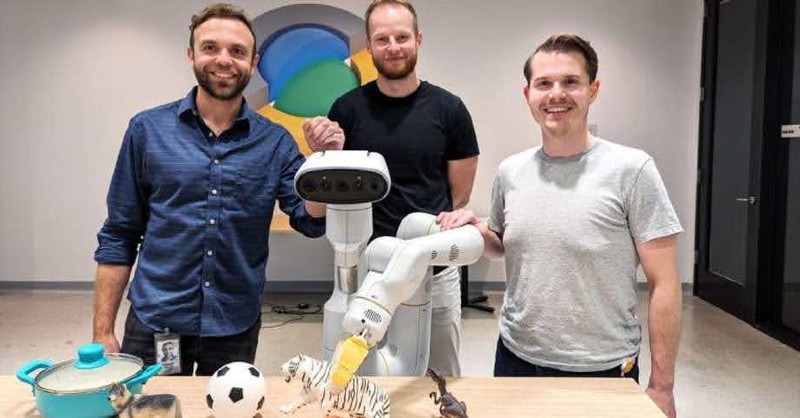
Physical Intelligence, the San Francisco AI robotics startup trying to build more general-purpose intelligence for machines, is reportedly discussing a funding round of about US$1 billion that could push its valuation above US$11 billion.
A report today says the company has attracted interest from major investors including Founders Fund and Lightspeed Venture Partners, alongside existing backers such as Thrive Capital and Lux Capital. The talks are still ongoing, so final terms could change.
The excitement around Physical Intelligence comes from a simple but difficult idea: robots should be able to learn and adapt across many real-world tasks instead of being locked into narrow, pre-programmed behaviour. In investor language, this is often described as a move toward foundation models for robotics.
TechBooky has covered the broader robotics push from companies such as Nvidia and Meta. Physical Intelligence sits inside that same shift: AI is moving from screens and servers into the physical world.
The phrase ChatGPT for robots is useful only up to a point. Language models work in a digital environment where mistakes can often be corrected quickly. Robots operate around people, objects, factories, warehouses and homes. That makes reliability, safety and physical reasoning much harder.
Still, the investor logic is easy to understand. If a company can build AI systems that let robots handle a wider range of tasks, the market could stretch across logistics, manufacturing, healthcare, agriculture and domestic automation.
The robotics race will likely be slower and more expensive than the chatbot race. Hardware, safety testing and real-world training all add friction. But if the technology works, the impact could be enormous because it would connect AI directly to labour-intensive sectors.
For Africa and other emerging markets, the long-term question is whether robotics will arrive as imported automation or become part of local manufacturing and logistics innovation. The money flowing into Physical Intelligence suggests investors believe the next AI frontier will have wheels, arms and sensors, not just text boxes.
Related Reading
More contextual TechBooky stories selected from tags, categories and article context.
Paul Balo is the founder of TechBooky and a highly skilled wireless communications professional with a strong background in cloud computing, offering extensive experience in designing, implementing, and managing wireless communication systems.
We use cookies to ensure that we give you the best experience on our website. If you continue to use this site we will assume that you are happy with it.