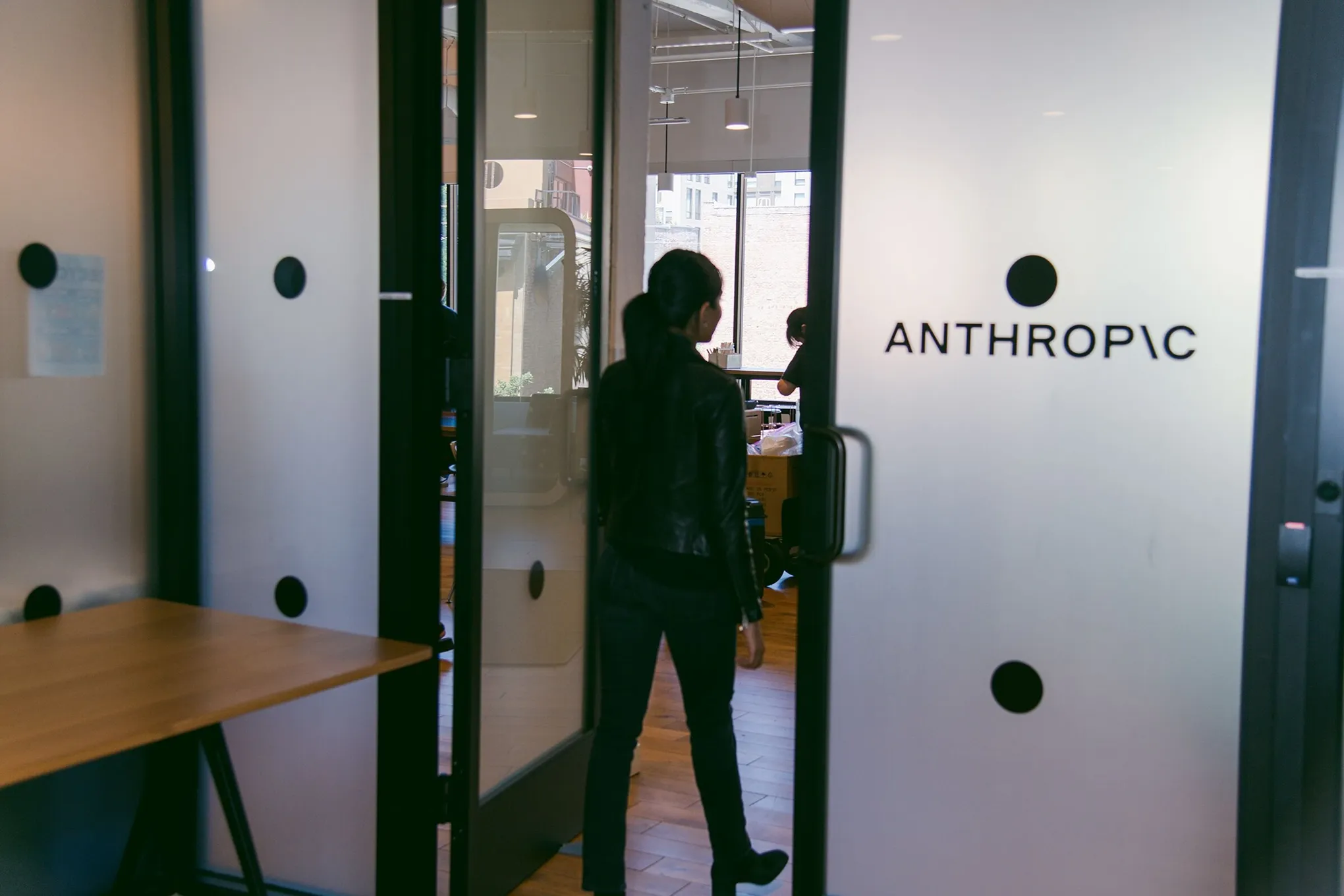
Anthropic’s road to the public markets is becoming a test of how much investors still believe in the AI boom, and how much patience they have for its costs, politics and public backlash.
The company confidentially submitted a draft S-1 registration statement to the U.S. Securities and Exchange Commission in June, giving it the option to go public after the SEC completes its review. A new Wall Street Journal report says Anthropic is now courting investors and trying to answer questions about Chinese competition, political pressure, data-centre expansion and public concern about AI.
That is a very different mood from the first wave of generative AI excitement, when revenue growth and model capability were enough to carry the story. Investors now want to know whether AI companies can turn massive spending into durable profit. They also want to know whether cheaper Chinese models, open-weight systems and rising infrastructure costs will squeeze the economics of frontier labs.
Anthropic has strong assets in that discussion. Claude is widely used by developers, businesses and researchers. Claude Code has helped the company tell a stronger enterprise productivity story, and the company has tried to distinguish itself with safety positioning. It also recently published serious research around Claude and the Riemann zeta function, which we wrote about in Claude did not solve Riemann, but moved the math.
But the company is also facing a more sceptical market. Its decision to add watermarks to Claude-generated content under EU AI Act transparency rules has already produced user backlash, especially from writers and developers worried about ownership, false positives and product quality. We covered that shift in Claude watermarks show the EU is rewriting AI rules.
The reported healthcare and biology push is therefore strategic. If AI companies can show useful progress in medicine, drug discovery, biology and scientific research, the public-interest argument becomes stronger. It is easier to defend expensive data centres and frontier models if the outcome is not only better chatbots and code assistants but new treatments, faster research and real-world scientific progress.
Still, healthcare is not an easy reputation fix. Medical AI is heavily regulated, data-sensitive and clinically risky. A model that performs well in a benchmark does not automatically become a safe tool for hospitals, drug labs or patients. Anthropic will need evidence, partnerships, guardrails and measurable outcomes if it wants investors and the public to believe that biology is more than IPO storytelling.
There is also the China question. Cheaper models such as Kimi K3 and other Chinese systems have sharpened the debate over whether U.S. frontier labs can keep charging premium prices while rivals improve capability at lower cost. We recently argued that China could still win the AI race if the U.S. does not adjust. Anthropic’s investors will be asking some version of that same question.
The IPO, if it happens soon, will not only value Anthropic. It will value a belief system: that closed frontier AI labs can keep growing fast enough to justify the compute, talent and capital they consume. That belief is still powerful, but it is no longer unchallenged.
Anthropic’s pitch now has to be broader than Claude is good. It has to show that Claude can become infrastructure for work, science and enterprise software; that the company can manage regulation without alienating users; and that it can compete with cheaper global models without burning capital faster than revenue can catch up. That is a harder story, but it is the story public-market investors will want to hear.
Related Reading
More contextual TechBooky stories selected from tags, categories and article context.
Paul Balo is the founder of TechBooky and a highly skilled wireless communications professional with a strong background in cloud computing, offering extensive experience in designing, implementing, and managing wireless communication systems.
We use cookies to ensure that we give you the best experience on our website. If you continue to use this site we will assume that you are happy with it.