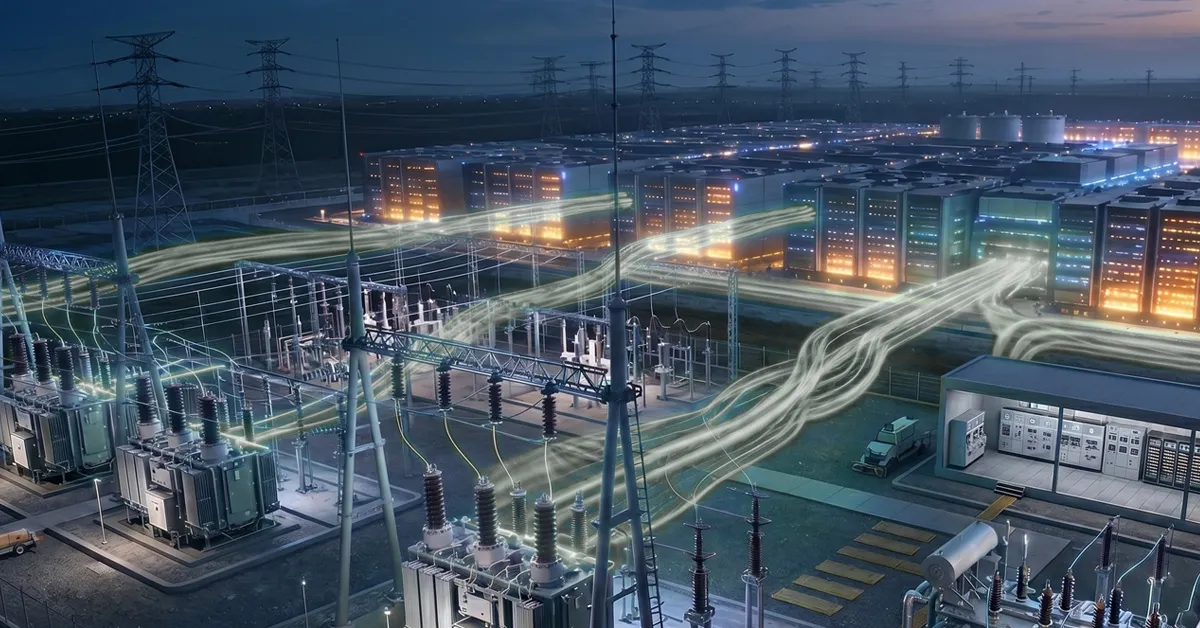
Anthropic has reportedly committed about $3.4 billion to secure gas-fired generators for its growing data-centre network, a deal that shows how access to electricity is becoming as important to AI companies as access to advanced chips. The Financial Times reported on 8 November that the Claude developer took over orders for 1.7 gigawatts of heavy-duty generators from Texas-based OnePWR Solutions. Reuters carried the report. Anthropic has not publicly set out the terms of the arrangement, so the figure and capacity remain reported rather than company-confirmed.
The arrangement was reportedly struck in late September and concerns generator commitments originally placed with Caterpillar. That timing matters. The news is emerging now, but it does not mean Anthropic signed a new agreement this weekend or that 1.7GW of power has already been installed. Delivery schedules, locations and the eventual operating model have not been detailed publicly.
A gigawatt-scale order is nevertheless a revealing measure of the AI industry’s priorities. New models need enormous clusters of processors, and those clusters need dependable electricity before they can produce a single answer for customers. Grid connections can take years. Companies seeking to launch capacity sooner are exploring dedicated generation or large power agreements alongside their chip and data-centre contracts.
TechBooky previously reported on Anthropic’s proposed Nscale computing arrangement, whose wider West Virginia development was described as relying on a natural-gas power plant. The reported generator purchase is a distinct transaction and should not be treated as confirmation that the same equipment will serve that site. Together, the stories show how securing electricity has moved into the centre of AI expansion plans.
Owning or reserving generating equipment may help a developer avoid waiting entirely on a utility, but it does not eliminate the hard work of building a data centre. A project still needs land, permits, fuel supply, transmission or onsite connections, cooling, trained staff and the processors themselves. A generator order is therefore a claim on future capacity, not proof that all the capacity is operating today.
The economic question is whether greater control over supply justifies a multibillion-dollar commitment. If demand for Claude continues growing, scarce power could be a competitive advantage. If demand or technology changes, the same equipment and fuel contracts could become a costly fixed obligation. Investors will also want to know which costs belong to Anthropic and which sit with site developers or energy partners.
Gas-fired generation can offer predictable output, but it also raises emissions and local air-quality questions. The reported deal does not provide enough information to calculate Anthropic’s eventual emissions or to say how the generators would be operated. Those questions depend on location, fuel use, efficiency and whether the machines serve as primary power or backup.
The broader public issue is familiar. OpenAI recently promised to cover costs tied to its own data-centre developments, amid concern that large AI campuses might shift grid expenses to other customers. Anthropic’s reported move points to a different but related pressure. Even a company willing to pay for power may struggle to obtain it quickly enough.
For now, the strongest conclusion is not that Anthropic has solved its electricity needs. It is that the competition to build AI increasingly reaches beyond software and semiconductors into the physical supply of power. The details of where this generator capacity will go, when it will be delivered and how it will be financed remain important unanswered questions.
Related Reading
More contextual TechBooky stories selected from tags, categories and article context.
Paul Femi Balo is the founder and publisher of TechBooky. He covers artificial intelligence, African technology, digital infrastructure, enterprise technology and the global digital economy.
We use cookies to ensure that we give you the best experience on our website. If you continue to use this site we will assume that you are happy with it.