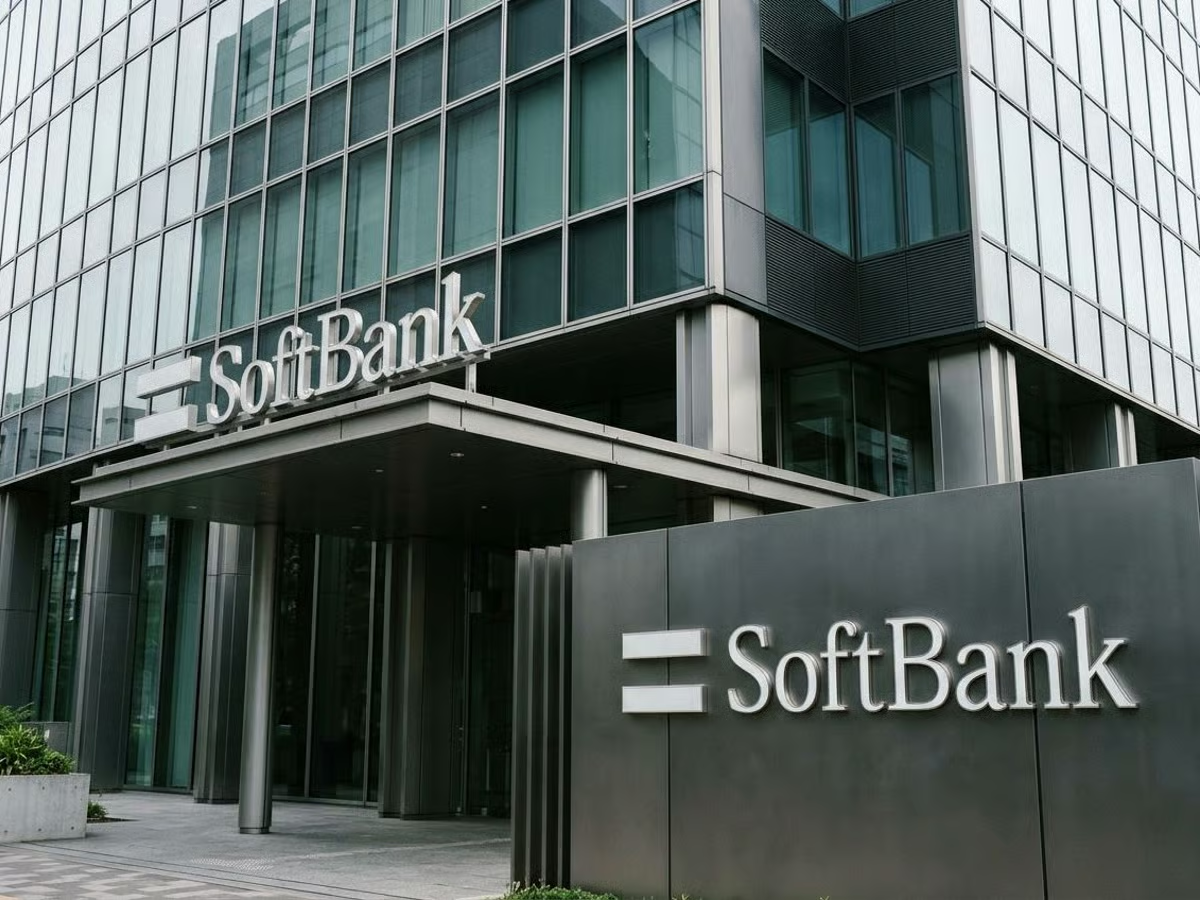
SoftBank Group reported a net loss of about 1.1 trillion yen, or roughly $7 billion, for the July-September quarter on Tuesday, 10 November, reversing a profit of about 2.5 trillion yen in the same period last year. The swing puts new attention on the cost and valuation of the Japanese investor’s enormous artificial intelligence ambitions.
The figure is a three-month result. SoftBank’s official Q2 FY2026 earnings materials also cover the six months to 30 September, so the two periods should not be treated as interchangeable. Reuters reported the quarterly loss at around 1.1 trillion yen and noted that SoftBank’s investment gains and losses can make its earnings unusually volatile.
Revenue moved in the other direction. Associated Press reported quarterly sales of about 2.2 trillion yen, up 16% from roughly 1.9 trillion yen a year earlier. That contrast is central to the story. The loss is not simply evidence that the group has stopped selling services; it reflects the scale and accounting effects of its investment-led strategy.
The comparison with last year’s profit is especially sharp because that period benefited from a large gain linked to the rising value of SoftBank’s OpenAI stake, Reuters reported. When a portfolio includes sizeable private-company holdings, reported profit can move dramatically as valuations change, even when cash has not moved in the same way. Investors therefore need to separate operating performance, financing costs and valuation changes rather than reading the net result as a single measure of AI demand.
SoftBank has concentrated substantial capital in OpenAI and in the infrastructure expected to support next-generation models. Reuters puts its cumulative OpenAI investment at about $64.6 billion for a roughly 13% stake. That figure illustrates both the potential upside if AI services earn durable returns and the exposure if valuations, financing conditions or construction timetables deteriorate. The company also has other technology investments, including Arm, so its fortunes are not reducible to one holding.
Building a major AI business requires more than a promising model. Data centres, power, chips and network capacity need funding before their eventual use is certain. TechBooky has examined how SoftBank-backed infrastructure, OpenAI’s computing needs and other investors’ commitments can become closely connected. That structure can accelerate expansion, but it also makes the financial risks harder to untangle when expectations change.
The latest result invites several practical questions. How much of SoftBank’s future return will come from realised cash flows rather than revisions to private valuations? How much capital remains committed to projects that take years to complete? And how resilient are those projects if power, equipment or financing becomes more expensive? A quarterly loss alone does not answer them, but it raises the cost of ignoring them.
SoftBank’s shares rose sharply in Tokyo before the results were released, according to AP. That timing matters: the day’s closing move should not be portrayed as a market endorsement of the loss. Investors will have the earnings materials and subsequent trading to weigh against the company’s longer-term AI case.
The headline number is striking, but the broader lesson is about the distance between AI investment and AI returns. SoftBank is betting that today’s extraordinary spending will buy a strong position in a larger future market. Its latest quarter shows how expensive, and how uneven, that path can be in the accounts long before the bet is settled.
Related Reading
More contextual TechBooky stories selected from tags, categories and article context.
Paul Femi Balo is the founder and publisher of TechBooky. He covers artificial intelligence, African technology, digital infrastructure, enterprise technology and the global digital economy.
We use cookies to ensure that we give you the best experience on our website. If you continue to use this site we will assume that you are happy with it.