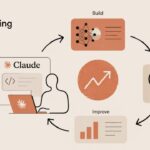
Artificial intelligence is no longer simply answering questions inside Anthropic. It is increasingly helping the company research and build the next generation of AI systems, and Anthropic now says Claude leads about 26 percent of its internal AI research and development work.
That figure does not mean Claude is independently running a quarter of the laboratory. In Anthropic’s latest measurement of AI-assisted development, “leads” describes work in which a model can complete most of a task from a high-level prompt while a person supervises the process. None of the work Anthropic assessed was fully autonomous.
Still, the number is striking. More than 90 percent of the company’s AI research work now involves Claude at some level, from suggesting code and reviewing experiments to carrying out longer sequences of technical work. Anthropic says roughly 30,000 agents may be operating at any moment on its most widely used internal platform.
The immediate productivity case is easy to understand. Researchers can test more ideas, automate repetitive engineering and move faster through experiments. The harder question is whether human oversight can keep pace when thousands of agents are acting simultaneously and when the systems being improved are the same systems helping to improve them.
Anthropic says every agent action passes through an online monitor. About 0.002 percent of actions, roughly one in 47,000, are blocked. It also says around 6 percent of its AI research compute is devoted to safety, while 12 percent of the compute used by AI-driven research goes toward safety work. Those safeguards matter, but percentages alone cannot answer whether monitoring will remain reliable as models take on longer and more consequential tasks.
This is why transparency around how AI systems are built, tested and controlled is becoming as important as benchmark performance. Faster research can produce useful breakthroughs, but it can also compress the time available for independent evaluation and public scrutiny.
Anthropic says it wants its measurements to support outside verification. That may be the most important part of the disclosure. The 26 percent figure is not evidence that an AI laboratory has automated itself. It is evidence that AI development is changing from a human workflow supported by tools into a human-agent operation whose scale will demand a different kind of governance.
Related Reading
More contextual TechBooky stories selected from tags, categories and article context.
Paul Balo is the founder of TechBooky and a highly skilled wireless communications professional with a strong background in cloud computing, offering extensive experience in designing, implementing, and managing wireless communication systems.
We use cookies to ensure that we give you the best experience on our website. If you continue to use this site we will assume that you are happy with it.