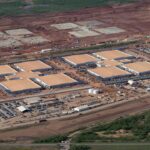
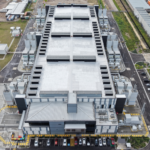
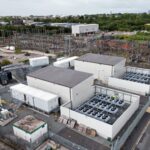
Google plans to invest $15 billion in Malaysia in 2027 and 2028, a sharp expansion of the data centre and cloud infrastructure it has already begun building in the country. The announcement puts Malaysia at the centre of a wider contest to secure the computing capacity needed for artificial intelligence, while raising a practical question for the region: can electricity, water and skilled labour keep pace with the servers?
The company said it will develop additional data centre campuses in Selangor and Negeri Sembilan, alongside its first Malaysian campus at Elmina Business Park. The planned spending also covers clean energy, water security and workforce training, according to Reuters’ report of the announcement. It is a forward-looking investment commitment, not money already spent.
Google says it plans to add more than one gigawatt of clean energy capacity to Malaysia’s grid and pay for the electricity used by its campuses and the direct costs of connecting them. That matters because large AI facilities cannot be judged solely by the headline investment figure. Their electricity demand, cooling needs and grid connections can determine whether local communities and businesses share in the benefits or absorb the pressure.
During construction, Google estimates the programme will support more than 37,000 Malaysian jobs each year and contribute an average of $1.1 billion annually to gross domestic product. Once operational, the facilities are projected to sustain more than 9,000 jobs a year. Such estimates are projections, not a guarantee of permanent direct employment.
The new commitment builds on Google’s earlier $2 billion data centre and cloud region project, announced in 2024. Google has also outlined four programmes intended to train 800,000 Malaysians over five years. The mix of infrastructure and skills reflects a larger commercial aim: making Malaysia a place where businesses can develop and deploy AI services locally rather than rely entirely on distant computing regions.
Southeast Asian governments are competing for cloud investment because it can bring construction work, advanced facilities and new digital services. Yet the useful test will be how much computing capacity is delivered, when the campuses open and whether the promised energy and water measures materialise. For Google, the investment is also a way to secure room for future AI demand before capacity becomes a bottleneck.
Malaysia’s prime minister has welcomed the commitment as a sign of international confidence in the country’s digital ambitions, according to national news agency Bernama. The expansion also follows Google’s data centre construction in Sweden, another example of the company’s drive to secure computing capacity in different markets.
Related Reading
More contextual TechBooky stories selected from tags, categories and article context.
Paul Femi Balo is the founder and publisher of TechBooky. He covers artificial intelligence, African technology, digital infrastructure, enterprise technology and the global digital economy.
We use cookies to ensure that we give you the best experience on our website. If you continue to use this site we will assume that you are happy with it.