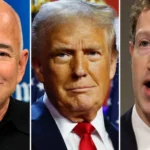
The reverberations of the U.S presidential election, held last week, are still being felt far and wide. The shocking outcome saw Donald Trump triumph as the president-elect, against the wishes and predictions of several political analysts who had anticipated Hillary Clinton’s victory. A major question following this unexpected turn of events is, “How did this happen?”
In the immediate aftermath of the election on the 9th, fingers were pointed in all directions. Hillary Clinton, who bagged the popular vote, put the blame on the FBI. The federal institution had decided to re-open an investigation into her use of a private email server eight days before the election, then closed the case two days prior to the election day.
However, in the tech world, the accusatory spotlight was focused squarely on two stalwarts: Google and Facebook. The New York Times reported that both senior and junior executives at Facebook voiced concerns about the role their platform had played in Trump’s election. Sources, who opted to remain anonymous, claimed that top executives endeavored to address staff concerns at a quarterly all-hands meeting in the wake of these allegations.
The proliferation of fake news stories circulated on Facebook and Twitter in the lead-up to the election was particularly alarming. On Twitter, the “indictment” hashtag surged in popularity after the FBI reopened the investigation into Clinton’s email server. A Fox News presenter’s baseless claim that Hillary Clinton was likely to face an indictment spread like wildfire on Twitter and Facebook. This story was retracted days later but, for numerous voters, the damage had already been done. The FBI’s reticence in response to this fiasco amplified the already rife criticism from both Democrats and Republicans.
Despite the backlash, Mark Zuckerberg, Facebook’s CEO, defended his company on the same platform he is accused of polluting with misinformation. Zuckerberg argued that fake stories represent a negligible 1 percent of the total stories circulating on Facebook. He acknowledged the existence of hoax articles but pointed out that these distortions were bipartisan, with both parties equally affected.
Ironically, in August, Facebook had launched a new algorithm designed to suppress misleading headlines. This move came in response to widespread concerns about the proliferation of fake news on its platform. Yet, the algorithm’s effectiveness came under public scrutiny following the U.S elections. With more than a billion users, Facebook functions as a massive digital newspaper. Therefore, its inability to reject obviously deceptive news headlines, such as those suggesting Clinton’s “imminent indictment,” only added fuel to the digital misinformation conflagration.
Several critics opine that this has always been Zuckerberg’s intention. The Facebook CEO has been a vocal critic of media conglomerates’ control over news dissemination. His desire for an “open information flow for people” suggested a preference for a decentralized network. This dream now seems to have come to fruition — even though it’s proving hostile for established media and considered responsible for propagating fake news.
Facebook now stands as the world’s most influential media company — a platform where countless fake stories have seen the light of day. Yet, is it fair to put the entirety of the blame on the shoulders of this social media giant?
Perhaps, it’s truer to say that we now live in an alarmingly politically polarized world. We are more inclined towards apps, websites, and channels that echo our personal perspectives. This kind of selective exposure is exemplified by Facebook, a virtual mirror of our grounded reality. Facebook enables users to read news articles that align with their beliefs while providing a potential space for spirited discourse with dissenters. However, policing content on such a massive platform will always spur controversy, as demonstrated by the conservative uproar in the U.S, who claimed their news content was being deliberately suppressed.
Even as we adjust to this new world, it is crucial for tech giants like Facebook to more effectively combat misleading or false headlines. Furthermore, we must remain vigilant ourselves, taking personal responsibility for the news we share and the sources from which we derive our information. Ironically, Facebook and Google had been praised for upholding democratic values during the Arab Spring only a few years prior. Today, these very platforms need to harness their profound influence to stop the escalating trend of fake news, instead of inadvertently becoming purveyors of misinformation.
Related Reading
More contextual TechBooky stories selected from tags, categories and article context.
Paul Balo is the founder of TechBooky and a highly skilled wireless communications professional with a strong background in cloud computing, offering extensive experience in designing, implementing, and managing wireless communication systems.
We use cookies to ensure that we give you the best experience on our website. If you continue to use this site we will assume that you are happy with it.