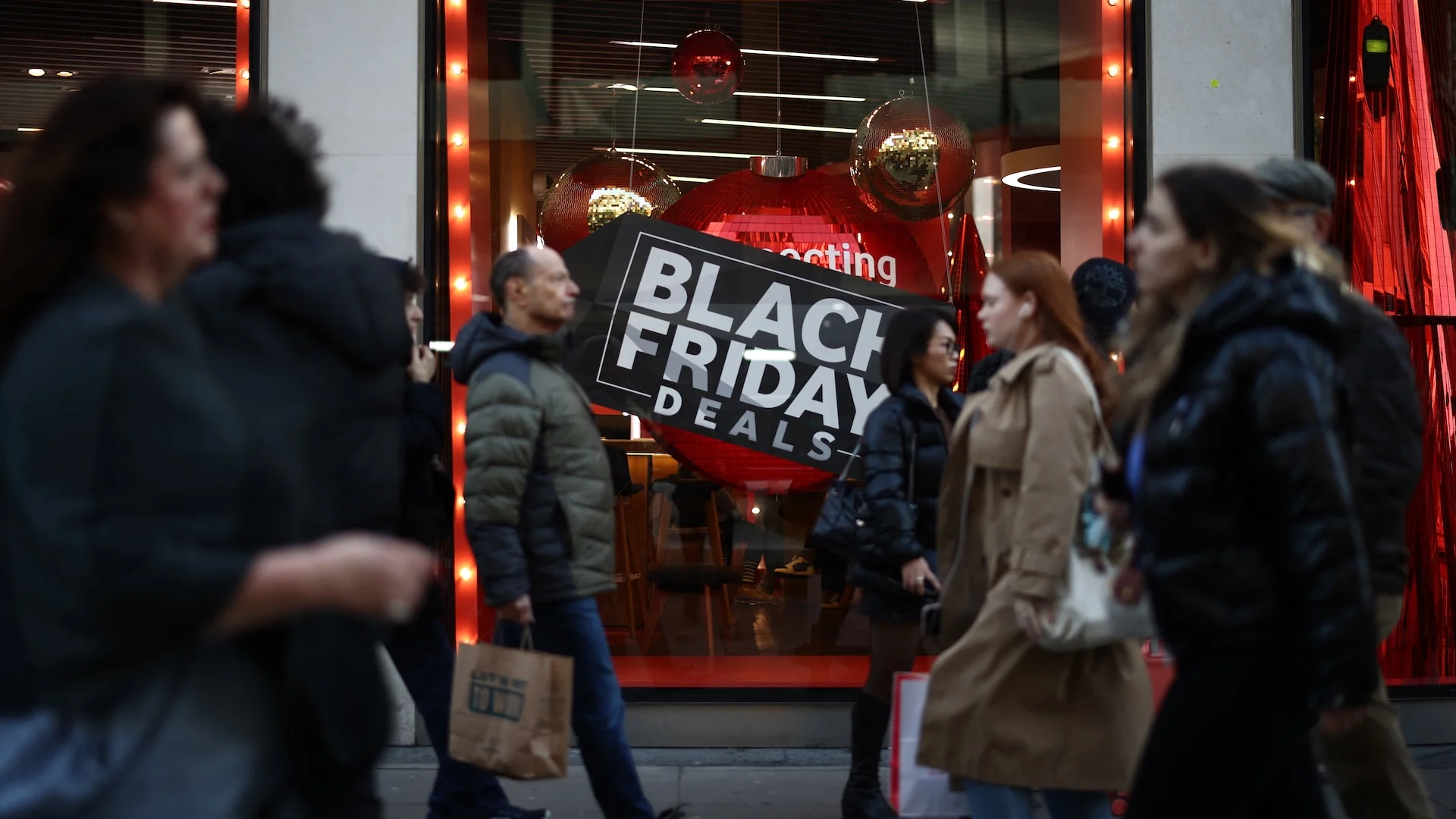
Black Friday is becoming a test of whether shoppers find deals through an AI assistant before they ever reach a retailer or search engine. Traffic to online stores from links in AI-powered tools more than doubled this November compared with the same period last year, according to Adobe data cited by the Associated Press. The change does not mean AI has overtaken conventional search or advertising, but it gives retailers a growing new route to customers at the busiest point in the shopping calendar.
The distinction between referrals and sales is important. Adobe’s measure tracks visits after a shopper clicks a link from an AI tool. It does not establish that every visit resulted in a purchase, or that an AI assistant independently completed the transaction. Still, the increase suggests that conversational product research is beginning to influence which sellers people consider.
A shopper can ask an assistant to compare prices, specifications, delivery dates and return policies across several products without opening a long list of search results. When the assistant recommends a product or merchant, the retailer may receive a visitor who has already narrowed the choice. That makes accurate product data, current inventory and clear delivery information more valuable, especially where competing deals look similar.
Adobe’s 2026 US holiday report forecasts $12.9 billion in online spending on Black Friday and $15.1 billion on Cyber Monday. Those are projections, not final totals. Its earlier analysis found that AI-referred retail visits were becoming more valuable per visit, while its UK forecast projected a 214% year-on-year rise in AI-driven retail traffic across the November-December holiday period. The US and UK figures cover different markets and measures and should not be treated as one global result.
Product discovery has traditionally been shaped by search rankings, marketplaces, social feeds and paid advertising. AI assistants add another layer that can summarise those sources and recommend a short list. Retailers therefore have a reason to make product pages machine-readable as well as useful to humans, with unambiguous prices, model names, stock status and policies. An attractive discount is less useful if an assistant cannot tell whether the item is available or which variant the offer covers.
There is also a consumer caution. AI-generated recommendations can miss exclusions, show stale prices or make a deal sound better than its terms allow. Shoppers should verify the final price and seller at checkout, particularly for high-value electronics. Retailers, meanwhile, need to track whether AI-referred visitors actually buy rather than judging success from traffic alone.
The broader Black Friday story is not that chatbots have replaced shopping sites. It is that a growing number of customers may reach those sites with a recommendation already in hand. When the final sales data arrives, the key question will be how much of that growing referral traffic converted into revenue and whether the pattern persists beyond promotional days.
Related Reading
More contextual TechBooky stories selected from tags, categories and article context.
Paul Femi Balo is the founder and publisher of TechBooky. He covers artificial intelligence, African technology, digital infrastructure, enterprise technology and the global digital economy.
We use cookies to ensure that we give you the best experience on our website. If you continue to use this site we will assume that you are happy with it.