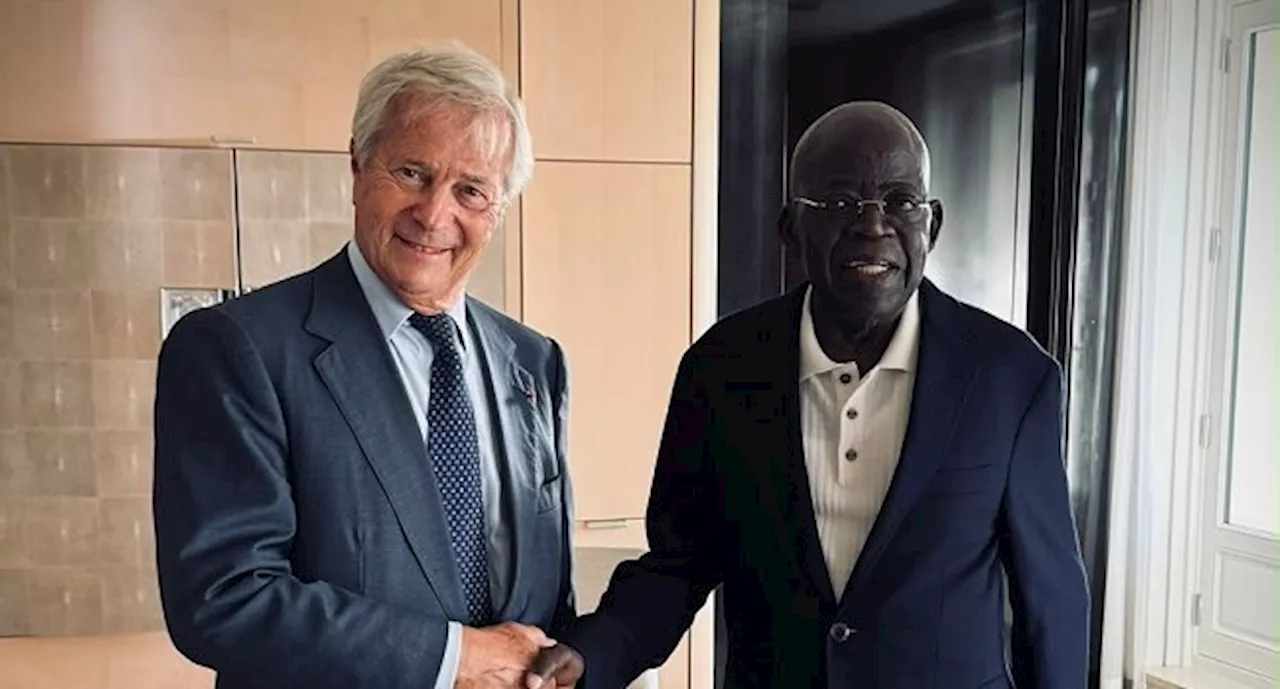
French investment group Bollore is preparing to deepen its presence in Nigeria, with fibre-optic infrastructure, media and the wider creative economy emerging as the clearest areas of interest. The plan was discussed during a meeting in Paris between President Bola Tinubu and the group’s chairman, Vincent Bollore, according to an official statement from the Nigerian presidency.
The conversation matters because Bollore is no longer simply a transport and logistics name. Its interests stretch across television, music, film and communications infrastructure, including businesses connected to Canal+, MultiChoice and Universal Music Group. That gives the company a potentially influential position at the meeting point between the networks that carry digital services and the content people pay to watch.
Nigeria is already trying to close a large connectivity gap. The government has been working to mobilise investment for a national fibre network, while operators continue to argue that reliable long-distance and last-mile infrastructure will determine whether broadband becomes genuinely affordable outside major commercial centres.
For Bollore, a deeper Nigerian strategy could connect several businesses that are usually discussed separately. Better fibre supports streaming, cloud services, digital payments and online advertising. Local film and music production gives those networks more valuable African content to carry. Distribution platforms then provide a route to paying audiences across the continent and beyond.
The timing is particularly interesting for Canal+, which has been expanding its African footprint around MultiChoice. Nigeria is one of the continent’s most important entertainment markets, but it is also a difficult one. High data costs, patchy electricity, currency pressure and piracy can quickly turn a promising consumer story into a difficult operating environment.
That is why the investment conversation should eventually move beyond broad commitments. Neither the presidency nor Bollore disclosed a project value, construction timetable or the number of jobs that could be created. The next meaningful update will be evidence of capital being deployed, local partners being named and infrastructure reaching places that currently sit outside Nigeria’s strongest digital corridors.
There is nevertheless a serious commercial logic behind the talks. Nigeria’s telecom industry has continued to attract international capital, including hundreds of millions of dollars in foreign investment. A group able to combine connectivity, premium entertainment and local production could benefit from that growth while helping Nigerian creators reach larger audiences.
The real test will be whether this becomes more than another high-level meeting. If Bollore commits to open-access fibre, local production capacity and long-term skills development, the investment could strengthen both Nigeria’s digital backbone and the industries built on top of it.
Related Reading
More contextual TechBooky stories selected from tags, categories and article context.
Paul Balo is the founder of TechBooky and a highly skilled wireless communications professional with a strong background in cloud computing, offering extensive experience in designing, implementing, and managing wireless communication systems.
We use cookies to ensure that we give you the best experience on our website. If you continue to use this site we will assume that you are happy with it.