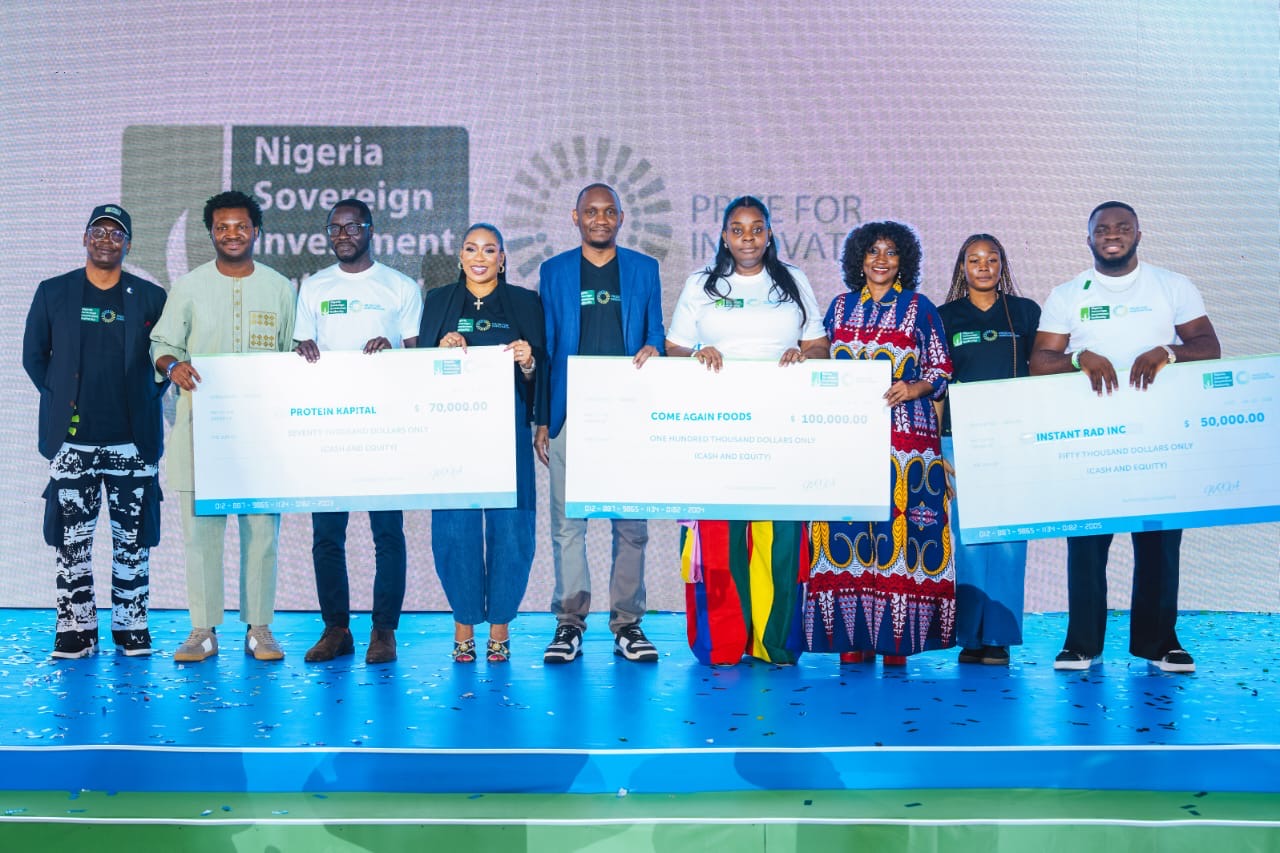
Nigeria’s sovereign investment authority has awarded a combined $275,000 in prizes to seven young companies after its fourth Prize for Innovation Demo Day in Abuja. The winners span food production, climate-linked manufacturing and healthcare. One of them, InstantRad, is building an AI-assisted teleradiology service designed to connect hospitals and diagnostic centres with radiologists across Africa.
The winners were announced over the weekend, with the reported results placing Come Again Foods first with a package worth about $100,000, Protein Kapital second with $70,000 and InstantRad third with $50,000. The official programme site confirms the $275,000 combined prize pool, made up of $220,000 from the Nigeria Sovereign Investment Authority, $45,000 from Cascador and $10,000 from Wema Bank. Those figures describe the overall programme rather than a single cash grant to InstantRad.
A hospital can own a scanner and still struggle to get a specialist to read the image quickly. Teleradiology attempts to bridge that gap by moving images securely to qualified readers, while software can help with workflow and triage. InstantRad says its platform connects facilities to radiologists across the continent. Its prize is recognition of the idea and its pitch, not independent proof of clinical accuracy or a measure of how many patients it currently serves.
That distinction matters with healthcare AI. Any system that influences diagnosis needs evidence on performance, patient privacy, clinician oversight and how it works in hospitals with uneven connectivity. The most useful question after the awards is whether InstantRad can demonstrate shorter reporting times without compromising the quality of care. TechBooky has previously examined the difficulty African health-tech startups face in turning promising tools into real healthcare partnerships.
Come Again Foods makes packaged snacks from locally sourced agricultural products. Protein Kapital uses insect farming and organic waste to produce protein and biofertiliser. Other prize recipients named in the weekend report include Eight Medical, Uwana Energy, Sambal Enterprises and Ebees Green, with separate awards from programme partners. The precise mix of cash, equity and partner support varies by recipient, so the headline prize pool should not be read as money divided equally among the seven firms.
The programme drew more than 6,000 applications and selected 12 finalists for the Demo Day, according to the report. NSIA says its prize is intended to pair funding with training, investor connections and support for companies that can scale. That follow-through is the harder test. Nigeria has no shortage of founders with strong pitches, but young companies often need paying customers, procurement access and patient capital well after the cameras leave an awards ceremony.
The result is therefore a useful snapshot of where Nigerian innovation is heading. Food security and climate technology took the top places, while an AI-enabled healthcare service entered the leading group. For InstantRad and the other winners, the next milestone is not another prize. It is showing that the service works reliably in the settings it was built to serve.
Related Reading
More contextual TechBooky stories selected from tags, categories and article context.
Paul Femi Balo is the founder and publisher of TechBooky. He covers artificial intelligence, African technology, digital infrastructure, enterprise technology and the global digital economy.
We use cookies to ensure that we give you the best experience on our website. If you continue to use this site we will assume that you are happy with it.