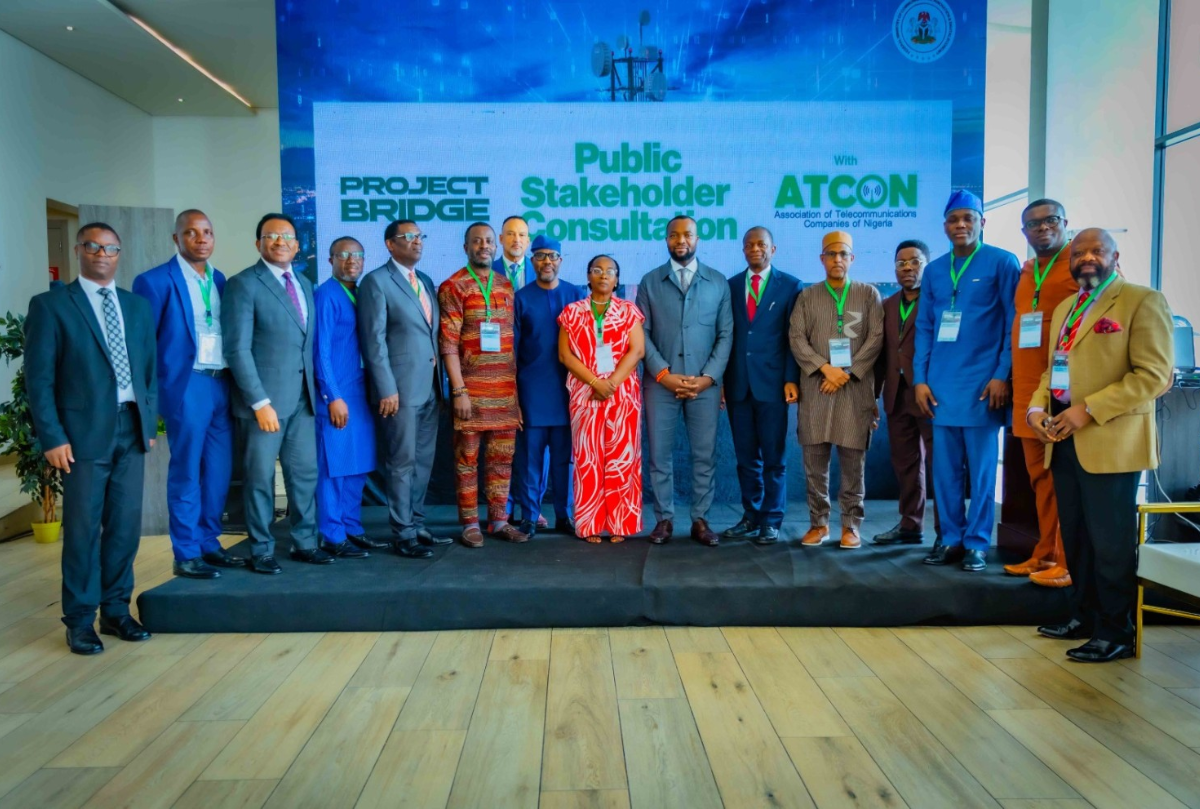
Nigeria digital economy ambition has always had a simple infrastructure problem underneath it: too many people, businesses, schools and public institutions still do not have reliable, affordable broadband. Project BRIDGE is meant to attack that problem from the backbone, not just from the retail internet layer.
The Federal Ministry of Communications, Innovation and Digital Economy describes Project BRIDGE as a special purpose vehicle that will deploy at least 90,000 kilometres of fibre-optic cable as Nigeria core connectivity infrastructure. The project is designed as a public-private partnership and is expected to help Nigeria reach about 120,000 kilometres of fibre nationwide.
TechCabal reports that the project is targeting completion by 2030, with the expanded backbone expected to reach more than 770 local government areas. If that happens, the project would become one of the most important digital infrastructure interventions in Nigeria in years, because fibre is what makes everything else cheaper and more reliable.
The official project page puts the expected implementation cost at about $2 billion, funded through a mix of development finance debt and private-sector equity. The government is expected to remain a minority partner, with its shareholding not less than 25 percent and capped at 49 percent. That structure is important because a national backbone can easily become inefficient if it is run like a purely political project.
The goal is not only faster internet in Lagos, Abuja and other already-connected centres. Project BRIDGE is meant to improve access in underserved areas, support schools and hospitals, deepen public-sector connectivity and make it easier for businesses outside major cities to participate in the digital economy. Nigeria still has more than 33 million people offline, according to the ministry project summary.
If done properly, fibre can change the economics of almost everything else in the tech ecosystem. Cloud adoption becomes easier. Fintech services become more reliable. Remote work and education improve. Health systems can move more services online. Local data centres can serve more customers. Even AI adoption depends on this kind of basic connectivity. A country cannot build an AI economy on weak broadband.
That is why the project connects with other pieces of Nigeria digital agenda. We have previously written about Nigeria $2 billion fibre network plan and how Project BRIDGE also appeared in broader digital economy conversations around Nigeria space-tech and satellite ambitions. The point is that fibre, satellite capacity, data centres, cloud services and AI policy all depend on one another.
The challenge, of course, is execution. Nigeria has announced ambitious infrastructure projects before, and many have struggled with procurement delays, right-of-way fees, vandalism, duplication, funding gaps and policy inconsistency. Project BRIDGE will need patient capital, state-level cooperation and a governance model that reassures operators, investors and users.
There is also the open-access question. A national backbone is most useful when multiple service providers can use it fairly to reach customers. If the network simply becomes another closed or politically captured asset, the market impact will be weaker. But if it lowers wholesale capacity costs and expands competition, consumers and businesses should eventually feel it in better service and pricing.
For Nigeria, this is less glamorous than launching a new AI model or announcing another innovation hub, but it may be more important. The digital economy does not float in the air. It travels through cables, towers, power systems and data centres. Project BRIDGE is a reminder that the next phase of African technology growth will depend as much on physical infrastructure as on software talent.
Related Reading
More contextual TechBooky stories selected from tags, categories and article context.
Paul Balo is the founder of TechBooky and a highly skilled wireless communications professional with a strong background in cloud computing, offering extensive experience in designing, implementing, and managing wireless communication systems.
We use cookies to ensure that we give you the best experience on our website. If you continue to use this site we will assume that you are happy with it.