Egypt is deepening its digital economy partnership with the World Bank Group, with artificial intelligence, digital infrastructure, skills development and data governance now sitting near the centre of the conversation.
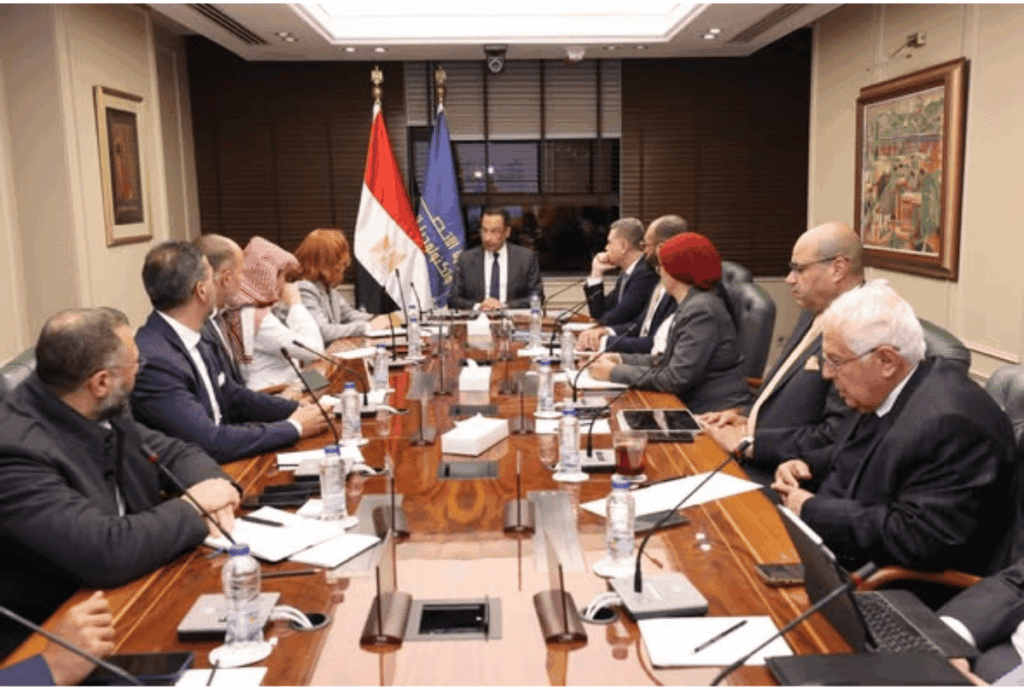
The latest talks in Cairo brought together Egypt’s communications and information technology minister, Raafat Hendy, and Paschal Donohoe, the World Bank Group’s managing director and chief knowledge officer. The discussions focused on digital transformation, AI adoption, innovation, broadband expansion and the country’s wider effort to build a more competitive digital economy.
For Egypt, the partnership matters because digital infrastructure is now economic infrastructure. Broadband, data centres, public digital services, cloud capacity, AI skills and data governance all shape whether a country can attract investment, improve public services and create technology jobs.
Egypt has been expanding digital public infrastructure and broadband access, including fibre-optic infrastructure in more than 1,250 rural villages through the Decent Life initiative. The government also wants to strengthen data governance, increase data-centre investment, support digital skills and improve online safety for children.
Those priorities show how broad digital policy has become. A few years ago, digital transformation was often discussed as moving government forms online. Today it includes AI strategy, cloud infrastructure, skills pipelines, cyber resilience, data rules and private-sector investment.
The World Bank’s role is not only financing. Knowledge, policy support and implementation experience now matter as much as capital. Countries trying to scale digital public services need help with regulation, procurement, data governance, institutional capacity and skills development.
Egypt already has a large population, a strong technology-services base and a growing outsourcing sector. Better digital infrastructure could help it compete for more regional and global technology work, especially as companies look for skilled talent and cost-effective delivery hubs.
AI adds another layer. If Egypt wants AI to support public services, education, healthcare, agriculture and business productivity, it needs data quality, compute access, trained workers and clear governance. Those pieces are easier to name than to implement.
Egypt’s digital economy push also matters for North Africa and the wider continent. Countries that build reliable broadband, data centres, cloud ecosystems and digital skills can attract startups, enterprise technology companies and global service contracts.
But the challenge is execution. Digital strategies can sound impressive on paper. The real test is whether rural connectivity improves, public services become easier to use, data rules are trusted, children are protected online and technology investments create jobs beyond a narrow urban elite.
Egypt’s deeper World Bank partnership is therefore a practical story, not just a diplomatic one. It shows how African governments are trying to build the foundations for AI and digital growth before the next wave of competition leaves them behind.
Related Reading
More contextual TechBooky stories selected from tags, categories and article context.
Paul Balo is the founder of TechBooky and a highly skilled wireless communications professional with a strong background in cloud computing, offering extensive experience in designing, implementing, and managing wireless communication systems.
We use cookies to ensure that we give you the best experience on our website. If you continue to use this site we will assume that you are happy with it.