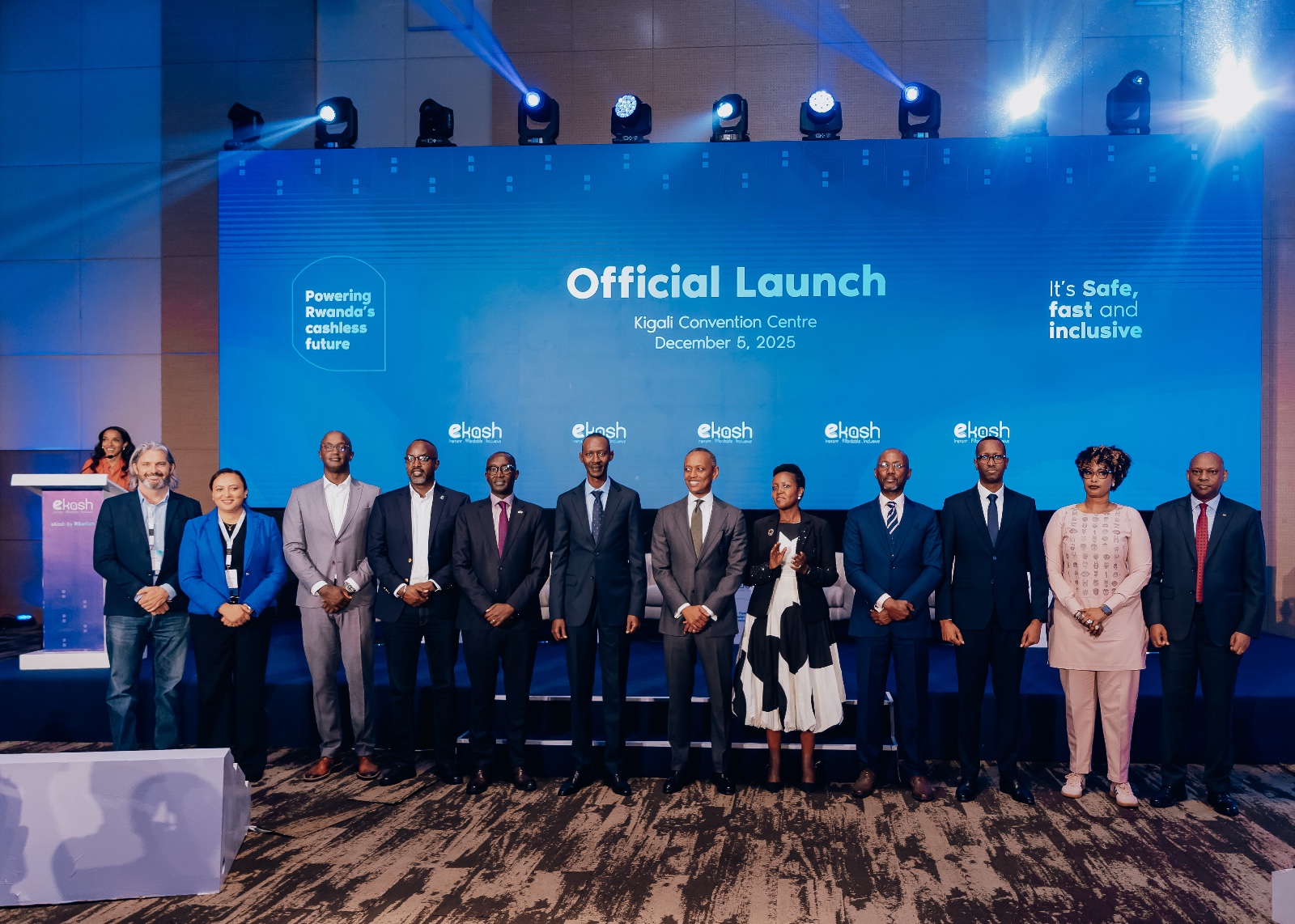
Rwanda has officially launched eKash as its national instant digital payment system, a move that could make transfers between banks and mobile wallets faster, cheaper and more interoperable across the country.
The Rwanda Information Society Authority said in an official update that eKash marks a new era of seamless, secure and interoperable digital payments. The platform went live on July 14, 2026, allowing users to send money instantly between bank accounts and mobile wallets without signing up for a new service.
That detail is important. Many African payment systems work well inside their own networks but become expensive, slow or awkward when money needs to move across different providers. eKash is designed to reduce that fragmentation by giving Rwanda a shared instant-payment rail.
Instant payment systems are becoming part of digital public infrastructure. They do for money movement what roads do for physical commerce: they lower friction, connect participants and create space for new services to emerge. When a market has interoperable payment rails, fintechs can build products without forcing users into one closed wallet or bank network.
Rwanda has spent years positioning itself as a digital economy leader, and eKash fits that strategy. A national instant payment system can support small merchants, remittances, bill payments, e-commerce, government collections and person-to-person transfers. The value is not just speed. It is the ability for different financial institutions to speak to one another in real time.
The story connects with a wider African fintech shift. A TechBooky report on WAEMU’s push toward a more connected fintech market showed how regional and national payment infrastructure is becoming a major policy priority. Rwanda is moving in the same direction, but through a national interoperable rail.
For consumers, the most visible benefit will be simpler transfers. But the deeper benefit could be lower costs. If transfers between banks and mobile wallets become easier and cheaper, more people may use formal digital channels instead of cash or informal alternatives.
For small businesses, that can matter every day. A shop owner should not have to worry about whether a customer uses the same wallet or bank. A market vendor should be able to receive payment from different providers without complicated workarounds. Interoperability helps digital payments feel normal instead of conditional.
For fintech startups, shared rails can reduce infrastructure duplication. Instead of each company building expensive bilateral connections, they can build services on top of a common system. That can improve competition because startups can focus on user experience, credit, savings, commerce tools, merchant services or cross-border products.
Launching a national payment system is only the first step. The real test is adoption, reliability, fraud controls, dispute resolution and pricing. Users will only shift behaviour if the system works consistently and feels safe.
Rwanda will also need to make sure banks, mobile-money operators and fintechs have incentives to participate fully. Interoperability can threaten players that benefit from closed networks, so governance matters. A well-run scheme must balance competition, consumer protection, innovation and operational resilience.
If eKash scales well, it could become a useful model for other African markets still trying to connect fragmented payment ecosystems. The continent does not only need more fintech apps. It needs payment rails that make those apps cheaper, safer and more useful for ordinary people.
Related Reading
More contextual TechBooky stories selected from tags, categories and article context.
Paul Balo is the founder of TechBooky and a highly skilled wireless communications professional with a strong background in cloud computing, offering extensive experience in designing, implementing, and managing wireless communication systems.
We use cookies to ensure that we give you the best experience on our website. If you continue to use this site we will assume that you are happy with it.