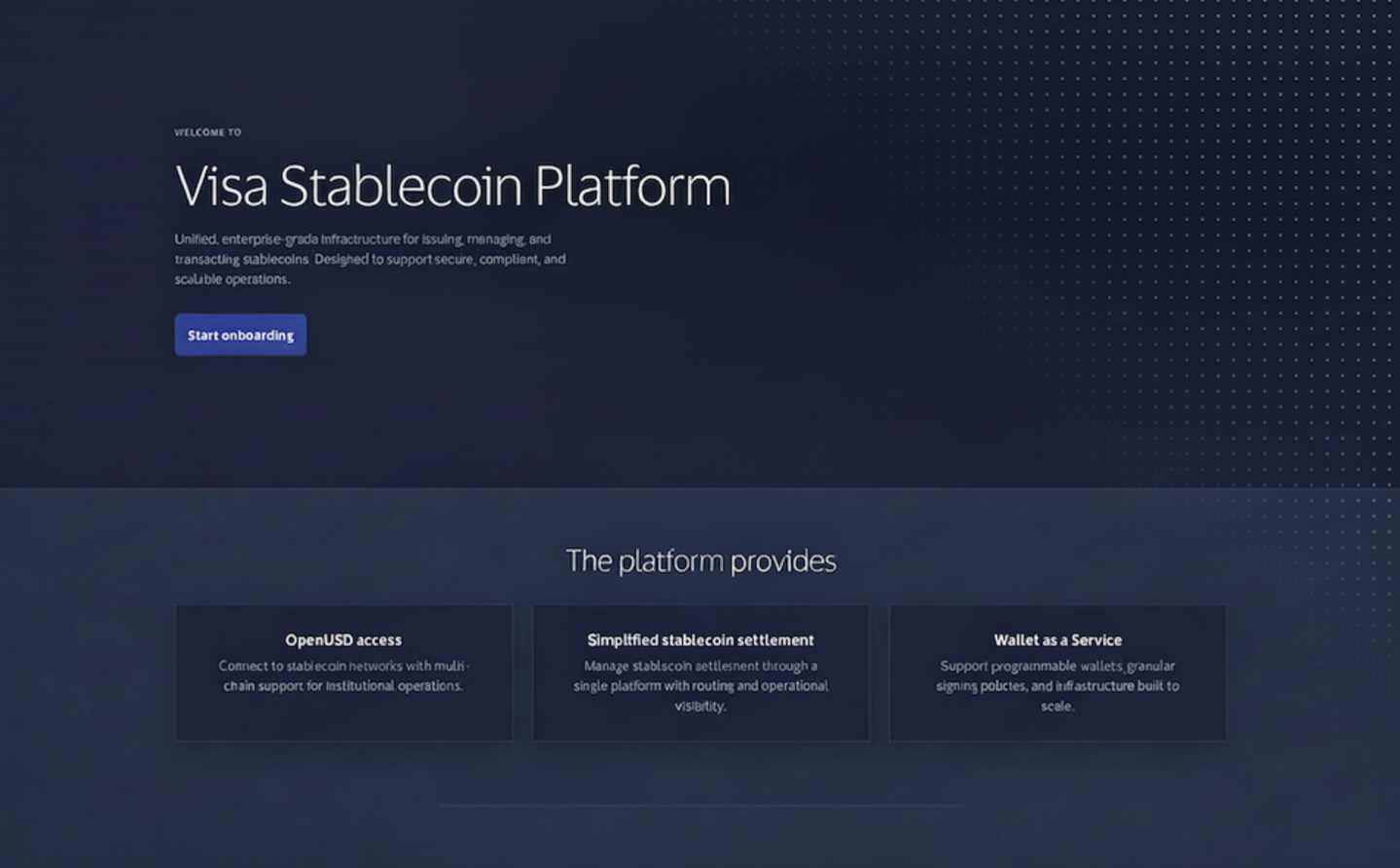
Visa is bringing stablecoins deeper into the mainstream payments stack with a new platform designed to help banks and fintechs use blockchain-based settlement without rebuilding their entire treasury and payment infrastructure from scratch.
The Visa Stablecoin Platform is being positioned as an internal system for financial institutions that want to integrate stablecoin payments into existing Visa workflows. The scale is what makes the announcement important: Visa’s network touches roughly 15,000 financial institutions and more than 200 million merchants, while the company settles about US$15 trillion in payments annually.
Stablecoins have spent years trying to move from crypto-native circles into everyday commerce. Visa’s move suggests the next phase may not be consumers choosing a crypto wallet at checkout. It may be banks, fintechs and payment processors using stablecoins behind the scenes to settle faster and cheaper.
Stablecoins solve a problem that traditional payment systems still struggle with: money movement can be slow, fragmented and expensive across borders, currencies and institutions. A dollar-backed stablecoin can move on a blockchain in minutes or seconds, with a clear transaction record and fewer intermediaries.
Visa does not need stablecoins to replace card payments for the platform to matter. The bigger opportunity is settlement. If financial institutions can use stablecoins inside familiar Visa processes, they may get faster treasury movement without asking merchants or consumers to understand blockchain rails.
This fits the broader fintech direction in Africa as well. The launch of Rwanda’s eKash instant payment system points to the same underlying demand: faster, more interoperable money movement. Stablecoins and national instant-payment rails are different technologies, but both are trying to reduce friction in how money moves.
For merchants, faster settlement is not a technical luxury. It can affect cash flow, inventory, supplier payments and working capital. Small businesses feel that most sharply because delayed settlement can create real operational pressure.
Visa’s pitch is that stablecoins can deliver lower-cost, near-instant settlement while staying connected to the existing financial system. That is important because most merchants do not want to manage crypto complexity. They want reliable payments, predictable accounting and fewer delays.
The platform also helps Visa defend its role as money movement changes. If stablecoins become a serious settlement layer, Visa wants them to flow through its network rather than around it. That is the strategic point. The company is not waiting for crypto firms to displace traditional rails; it is trying to absorb the useful parts of stablecoin infrastructure into its own system.
For fintech companies, a Visa-backed stablecoin layer could reduce some integration complexity. Instead of negotiating separate blockchain, custody, treasury and banking relationships, fintechs may get a more packaged route into stablecoin settlement.
The regulatory question remains. Stablecoins are becoming more accepted, but rules around reserves, consumer protection, anti-money-laundering controls and cross-border flows still vary widely. In markets where regulation is unclear, adoption may move more slowly.
For African fintechs, the opportunity is obvious but complicated. Cross-border payments, merchant settlement and remittances remain expensive in many corridors. Stablecoins could help, but only if banks, regulators and payment networks create compliant paths. Visa’s platform is another sign that stablecoins are moving from crypto speculation into payment infrastructure.
Related Reading
More contextual TechBooky stories selected from tags, categories and article context.
Paul Balo is the founder of TechBooky and a highly skilled wireless communications professional with a strong background in cloud computing, offering extensive experience in designing, implementing, and managing wireless communication systems.
We use cookies to ensure that we give you the best experience on our website. If you continue to use this site we will assume that you are happy with it.