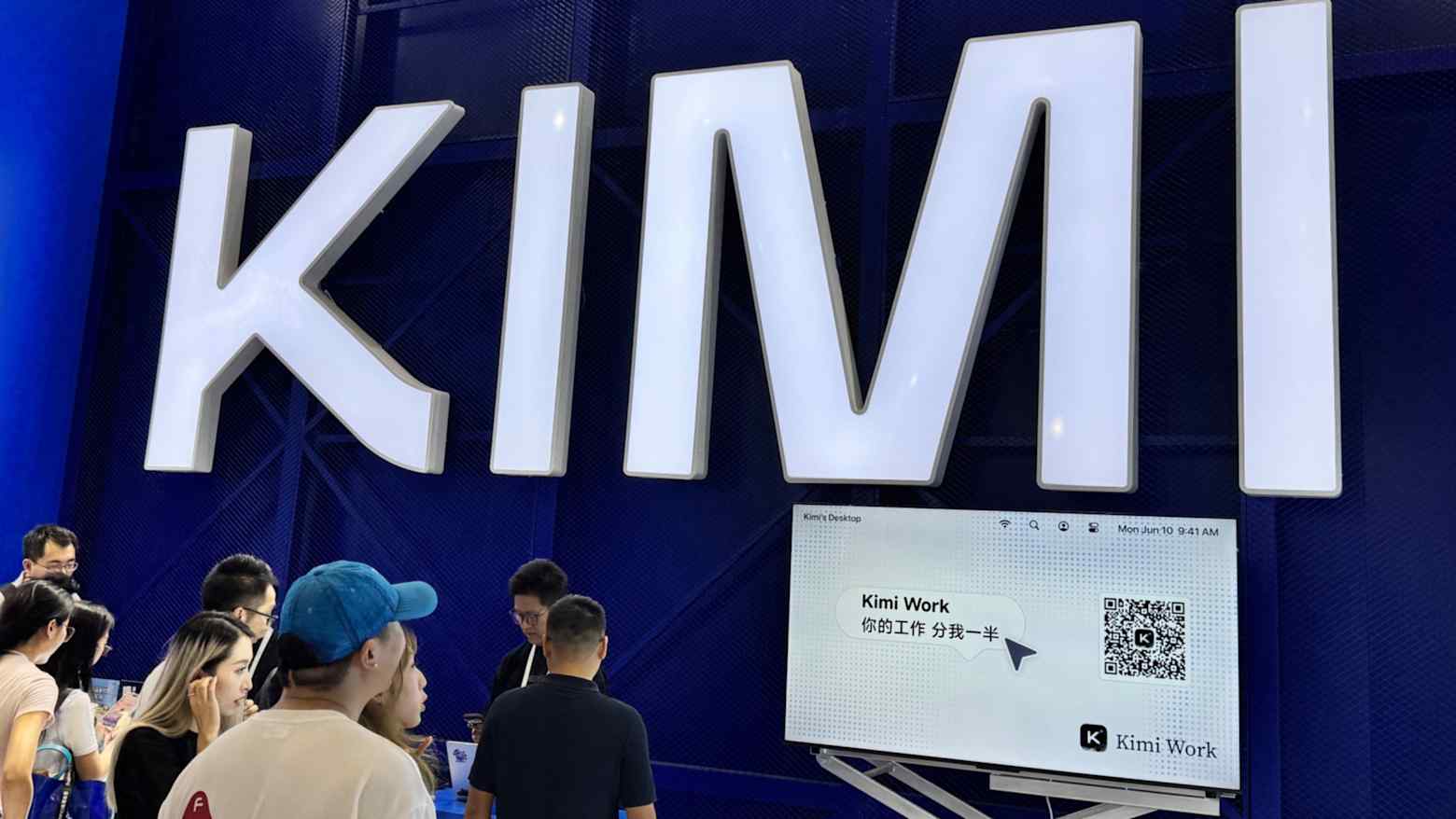
Moonshot AI’s Kimi K3 has quickly become more than another model launch. Over the weekend, the Chinese open-weight model turned into a market story, a policy story and a business-model headache for U.S. frontier AI labs. The reason is simple: if powerful models can arrive cheaper, more openly and faster than expected, the economics of the AI boom start to look less comfortable.
The immediate spark was Kimi K3’s strong showing across developer and capability discussions, including its No. 1 position on the Frontend Code Arena and its broader performance in coding and long-context tasks. But the discussion has now moved beyond benchmarks. Investors and analysts are asking whether China’s open-weight strategy could weaken the pricing power of closed model providers and complicate the case for ever-rising AI infrastructure spending.
That is why the Kimi moment has started to feel like a second DeepSeek-style shock. It may not be identical to DeepSeek R1, and some experts are warning against panic. But markets do not need a perfect repeat to react. They only need a credible reason to question the assumptions behind high AI valuations.
The biggest pressure Kimi K3 puts on the market is not simply that it is good. The pressure is that it appears good enough to make buyers question whether they need the most expensive closed models for every task. If a cheaper or open-weight model can handle coding, reasoning, long-context workflows and agentic tasks well enough, customers gain leverage.
That leverage matters because the U.S. frontier AI business model depends heavily on premium pricing, large enterprise contracts and the belief that only a few labs can deliver top-tier capability. If open-weight Chinese models keep narrowing the gap, the market has to reconsider how much margin the closed labs can protect.
The earlier DeepSeek valuation story already showed how aggressively China’s AI champions are being priced. Kimi K3 adds a developer-facing proof point to that market story: China is not only competing on national ambition, but on models developers may actually want to use.
AI stocks have been priced on a chain of assumptions. Frontier labs need more compute. More compute means more chips. More chips means stronger demand for Nvidia, memory, networking and data centres. Stronger demand supports the valuations of the companies building the AI supply chain.
Kimi K3 complicates that story in two ways. First, if open-weight models reduce the premium that customers are willing to pay for closed systems, the revenue side of the AI equation becomes less certain. Second, if model efficiency improves quickly, investors may question whether compute demand can keep surprising forever, even if total AI usage continues to grow.
This is the context behind the recent volatility in the market’s AI leadership. Apple and Nvidia swapping the most valuable company crown was not only about two stocks. It was a visible sign that investors are starting to separate durable platform cash flow from the more volatile AI infrastructure trade.
There is also a security dimension. The UK AI Security Institute says recent open-weight models are now only about four to seven months behind frontier closed models on some cyber capability evaluations, a narrower gap than much of 2025. That does not mean every open model is dangerous by default, but it does suggest advanced capabilities are spreading faster.
Kimi K3 has not yet been fully assessed across all of those safety dimensions, and its full weights are expected later this month. Still, the timing makes policymakers nervous. Open-weight models can be inspected, adapted and deployed more freely, which is good for innovation but harder to control when capabilities include advanced coding, vulnerability discovery or agentic workflows.
This is why the conversation around AI security is getting sharper. OpenAI’s work on red-teaming and prompt-injection defence, including GPT-Red, shows that frontier labs know agentic AI will create new security problems. Open-weight models make that challenge more distributed.
It is still worth being careful. Kimi K3 may be excellent without proving that U.S. labs have lost the AI race. Benchmarks can be noisy. Some capability gaps still matter. Deployment costs, reliability, tooling, safety, enterprise trust, data governance and ecosystem support all affect whether a model becomes a real business threat.
There are also reasons big AI infrastructure demand could keep growing even if models become more efficient. Lower model costs can increase usage. More usage can still require more chips, memory and networking. Efficiency does not always reduce total demand; sometimes it unlocks much more demand.
That is why the best reading is not panic, but pressure. Kimi K3 pressures U.S. labs on price. It pressures Nvidia bulls to explain why compute demand remains structurally strong. It pressures policymakers to rethink open-weight risk. And it pressures customers to test more models before signing expensive long-term deals.
For developers, Kimi K3 is good news in the most practical sense: more capable models, more competition and potentially lower costs. If the model performs well in real coding workflows, it could become part of the toolkit for startups, agencies and software teams that cannot afford to run every task through premium U.S. models.
For African startups, the bigger opportunity is choice. Cheaper strong models can lower the cost of building AI products, customer-service agents, coding tools, local-language assistants and automation workflows. The caution is trust. Teams will still need to think about data location, privacy, compliance and whether open-weight deployment is safer than sending sensitive information to a foreign API.
The Kimi K3 story is therefore not just about a Chinese model doing well on a leaderboard. It is about the AI market becoming more competitive, less predictable and less comfortable for incumbents. The frontier is no longer only about who has the biggest model. It is about who can deliver useful capability at the right price, with enough trust, before the market changes again.
Related Reading
More contextual TechBooky stories selected from tags, categories and article context.
Paul Balo is the founder of TechBooky and a highly skilled wireless communications professional with a strong background in cloud computing, offering extensive experience in designing, implementing, and managing wireless communication systems.
We use cookies to ensure that we give you the best experience on our website. If you continue to use this site we will assume that you are happy with it.