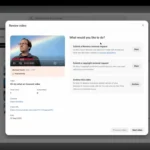
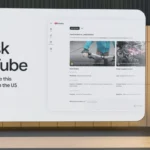
TikTok is testing a new AI likeness detection tool that could give creators a way to find and report unauthorised deepfakes of themselves. The opt-in feature is being tested with some creators in the United States and is part of a broader shift from simple AI-content labels toward direct protection of digital identity.
The tool asks participating creators to verify their identity with a selfie and government ID through Jumio, a third-party verification provider. TikTok says it does not keep the ID documents and uses facial data to scan for potential AI-generated imitations. Creators can then review flagged content and report misuse of their likeness.
This is not just a creator feature. It is a sign that major social platforms now recognise that AI abuse is becoming personal. A watermark can tell viewers that a video may be AI-generated, but it does not automatically help the person whose face or voice has been copied without permission.
AI likeness abuse sits at the intersection of privacy, reputation, identity, harassment and creator economics. A fake video can make someone appear to say or do something they never did. For creators, journalists, politicians, entertainers and ordinary users, that can damage trust quickly.
The challenge is speed. Deepfakes can spread faster than manual reporting systems can respond. A creator may only discover a fake after it has already been reposted, clipped, downloaded or used to drive traffic elsewhere. Automated scanning gives platforms a better chance of finding abuse before it becomes harder to contain.
TikTok is testing AI likeness detection for creators@tiktok_us is testing an opt-in Likeness Detection tool with some US creators.
It surfaces AI-generated content that may use a creator’s face without consent. pic.twitter.com/XxTF4nUETz
This is the same reason YouTube has been expanding its own likeness detection tools, and why recent AI video tools have attracted closer scrutiny. The rise of personal AI avatars in Google Vids shows how quickly synthetic video is becoming normal. Protection tools have to move just as quickly.
The privacy trade-off is obvious. To protect a creator’s likeness, TikTok has to verify who they are and compare facial data against videos on the platform. That raises questions about biometric data, storage, consent, third-party verification and whether creators will feel comfortable handing over identity documents to access protection.
TikTok says the feature is opt-in and that ID documents are handled through Jumio rather than stored by TikTok. That may reassure some creators, but not all. Platforms will have to earn trust if they want people to submit the very identity data they are trying to protect.
There is also the question of accuracy. Likeness detection tools must avoid missing harmful deepfakes while also avoiding false positives that could remove parody, commentary, satire or legitimate creative work. That balance will be difficult, especially as AI-generated video becomes more realistic.
For the past year, much of the AI-content debate has focused on labels, watermarks and disclosure. Those are useful, but they do not solve the deeper problem: who controls a person’s face, voice and identity in synthetic media?
TikTok’s test suggests platforms are beginning to treat likeness as a rights-management issue, closer to copyright enforcement than ordinary content moderation. A creator should be able to know when their face is being used, review the context and request removal when it is unauthorised.
That same safety conversation is spreading across social platforms. Meta’s decision to add parent alerts for teen self-harm conversations with Meta AI shows another part of the pattern: AI products are no longer being judged only by what they can generate, but by whether platforms can reduce real-world harm around them.
If TikTok’s test works, expect likeness detection to become a standard creator-safety tool across major platforms. YouTube has already moved in that direction, and other platforms will face pressure to offer similar protections, especially for public figures and high-risk creators.
The harder question is whether these tools will eventually be available to ordinary users, not just creators. Deepfake abuse does not only target celebrities or influencers. Anyone with public photos can be impersonated, harassed or exploited.
TikTok’s test is therefore a useful step, but it is not the end of the problem. AI identity protection will need laws, platform tools, takedown systems, user education and serious penalties for abuse. The internet is entering an era where proving a video is fake may be just as important as proving it went viral.
Related Reading
More contextual TechBooky stories selected from tags, categories and article context.
Paul Femi Balo is the founder and publisher of TechBooky. He covers artificial intelligence, African technology, digital infrastructure, enterprise technology and the global digital economy.
We use cookies to ensure that we give you the best experience on our website. If you continue to use this site we will assume that you are happy with it.