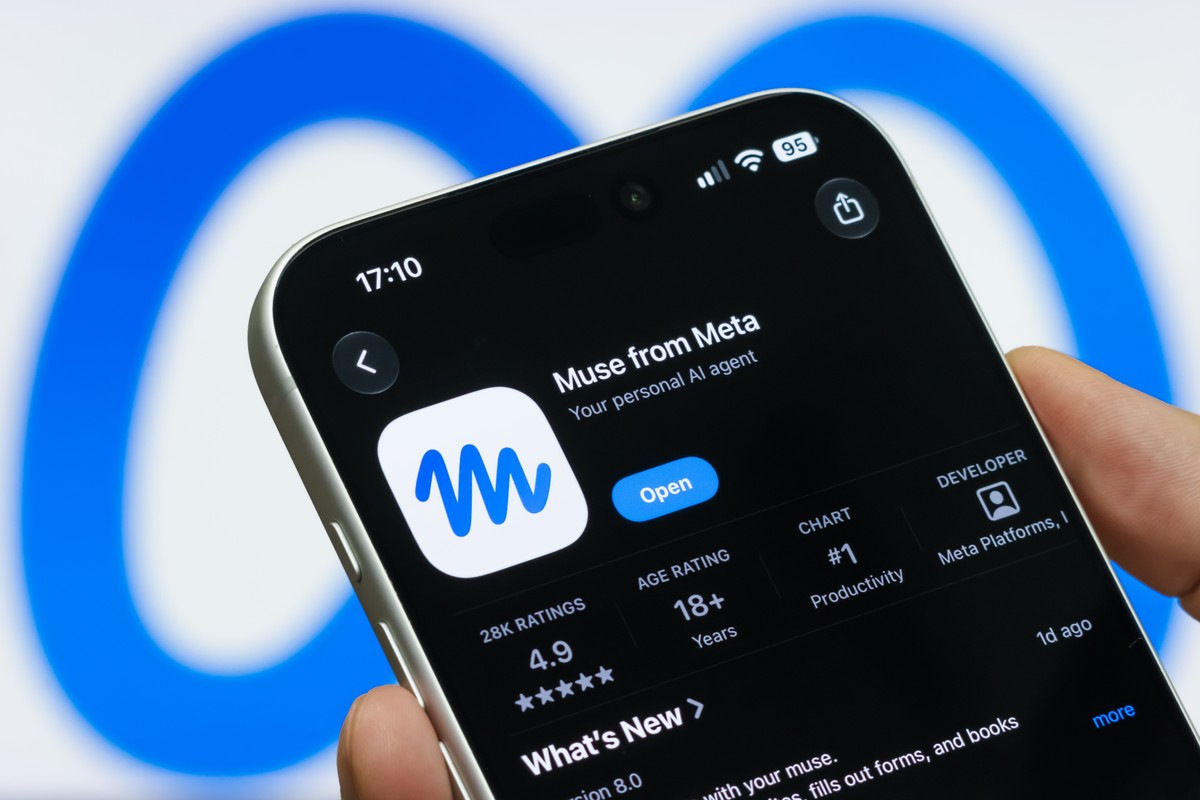
Meta has launched its Muse personal AI agent in the UK, putting a service that can browse websites, coordinate tasks and make purchases with approval into the hands of British adults. The launch is also an early test of how UK consumer and privacy rules will apply when an AI assistant does more than answer questions.
In its launch announcement, Meta says Muse is available to people aged 18 and over through iOS, Android, the web and WhatsApp. Basic use is free, with optional paid plans for higher usage. The company says users must approve consequential actions such as sending an email or completing a purchase.
Muse can work across connected services, building an itinerary, organising a diary or helping a user find goods and complete a checkout. Meta has named UK partners including Marks & Spencer, Currys, ASOS, Trainline and easyJet. Some integrations allow access to a person’s account, while others let Muse navigate a partner’s website. Those are different levels of access, and a user should check which one is being granted before asking the agent to act.
The assistant can retain details and continue working after its app is closed, returning when it needs a decision. Meta says users can adjust proactive prompts and controls over whether their Muse interactions are used to improve its AI. It also says conversations and data in Muse’s virtual machine are not shared with its advertising systems. Those are company descriptions of the product; the practical test will be whether the controls are clear and reliable in day-to-day use.
The Competition and Markets Authority says ordinary consumer protection law applies to personal AI agents. It has engaged with Meta for several weeks before the launch and says the company changed its terms and conditions following that engagement. The CMA will review how Muse is presented and functions as it rolls out, particularly whether people understand its limitations, permissions and autonomy. This is regulatory scrutiny, not an announced penalty or formal finding of wrongdoing.
Separately, the Information Commissioner’s Office says Meta has committed to voluntary monitoring and reporting so the regulator can examine the technology and user experience as they develop. The ICO emphasises that people must be able to understand and control how their personal information is used. It has not said it has opened an enforcement investigation.
The distinction matters because an agent may access emails, calendars, shopping accounts and details about other people to complete a single request. A useful result can require broad permissions, but mistakes or unclear consent can carry consequences beyond a wrong chatbot answer. The CMA and ICO advise users to start with limited access, review approval settings and check what an agent remembers.
TechBooky has followed Muse’s expansion, including its launch in Japan and the addition of voice features. The UK launch shifts the story from what the assistant can demonstrate to whether it can earn trust under a more explicit set of consumer and data protection expectations.
Related Reading
More contextual TechBooky stories selected from tags, categories and article context.
We use cookies to ensure that we give you the best experience on our website. If you continue to use this site we will assume that you are happy with it.