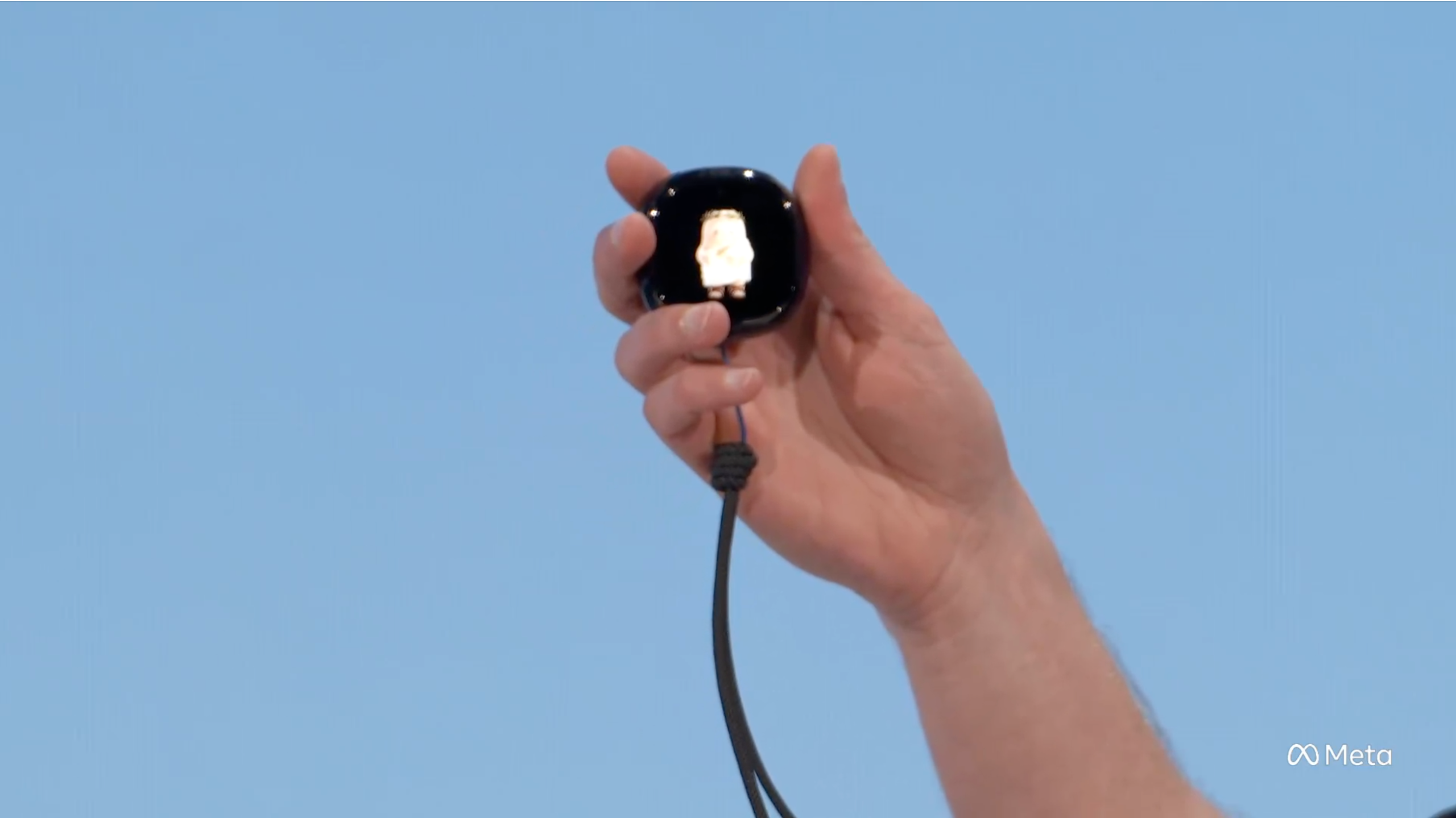
Meta has teased Muse Charm, a pocket-sized device designed for voice conversations with its Muse AI assistant. The company introduced the idea at Connect 2026, saying Charm would bring a real-time voice model into something people can carry. That is the extent of the confirmed hardware story for now. Meta has not announced a price, release date or detailed specifications.
In its Connect roundup, Meta described Charm as a device that fits in a pocket and promised more information later this year. The language is deliberately brief. There is no public battery-life figure, no confirmed camera specification and no explanation yet of whether it will work independently or rely on a phone. Those omissions are worth noting because a voice-first device lives or dies on the details of how quickly and reliably it responds.
Muse itself is not new. Meta introduced the personal AI agent earlier this month as a service intended to help users complete tasks, not merely answer questions. The company has been expanding the places where that agent can appear, including its AI glasses. Charm suggests Meta also sees a role for an assistant that is neither strapped to a face nor buried inside an app.
A pocket device could make talking to an assistant feel more immediate than unlocking a phone and finding an app. But convenience is not a business case by itself. Phones already have microphones, speakers and access to several capable AI services. Meta will have to demonstrate that Charm offers a noticeably better experience, whether through low-latency conversations, useful task completion or a form that people actually want to carry.
Privacy may be the harder question. A voice assistant meant to be close at hand raises obvious concerns about when it is listening, what is sent to Meta’s servers and how it handles personal information during an action. Meta has described safeguards around Muse, but it has not yet explained Charm’s physical controls or its data flow in enough detail to judge the device. That should become clearer when full specifications arrive.
The announcement also comes as the industry experiments with ways to move AI beyond the smartphone. Snap is building intelligence into its Specs glasses, while Meta has been pushing its own glasses as an everyday interface. Charm is a different bet: the assistant can be available without asking someone to wear a screen or camera.
For now, Muse Charm is a teaser rather than a product shoppers can compare. The next announcement needs to answer the questions Meta left open: what it costs, what it can do without a phone, how it protects conversations and when people can buy it. Until then, the most interesting part is not the gadget’s undisclosed specs but Meta’s decision to give its agent a dedicated place in the physical world.
Related Reading
More contextual TechBooky stories selected from tags, categories and article context.
Paul Balo is the founder of TechBooky and a highly skilled wireless communications professional with a strong background in cloud computing, offering extensive experience in designing, implementing, and managing wireless communication systems.
We use cookies to ensure that we give you the best experience on our website. If you continue to use this site we will assume that you are happy with it.