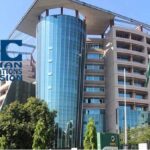
MTN Nigeria is reportedly in advanced discussions to acquire valuable spectrum held by Mafab Communications, a potential transaction that could redraw the country’s young 5G market before many Nigerians have had a chance to use the technology.
The proposed transfer has not been completed, and neither company has publicly announced a signed agreement. Reports published on Friday say the discussions cover Mafab’s 100MHz holding in the 3.5GHz band and a 2x20MHz block in the 2.1GHz band. Any transfer would require approval from the Nigerian Communications Commission, making this a developing regulatory story rather than a finished acquisition.
Mafab and MTN each paid $273.6 million for 100MHz blocks during Nigeria’s landmark 2021 5G auction. MTN went on to build a visible commercial network, while Mafab launched services in Abuja and Lagos in January 2023 but never developed the broad consumer footprint expected from a national challenger. The NCC previously defended Mafab’s rollout after questions emerged about whether the company had met its licence obligations.
For MTN, the attraction is straightforward. Spectrum is the raw capacity on which mobile networks are built. Adding Mafab’s frequencies could allow the operator to carry more data, reduce congestion in busy locations and expand 5G without relying only on new spectrum auctions. It would follow the operator’s spectrum arrangement with T2 Mobile, another example of MTN using underutilised frequencies to strengthen its network.
Consumers could benefit if the additional capacity translates into stronger coverage and more consistent speeds. Nigeria’s data consumption continues to rise, while operators face pressure to improve service after years of complaints about slow connections, dropped calls and expensive data. The industry has already committed substantial sums to network upgrades, with the NCC tracking new 4G and 5G sites across the country.
The harder question is what the deal would do to competition. Mafab entered the auction as a new challenger, and its licence was supposed to widen the group of companies capable of shaping Nigeria’s next-generation mobile market. If its most valuable frequencies move to the country’s largest operator, the market becomes more concentrated even if the spectrum is finally put to productive use.
That gives the NCC a delicate decision. It must examine whether the transfer would improve network efficiency without giving one operator an excessive advantage over Airtel, Globacom and smaller providers. Conditions could be attached to coverage, investment, wholesale access or service quality if approval is eventually granted.
The latest industry figures cited in the reports put 5G at only 4.74 percent of Nigerian mobile connections in July 2026, compared with more than half for 4G. The slow adoption reflects limited coverage, expensive compatible phones and the simple reality that many customers still struggle to obtain reliable 4G service.
That is why the potential transaction matters beyond its headline value. It is a test of whether Nigeria should prioritise having more licensed competitors or getting scarce spectrum into the hands of an operator able to deploy it. Until MTN, Mafab or the NCC confirms the terms, however, it should be treated as an advanced discussion rather than a completed $273.6 million sale.
Related Reading
More contextual TechBooky stories selected from tags, categories and article context.
Paul Balo is the founder of TechBooky and a highly skilled wireless communications professional with a strong background in cloud computing, offering extensive experience in designing, implementing, and managing wireless communication systems.
We use cookies to ensure that we give you the best experience on our website. If you continue to use this site we will assume that you are happy with it.