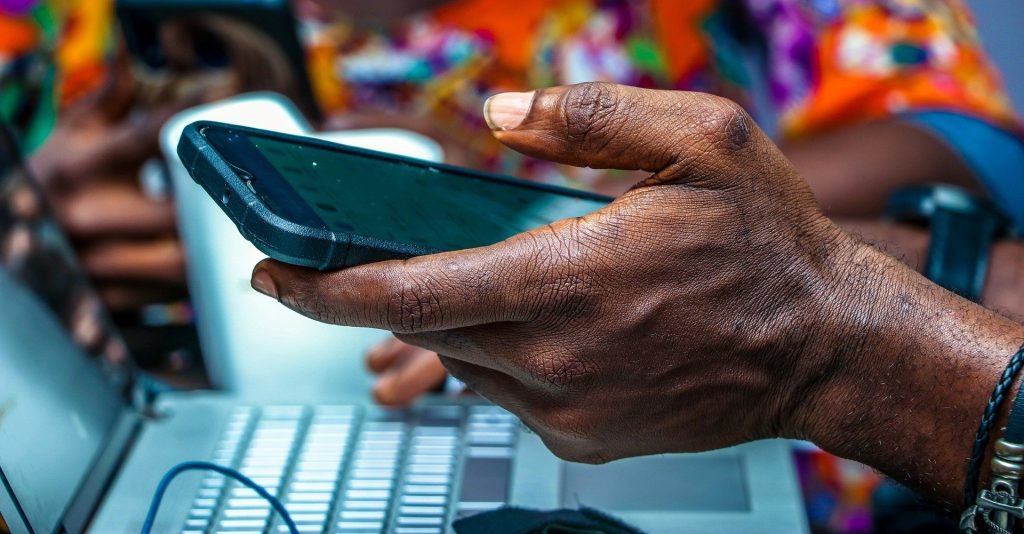
A mobile network can reach a neighbourhood and still leave many people offline. The missing piece is often the device in a person’s hand. An internet-ready smartphone is expensive to buy outright, especially for households managing irregular income. That is why the next fight over digital inclusion in Africa may be as much about finance as towers and spectrum.
South Africa’s Mission Mobile recently said it had secured up to R500 million in growth capital to expand its smartphone-access model. Kenya’s Watu has likewise seen strong demand for financed handsets, as TechBooky reported from its results. These are different businesses, but both point to the same uncomfortable truth: an affordable monthly mobile plan does little for someone who cannot clear the upfront price of the phone.
The GSMA’s Mobile Economy Africa 2026 report describes the broader gap between network availability and meaningful mobile internet use. Device affordability is only one part of that gap, alongside digital skills and the cost of service, but it is a part that telecom policy has too often treated as a retail issue rather than core infrastructure for participation.
Financing can help, but the terms decide everything
Spreading a phone’s cost across manageable payments sounds simple. For a prepaid customer without a formal payslip, however, traditional credit checks may not reflect actual ability to pay. Alternative underwriting can open a door, yet it can also misread unstable income. A high approval rate is not the same as a good consumer outcome. The real measure is whether people keep a working device without sacrificing essentials or falling into an expensive cycle of arrears.
Providers should disclose the total amount payable, not just the weekly or monthly instalment. Customers need to know the deposit, interest or service charges, repair and replacement conditions, and what happens if they miss a payment. Device locking may reduce a lender’s risk, but it can also cut someone off from work, banking or emergency communication at precisely the moment their finances become strained.
There is a tempting commercial story for operators. A financed smartphone can turn a voice-and-text customer into a regular data user. That gives mobile networks an incentive to support device access, but it also means financing should be assessed independently of the extra data revenue it brings them. A contract that looks cheap until bundles, insurance and fees are added has not solved affordability.
Competition and transparency would make more difference than one flashy financing launch. Regulators can require clear, comparable total-cost disclosures and proportionate collections practices. Operators can bundle practical support without obscuring the handset price. Refurbished devices, repair services and longer software support can lower the cost of ownership, provided consumers understand battery condition, warranty and security updates.
Public agencies also have a role. If education, healthcare and government services increasingly expect mobile access, policymakers cannot simply assume that access will appear because a 4G signal does. They can track the actual device-ownership gap, support digital skills and design services that still work on low-cost hardware and unreliable connections. A financing product should expand choice, not become the only path to basic civic services.
None of this is an argument for putting every handset on credit. Cash purchases, lower-cost models and shared access remain valid. It is an argument for recognizing that the leap from coverage to use has a price tag and a payment schedule. Africa will not close its smartphone gap through network investment alone. It needs fair ways for people to own and keep the tools that make the network useful.
Related Reading
More contextual TechBooky stories selected from tags, categories and article context.
Paul Balo is the founder of TechBooky and a highly skilled wireless communications professional with a strong background in cloud computing, offering extensive experience in designing, implementing, and managing wireless communication systems.
We use cookies to ensure that we give you the best experience on our website. If you continue to use this site we will assume that you are happy with it.