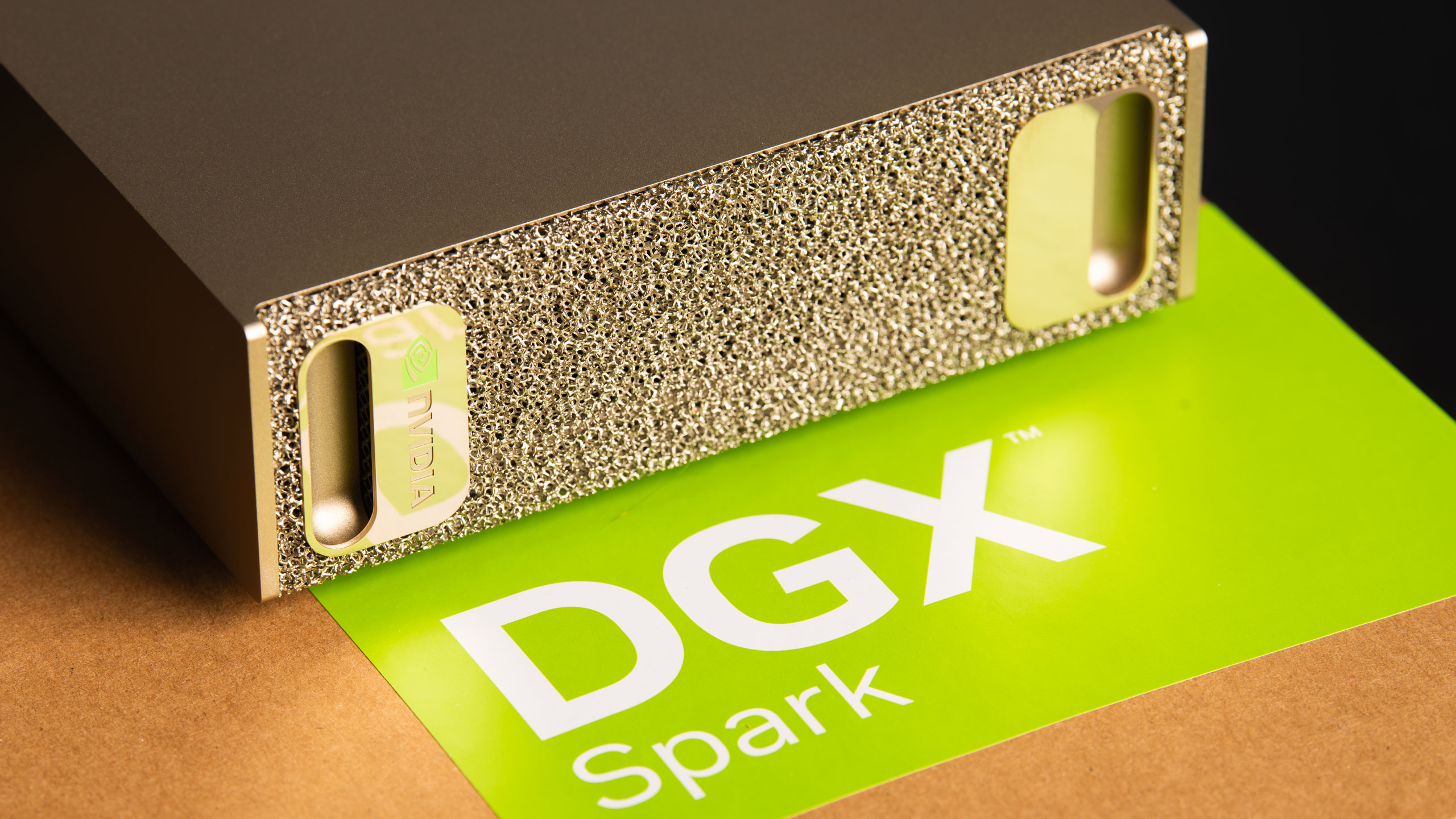
Nvidia is giving developers a less expensive way to keep substantial AI workloads on their own desks. Its new 64GB DGX Spark configuration will go on sale on October 23, starting at $4,999, through Acer, ASUS, Dell, Gigabyte, HP and MSI. The machine is still a specialist computer, but the lower entry price matters for teams that want to experiment with private data without paying for a cloud instance every time they test a model.
The new model announced by Nvidia keeps the GB10 Grace Blackwell Superchip, DGX OS and the company’s AI software stack from the 128GB version. Nvidia says it can run models with up to 100 billion parameters on a single device. That figure describes supported model size, not a promise that every model or workload will run equally fast; memory needs, precision and context length still matter.
There is also an upgrade path that does not require replacing the first machine. Two 64GB systems can be linked through Nvidia Sync Cluster Assistant to pool their memory and computing capacity. Nvidia says the assistant detects connected units, checks their configuration and sets up the network. In one company test using Qwen 3.8 27B, a pair delivered up to 1.7 times the performance of a single system. That is a vendor benchmark for one workload, not an independent measure of every local AI task.
For a developer, the appeal is fairly practical. A local machine can run a coding agent, analyse sensitive documents or serve an internal model without sending every prompt and file to an outside service. It could also be useful where an always-on cloud connection is expensive or unreliable. But $4,999 is still a significant purchase before electricity, storage and maintenance are counted. Local AI trades recurring cloud bills for hardware ownership and the responsibility of operating it.
Nvidia plans to release a Sync Model Launcher later in the month to simplify downloading and running models across one or two units. The company is positioning Spark as part of a broader push to bring agents closer to users. TechBooky recently looked at Perplexity’s local-first agent platform on DGX Spark, which offers a useful example of the sort of software these machines are meant to host.
The question now is whether the cheaper configuration makes local development economical enough for smaller teams, not simply whether Nvidia can fit a large model into a compact box. Actual value will depend on model performance, utilisation and how often a team would otherwise pay for cloud compute.
Related Reading
More contextual TechBooky stories selected from tags, categories and article context.
Paul Balo is the founder of TechBooky and a highly skilled wireless communications professional with a strong background in cloud computing, offering extensive experience in designing, implementing, and managing wireless communication systems.
We use cookies to ensure that we give you the best experience on our website. If you continue to use this site we will assume that you are happy with it.