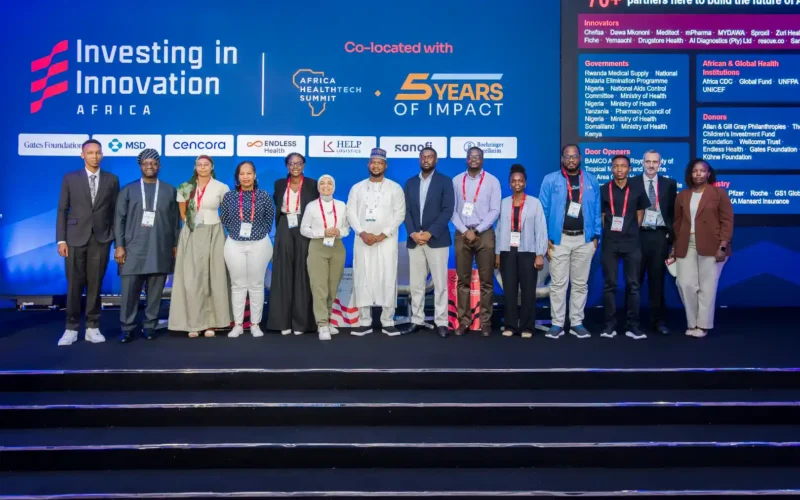
African health-tech startups often face a difficult stretch after building a product: finding the large buyers, regulators and financing partners needed to make it work at scale. Investing in Innovation Africa, known as i3, has announced four agreements that put that challenge in sharper focus. The partnerships were unveiled on September 29 at its Access to Markets event in Kigali, and they address four different parts of the healthcare system.
In Tanzania, Dawa Mkononi and NMB Bank have signed a working-capital deal intended to expand interest-free credit for pharmacies, drug shops and health facilities. Dawa Mkononi will use its own credit-scoring system to support the lending. The company says that system has already disbursed more than $6 million to frontline facilities, with a 0.3% non-performing rate. That figure describes its existing book as reported by i3, not a forecast for the new deal.
The need is practical. A pharmacy that cannot pay for stock when it needs it may lose customers or leave patients without essential medicines, even if demand is strong. Better access to working capital could help, but the terms, eligibility and repayment experience will determine whether the financing makes a lasting difference.
Kenya-based MYDAWA is taking a different route. Its partnership with Endless Health will co-design and test a digital-first approach to hypertension and diabetes care for lower- and middle-income patients, with Ariadne Labs involved in building an evidence base. MYDAWA is also working with Turn.io on WhatsApp-based patient engagement. The project is not simply about sending reminders. It asks whether private pharmacies can support consistent, high-quality chronic care, where follow-up is often as important as the first consultation.
The agreement with the clearest Nigerian regulatory angle links Sproxil with the Pharmacy Council of Nigeria. Their memorandum of collaboration covers the National Electronic Pharmacy Platform, oversight of online medicine sales, digital field audits and professional development for pharmacists. i3 says the council will retain its regulatory authority while Sproxil supplies technology and data infrastructure. That division matters: a private software supplier can build useful tools, but it should not be confused with the public body making regulatory decisions.
The fourth deal gives Meditect debt financing from Boehringer Ingelheim to expand access to authentic, affordable medicines and digitize pharmaceutical supply chains in sub-Saharan Africa. In a market where patients can struggle to verify what they are buying, better traceability and more reliable distribution could be consequential. The size and terms of the financing were not disclosed in i3’s announcement.
Taken together, the agreements show that African health-tech is not one sector with one bottleneck. Pharmacies need credit, patients with chronic conditions need continuity, medicine suppliers need trusted channels and regulators need workable oversight systems. TechBooky has previously looked at how pharmacy financing and digital procurement intersect in Nigeria. The new i3 partnerships extend that picture across multiple countries.
i3 says its wider program has facilitated more than 760 introductions and 165 partnerships, pilots and memorandums of understanding valued at over $19 million. Those are useful measures of activity, not proof that every agreement will improve care. The next test is implementation: how many facilities can use these products, whether medicines become easier to obtain safely and whether patients see better, more affordable service.
Related Reading
More contextual TechBooky stories selected from tags, categories and article context.
Paul Balo is the founder of TechBooky and a highly skilled wireless communications professional with a strong background in cloud computing, offering extensive experience in designing, implementing, and managing wireless communication systems.
We use cookies to ensure that we give you the best experience on our website. If you continue to use this site we will assume that you are happy with it.