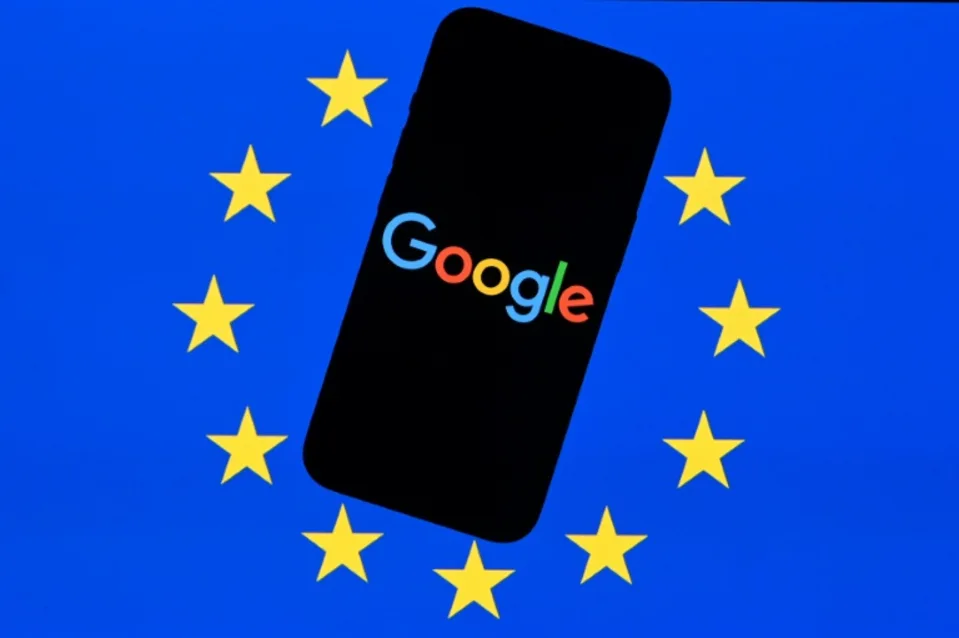
The European Union has moved again against Google’s control of the mobile internet, and this time the fight goes directly into artificial intelligence. Under two new Digital Markets Act decisions, Google must give rival AI assistants and search engines more comparable access to Android and some Search data, a change that could reshape how deeply non-Google AI tools can operate on Android phones in Europe.
The decisions, reported by The Verge and Associated Press, require Google to open parts of Android to rival assistants and share certain anonymised Search data with competing services. The Android changes are expected by July 2027, while the Search data obligations are expected to take effect by January 2027.
This is not just another antitrust headline. It is a clear sign that regulators see AI assistants as the next operating-system layer. If Gemini can sit deeply inside Android, answer by voice, run background tasks and use privileged system hooks, the EU wants rivals to have a fair shot at comparable access.
Android is not simply a phone operating system. It is the default computing environment for billions of people, especially in markets where smartphones are the primary internet device. If a company controls the assistant layer on Android, it can influence search, shopping, navigation, productivity, messaging and eventually agentic tasks that move across apps.
That is why the EU is treating this as a competition issue. AI assistants are no longer just chatbots that sit in a separate app. They are becoming front doors to the internet. A user could ask an assistant to book transport, search local services, compare prices, write messages or summarise private content. The assistant with the best system access will usually feel faster, smarter and more useful.
A useful parallel is Google’s long-running Android antitrust fight in Europe. A previous TechBooky report on Google losing its final Android antitrust appeal showed how regulators have been watching the company’s mobile advantage for years. The new AI decisions extend that argument into a world where the assistant may become more important than the search box.
The Search data requirement may be even more sensitive. Rival search engines and AI services need high-quality signals to improve results, rank content and understand user intent. Google has decades of data advantage. The EU is now saying that, under the DMA, certain search-generated data should be available to competitors under conditions designed to protect privacy and security.
Google objects to the move, warning that broader access could create risks for user privacy, security and business secrets. The European Commission says access will be governed by safeguards. That tension will define the next phase of the fight: regulators want competition, while Google will argue that forced openness can introduce new risks.
For AI startups, this is a potentially important opening. ChatGPT, Perplexity, Mistral, Anthropic partners and other assistant providers may gain a clearer path to becoming default-like experiences on Android in Europe. The question is whether technical access will translate into real distribution, because consumer habits can be harder to change than regulation.
For users, the immediate benefit could be more choice. In practice, that may mean easier ways to choose a non-Google assistant, stronger integration for third-party AI tools and more competition around search-style answers. For developers, it could mean a larger addressable market for AI agents that need device-level access.
The wider implication is that Europe is trying to prevent AI from recreating the old platform bottlenecks. If the mobile era was shaped by app stores, default search and operating-system privileges, the AI era may be shaped by assistants, data access and agent permissions. The EU wants to intervene before those layers become locked down.
This will almost certainly be watched by Apple, Meta, OpenAI, Microsoft and every major AI company trying to own the next interface. The ruling may begin in Europe, but if it changes Android product design, its effects could travel much further.
Related Reading
More contextual TechBooky stories selected from tags, categories and article context.
Paul Balo is the founder of TechBooky and a highly skilled wireless communications professional with a strong background in cloud computing, offering extensive experience in designing, implementing, and managing wireless communication systems.
We use cookies to ensure that we give you the best experience on our website. If you continue to use this site we will assume that you are happy with it.