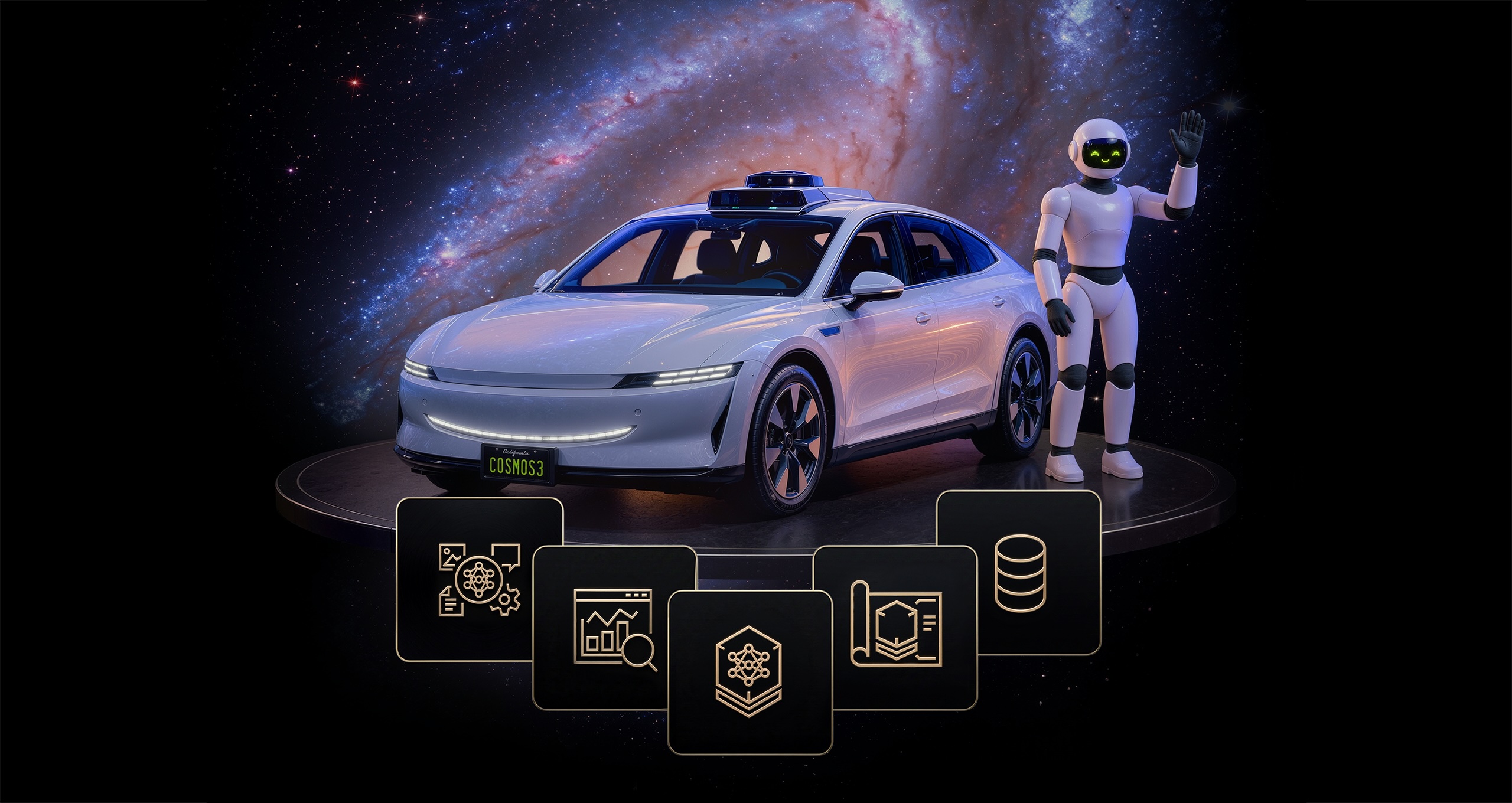
Nvidia is pushing its physical AI strategy further into the real world with Cosmos 3 Edge, a new model designed to help robots and vision AI agents understand their surroundings, reason in real time and generate actions locally on edge devices.
The company announced the model today as part of a broader Japan-focused robotics and manufacturing push. In its official announcement, Nvidia said Cosmos 3 Edge is a 4-billion-parameter model built on Nvidia Nemotron and designed for on-device vision reasoning and robot policy deployment on Jetson Thor platforms.
This is a different kind of AI story from the usual chatbot race. Cosmos 3 Edge is about machines that must see, reason and act in physical space. That includes robots in factories, autonomous machines in warehouses, smart cameras, industrial inspection systems, mobility platforms and eventually more capable humanoid robots.
Nvidia already dominates the AI training and inference hardware market. The next growth layer is getting AI out of data centres and into machines that operate in the physical economy. That requires models that understand motion, distance, object interaction, safety constraints and changing environments, not just text prompts.
Cosmos 3 Edge is built for that gap. Nvidia says developers can adapt the model for specific robots, vehicles, sensors and environments using the open Cosmos framework, and can post-train for specialised embodiments in about a day. The point is to shorten the distance between simulation and deployment, which remains one of the hardest problems in robotics.
A related TechBooky article on Physical Intelligence’s reported US$1bn robotics AI round showed how much investor attention is moving toward robot intelligence. Nvidia’s move is the infrastructure side of that same race: the model, chip and software stack that others will build on.
Nvidia is making the announcement in Japan for a reason. Japan has deep manufacturing, robotics, automotive and industrial engineering expertise. Nvidia said AIRoA, FANUC, Fujitsu, Hitachi, Kawasaki Heavy Industries, Kubota, NEC, SoftBank, Sony and Yaskawa Electric intend to join the Nvidia Cosmos Coalition.
That list matters because physical AI will not be won by software labs alone. It needs machine makers, factory operators, robotics companies, sensor providers and industrial customers. Japan gives Nvidia a mature industrial base where robots are already part of the production conversation.
Jensen Huang framed the opportunity as the next frontier of AI being in the physical world. That is a useful way to read the announcement. After years of AI being measured by language benchmarks, image generation and coding tasks, the next major test may be whether AI can safely and reliably help machines work around people, products and infrastructure.
Running more intelligence locally matters. A robot cannot wait for a cloud model to interpret every movement in a fast-changing environment. Latency, reliability, bandwidth and safety all favour more on-device reasoning. Cosmos 3 Edge is meant to make that possible on Nvidia edge computers, including Jetson Thor.
That does not mean cloud AI disappears. In many systems, cloud models will still train, simulate and coordinate fleets, while edge models handle real-time perception and action. The likely future is a hybrid stack: data centre training, synthetic data generation, simulation, and local inference inside machines.
For African manufacturers, logistics companies and infrastructure operators, the technology may feel distant today, but the direction is important. Industrial AI will eventually affect warehouses, ports, mines, farms, hospitals and smart-city systems. Nvidia is trying to make sure its chips and models are sitting inside that transition.
Related Reading
More contextual TechBooky stories selected from tags, categories and article context.
Paul Balo is the founder of TechBooky and a highly skilled wireless communications professional with a strong background in cloud computing, offering extensive experience in designing, implementing, and managing wireless communication systems.
We use cookies to ensure that we give you the best experience on our website. If you continue to use this site we will assume that you are happy with it.