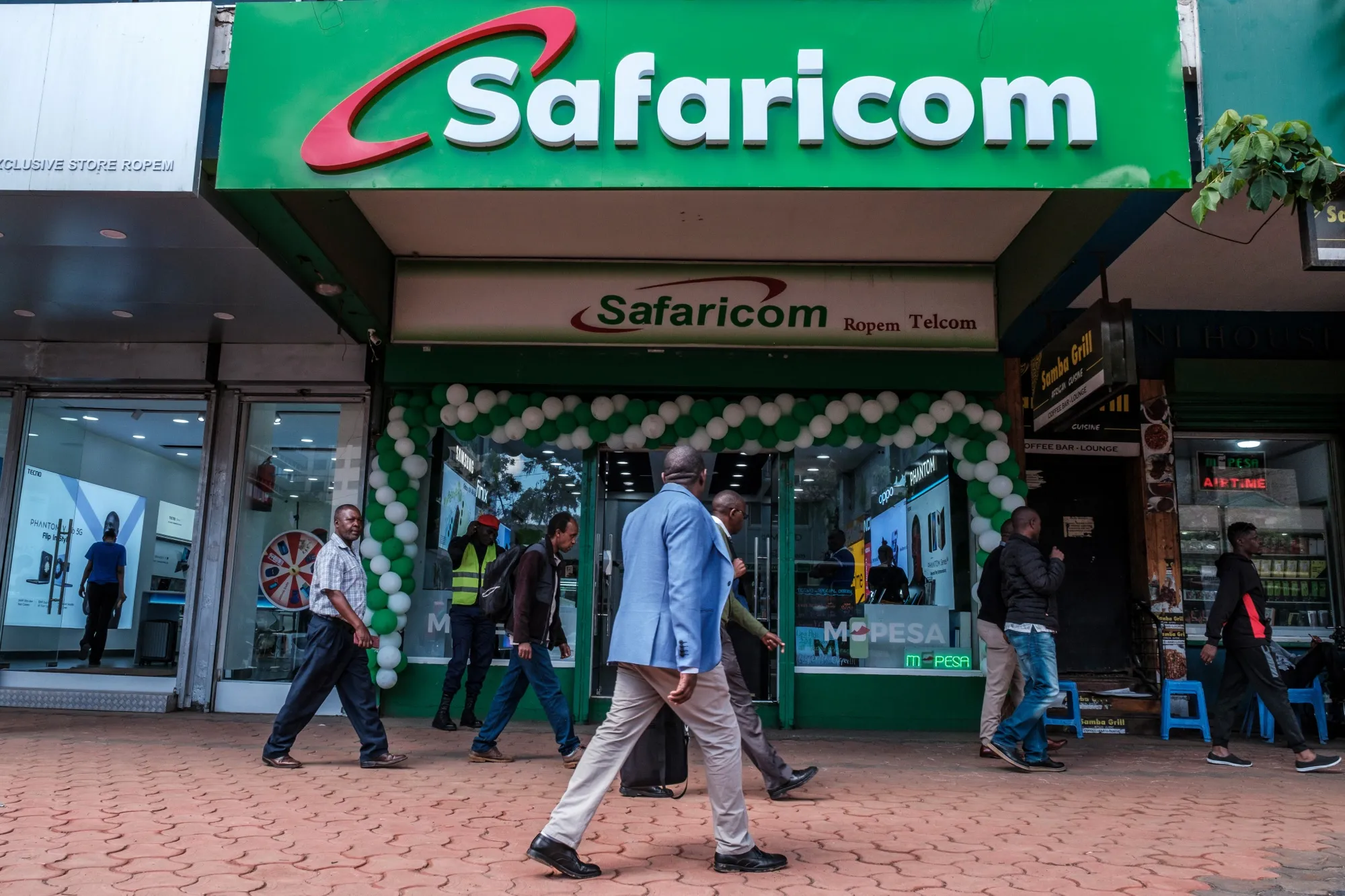
Safaricom’s group net income climbed 35.9% to KSh58.2 billion in the six months to September 2026, a result that puts its costly expansion into Ethiopia in a different light. The Kenyan operator is still investing across the border, but the losses from that business are narrowing while M-PESA and mobile data continue to support earnings at home.
The company reported group earnings before interest and tax of KSh91.1 billion, up 39.8% from a year earlier, according to Reuters’ account of the results. Group service revenue reached KSh226.1 billion, up 13.1%, while earnings before interest, tax, depreciation and amortisation rose 27.5% to KSh129.2 billion.
What changed in Ethiopia? The subsidiary’s EBITDA loss narrowed to about KSh0.4 billion. That is not the same as saying the operation is profitable after financing, depreciation and other charges. It does, however, suggest that its network and customer base are generating more revenue relative to day-to-day running costs than they did a year earlier.
Safaricom entered Ethiopia in 2022 as the country opened its telecommunications market to a foreign competitor. Building coverage and distribution in a new market required heavy upfront spending. The latest numbers matter because investors have long had to weigh that bill against the potential of one of Africa’s largest populations. In TechBooky’s earlier coverage of M-PESA Ethiopia’s mini-app expansion, the payments service was already moving beyond basic transfers.
Back in Kenya, M-PESA revenue rose 13.6% to KSh100.1 billion over the half-year, according to Capital Business’ report on the briefing. That scale shows why mobile money remains central to Safaricom’s investment capacity. It also gives the company a route to deepen financial services as network competition intensifies. TechBooky recently reported a proposed M-PESA tax-invoice link for Kenyan traders, which remains a discussion rather than a launched product.
The key question for the next reporting period is whether Ethiopia can keep shrinking its operating loss without slowing customer growth or raising prices beyond what users can bear. Currency weakness and inflation remain risks. For now, Safaricom’s earnings show a stronger core business and a less punishing Ethiopian expansion, not a completed turnaround.
Related Reading
More contextual TechBooky stories selected from tags, categories and article context.
Paul Femi Balo is the founder and publisher of TechBooky. He covers artificial intelligence, African technology, digital infrastructure, enterprise technology and the global digital economy.
We use cookies to ensure that we give you the best experience on our website. If you continue to use this site we will assume that you are happy with it.