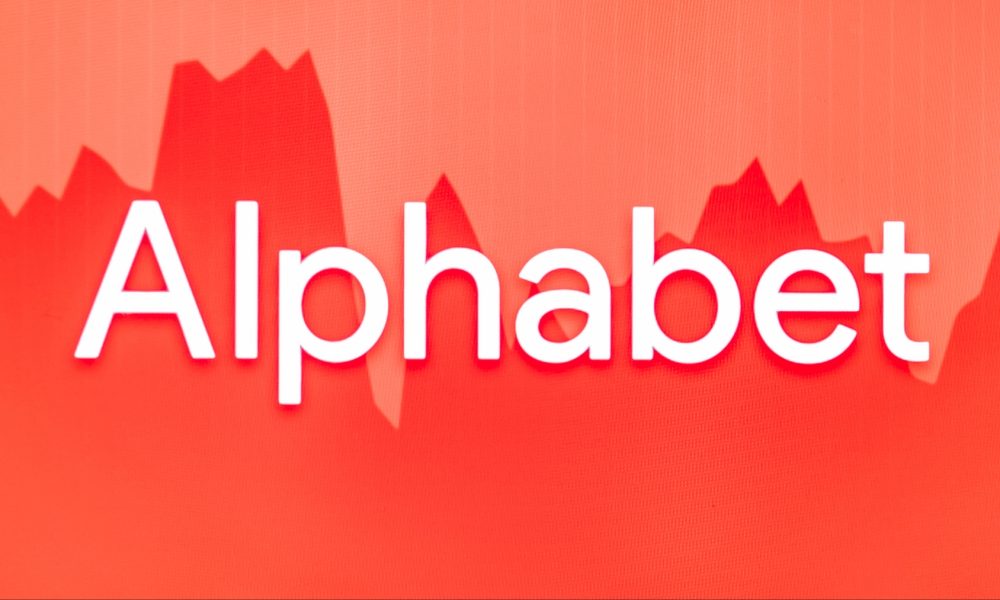
Alphabet’s third-quarter results show how quickly demand for its AI infrastructure is turning into revenue, and how expensive that demand is to serve. The Google parent reported $127.6 billion in revenue for the three months ended 30 September 2026, up 25% from a year earlier. Google Cloud revenue more than doubled to $30.7 billion, but the company’s purchases of property and equipment also surged to $51.4 billion, leaving quarterly free cash flow at negative $9.1 billion.
The numbers in Alphabet’s official earnings release make this a more revealing quarter than a simple AI-growth headline suggests. Operating profit rose strongly, while net income fell because of losses on equity securities. Cash generation from the underlying business remained positive, but infrastructure spending exceeded it.
Google Cloud brought in $30.7 billion, compared with $15.2 billion a year earlier, an increase of roughly 103%. The segment’s operating income climbed to $11.1 billion from $3.6 billion. Alphabet said sales of its TPU systems were a meaningful contributor. That matters because the company is not only renting cloud capacity and selling AI software. It is also trying to make its own chips and infrastructure a larger part of what customers buy.
The older advertising engine remains much larger, though it is growing more slowly. Google Services revenue rose 11% to $96.3 billion. Search and related revenue reached $63.4 billion, while YouTube advertising brought in $11.2 billion. Those businesses continue to finance Alphabet’s investment in data centres, chips and AI products even as cloud becomes a bigger driver of the growth rate.
Chief executive Sundar Pichai said the Gemini app now has one billion users and that requests through Google’s first-party model APIs are approaching 32 billion tokens per minute. These are company-reported usage figures, not a measure of how much each user or developer spends. They nevertheless help explain why Alphabet is expanding computing capacity at such speed.
Alphabet’s operating income increased about 30% to $40.6 billion, lifting its operating margin to 31.8%. Yet net income available to common shareholders declined to $26.2 billion from $35.0 billion a year ago, and diluted earnings per share fell to $2.12 from $2.87. The main difference was below the operating line. Other income and expense swung to a loss of $8.2 billion, including an $8.7 billion loss on equity securities, after a sizeable gain in the comparable quarter last year.
That distinction is important. The decline in reported net income does not mean Google’s core businesses made less operating profit. They made more. At the same time, the cash cost of supporting AI growth is difficult to ignore. Operating cash flow was $42.3 billion, down from $48.4 billion a year earlier. Purchases of property and equipment more than doubled from $24.0 billion to $51.4 billion. On Alphabet’s own reconciliation, free cash flow was negative $9.1 billion, compared with negative $5.9 billion in the previous quarter.
A negative quarter of free cash flow is not by itself evidence that Alphabet cannot afford its build-out. It does show that the timing of infrastructure investment and the returns from it are now central to the earnings story. The company is spending before all the resulting capacity can generate revenue, and investors will want to see whether cloud demand and margins can keep pace with that investment.
The quarter also gives a sharper answer to the question raised in TechBooky’s look ahead to big-tech earnings. Demand is material and measurable, especially at Google Cloud. But translating it into durable free cash flow will take more than fast sales growth. Alphabet needs to fill the capacity it is building, sustain cloud profitability and keep its advertising franchise resilient as search itself changes with AI.
The comparison with Microsoft is instructive, but not one-to-one because their segments and fiscal calendars differ. Microsoft’s latest quarter also showed strong cloud demand and a rising infrastructure bill. For Alphabet, the particularly striking feature is that cloud revenue doubled while the company’s free cash flow became more negative. The next few quarters will show whether those two lines begin to move closer together.
Related Reading
More contextual TechBooky stories selected from tags, categories and article context.
Paul Femi Balo is the founder and publisher of TechBooky. He covers artificial intelligence, African technology, digital infrastructure, enterprise technology and the global digital economy.
We use cookies to ensure that we give you the best experience on our website. If you continue to use this site we will assume that you are happy with it.