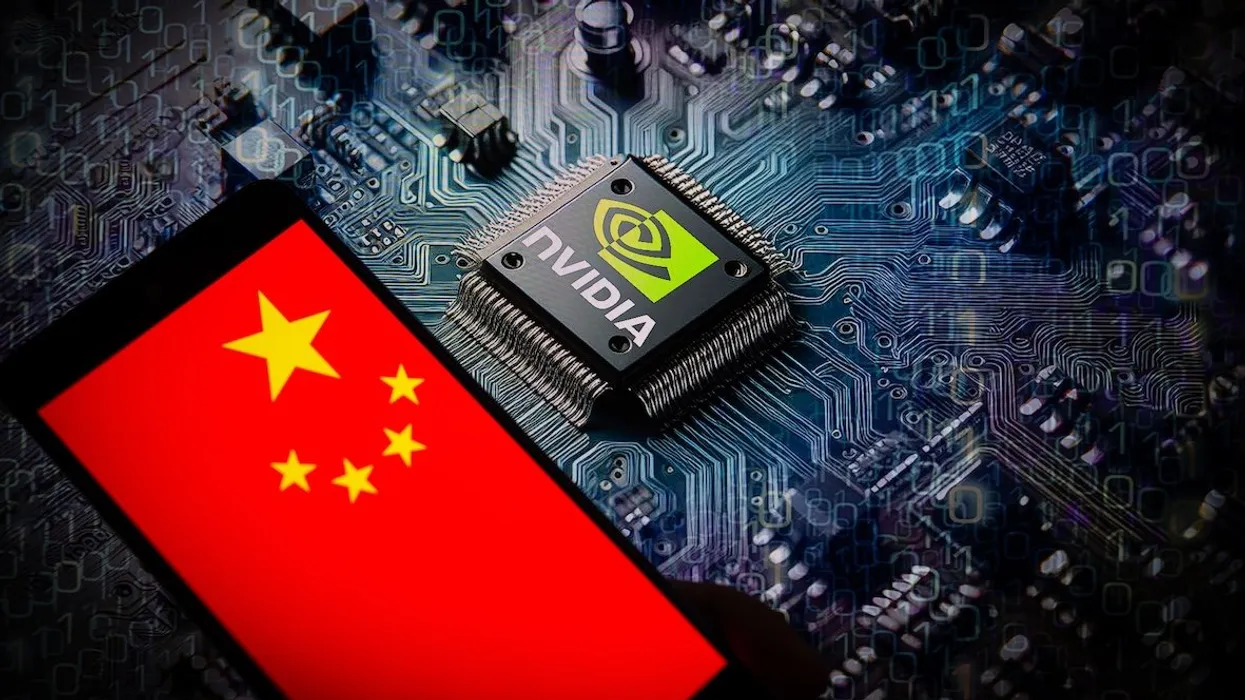
China’s biggest technology companies may receive only a fraction of the Nvidia chips they have ordered over the next four months, according to a new Bloomberg report. Alibaba, Tencent, ByteDance and other Chinese AI and cloud firms have placed orders for roughly six million RTX Pro 5500 graphics cards, worth about $70 billion at listed prices. People familiar with the matter told Bloomberg that buyers expect deliveries amounting to around 1% of those orders in the near term.
The striking figure is an expectation about the next four months, not evidence that Nvidia has cancelled 99% of the orders. It also does not mean that $70 billion of revenue has been booked. Orders, shipments and recognised sales are different measures, and Nvidia has not publicly confirmed the reported totals or delivery schedule.
The RTX Pro 5500 is a professional graphics processor that can be adapted for AI work. It is not the same as Nvidia’s highest-end data centre accelerators. That distinction matters in China, where restrictions on advanced US chip exports have made access to cutting-edge AI hardware more difficult and pushed companies towards other options.
The new Bloomberg figures extend a story TechBooky reported in October, when Chinese groups were said to have placed more than $35 billion in RTX Pro 5500 orders. The immediate question is now less whether demand exists than how rapidly it can be satisfied. A buyer that receives only a small initial allocation cannot assume its planned AI capacity will arrive on the timetable implied by its purchase order.
Bloomberg says several thousand units could arrive before the end of 2026, with larger batches expected around February. Those numbers are reported projections rather than confirmed shipment records. Delivery could change with manufacturing capacity, allocation decisions, export rules and other constraints. The six-million-unit total also aggregates demand across customers rather than describing a single company’s guaranteed allocation.
For AI developers, compute is not merely a purchase on a balance sheet. It determines how quickly models can be trained, tested and served to users. A slow hardware rollout can postpone products and raise the cost of running existing services. Large buyers may try to diversify towards domestic accelerators, squeeze more work from chips they already own or rent capacity elsewhere, but each route carries its own software, performance and operational trade-offs.
The reported orders also highlight the gap between the political ambition to build an independent Chinese AI ecosystem and the immediate commercial appetite for Nvidia hardware. Even if every order is genuine, the headline value is a measure of demand, not a forecast of near-term Nvidia revenue. The clearest signal for investors and developers will be verified shipments over the coming quarters, alongside any changes to the export environment.
Related Reading
More contextual TechBooky stories selected from tags, categories and article context.
Paul Femi Balo is the founder and publisher of TechBooky. He covers artificial intelligence, African technology, digital infrastructure, enterprise technology and the global digital economy.
We use cookies to ensure that we give you the best experience on our website. If you continue to use this site we will assume that you are happy with it.